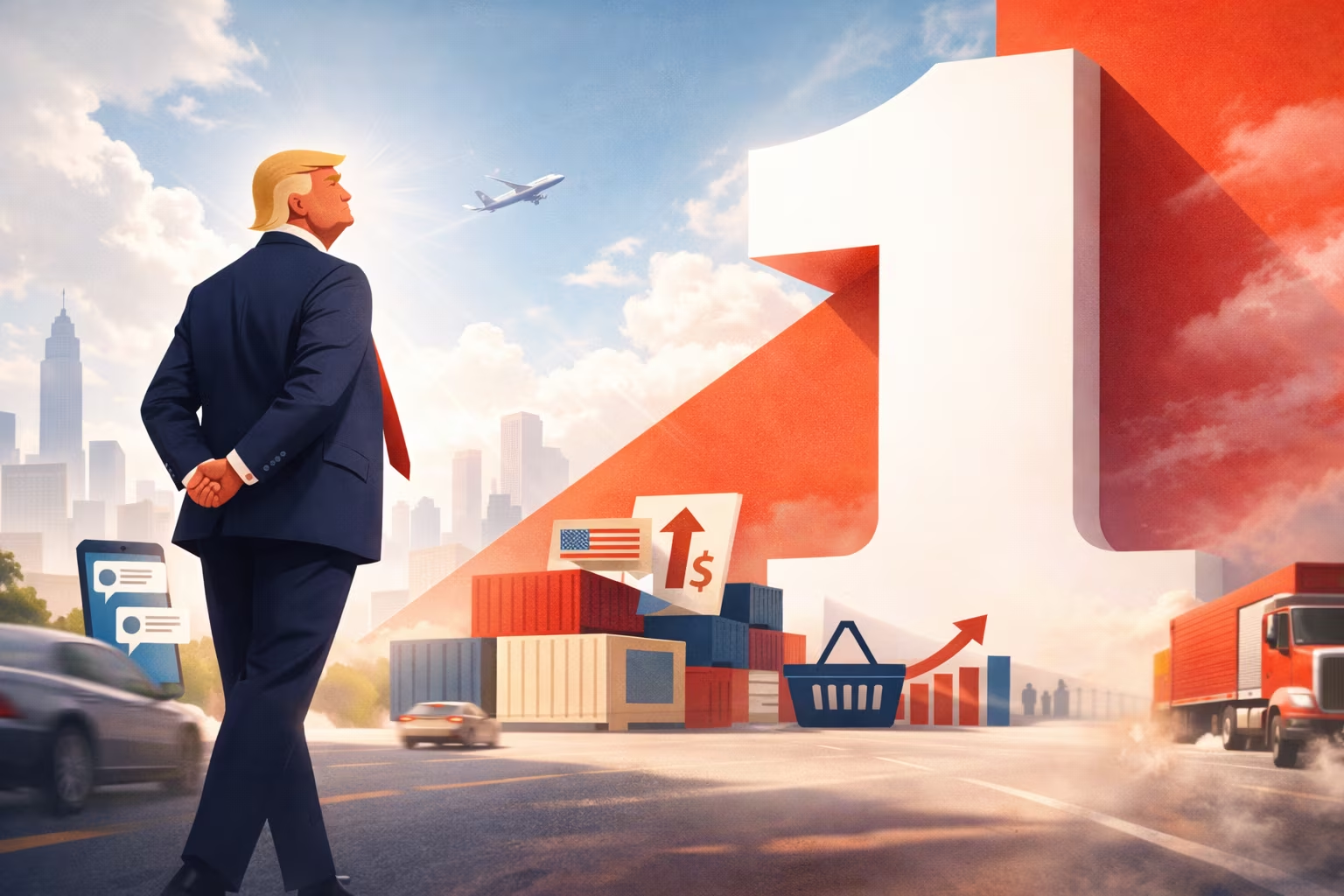
As he wrapped up the first year of his second presidential term, Donald Trump once again turned his focus to the economy, crime, and trade policy. In posts on Truth Social, he claimed that crime in the United States is at “the lowest level in history,” attributing this primarily to what he described as “the most successful operation on the southern border.” Trump also said that employment in the U.S. economy is now “the highest ever,” punctuating the claim with the MAGA slogan.
In another post, the president said that the tariffs he introduced had delivered “enormous wealth” and “unprecedented national security” for the country. According to him, the trade deficit has fallen by 60%, GDP has reached 4.3% and continues to grow, and there is “no inflation at all.” “The U.S. is respected again as a country,” he added.
Earlier this week, Trump had already linked positive macroeconomic indicators to his hardline tariff policy. According to data from the Department of Commerce, the economy grew by 4.3%, driven by higher exports and consumer spending. Commenting on these figures, the president wrote that tariffs were precisely what delivered “excellent U.S. economic performance,” which, he said, would only improve further—again asserting the absence of inflation and a strengthening of national security.
The economy and the affordability of goods were central themes of his 2024 presidential campaign, which ended in victory. At the time, Trump promised to “end inflation” and bring prices down. By late 2025, however, the November inflation report showed that food prices had risen by 2.6% year on year, while gasoline prices had edged slightly lower.
Even so, the president continues to offer a positive assessment of the economy. In an interview with Politico, he gave it an “A-plus-plus-plus-plus-plus,” saying he had inherited “total chaos” and placing primary responsibility for rising prices on former president Joe Biden. “Prices were at historic highs when I came in,” Trump said. “Now they are coming down significantly.”
It remains unclear whether the U.S. Supreme Court will uphold the sweeping tariffs and deem them lawful. The justices are expected to determine whether the president has the authority to set external trade rates unilaterally, without congressional approval, under the International Emergency Economic Powers Act. The White House is also facing lawsuits from companies arguing that high import duties have harmed their financial performance.
Trump continues to frame his political rhetoric around affordability—a theme that proved decisive for Democrats in last month’s elections. At the same time, the president has dismissed the issue as a “scam,” claiming it was fabricated and artificially amplified by Democrats. Public opinion polls, however, suggest that only a small share of Americans attribute improvements in their personal finances to the actions of the incumbent president.