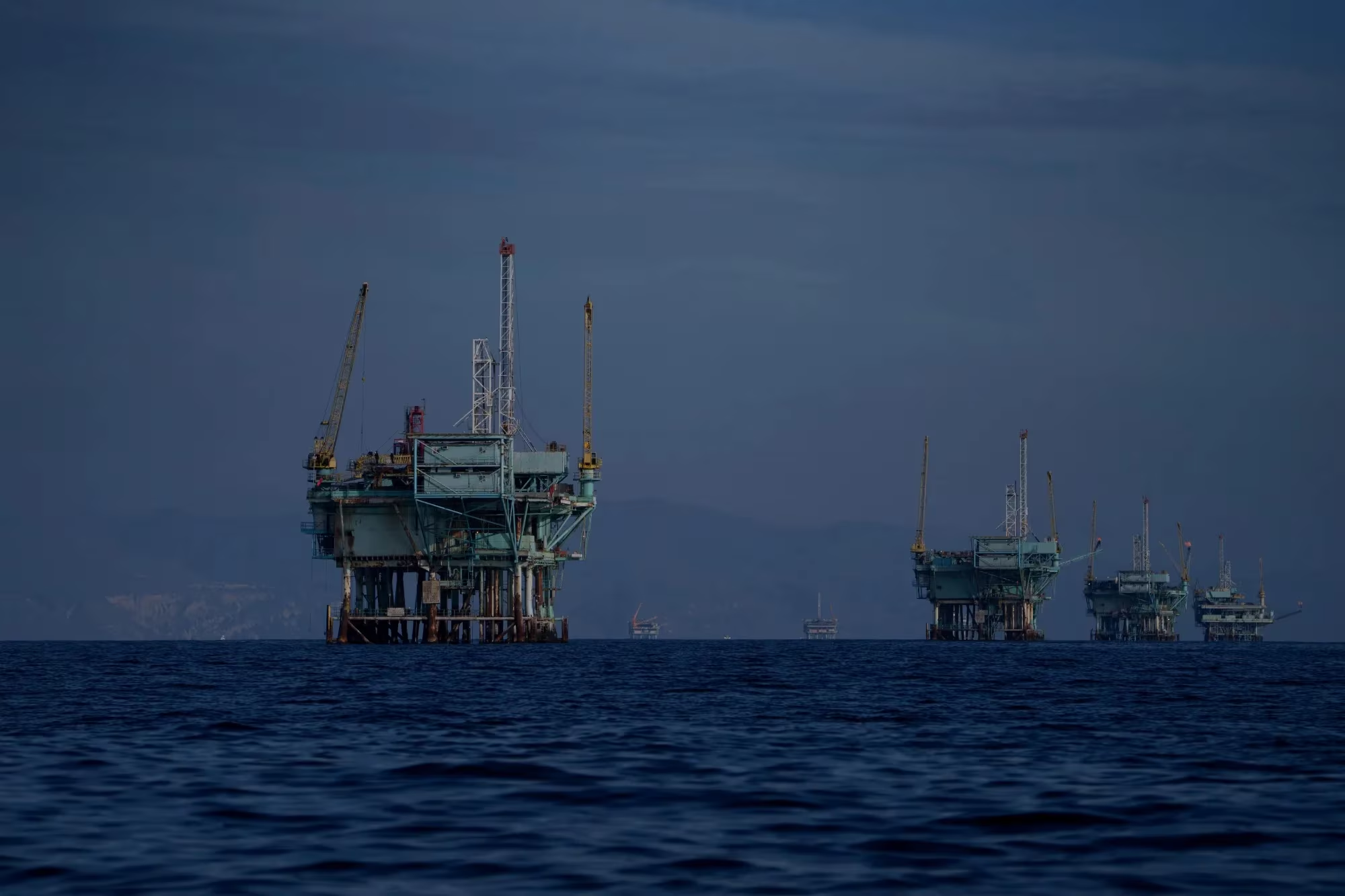
On Friday, the administration of Donald Trump ordered the restart of the Santa Ynez Unit oil and gas infrastructure and the Santa Ynez Pipeline System off the coast of California. The decision comes amid a sharp rise in oil and gas prices after Iran closed the Strait of Hormuz.
The order by Energy Secretary Chris Wright to resume production followed a presidential directive signed earlier the same day by President Trump. According to the official statement, its purpose is to “eliminate supply disruption risks caused by California’s policies, which have left the region and the U.S. armed forces dependent on foreign oil”.
“The Trump administration remains committed to putting the interests of all Americans and their energy security first,” Wright said. “Unfortunately, some state leaders do not share these principles, which could have potentially catastrophic consequences not only for their residents, but also for our national security”.
According to him, the decision “will strengthen U.S. oil supply and restore the pipeline system that is vital to national security and defense, ensuring reliable energy deliveries to military installations on the West Coast on which the armed forces’ operational readiness depends”.
The Department of Energy noted that Sable Offshore’s facilities are capable of producing about 50,000 barrels of oil per day. According to the department’s estimates, this represents “a 15 percent increase in domestic oil production in California, allowing nearly 1.5 million barrels of foreign oil to be replaced each month”.
The department also argued that “decades of radical state policies aimed at reliable energy sources” have led to a decline in domestic production.
“Today more than 60 percent of the oil refined in California comes from abroad, with a significant share passing through the Strait of Hormuz—which creates serious national security risks,” officials said.
The order signed by Trump also provides for the priority use of pipeline infrastructure for transporting oil. This is intended to ensure that crude extracted off the coast of California is routed through interstate pipelines, thereby reducing “California’s dependence on foreign oil vulnerable to geopolitical disruptions”.
California Attorney General Rob Bonta, a Democrat, described Trump’s order as “yet another brazen abuse of power”.
“We will not stand by while this administration continues its unlawful, full-scale assault on California and our coastline, and we are considering all available legal options,” Bonta wrote on the social network X.
California had previously filed a lawsuit against the Trump administration—in January, after the approval of oil pipeline construction. At the time, Bonta said the state had “seen firsthand the devastating environmental damage and public health threats caused by offshore oil spills—yet the Trump administration is willing to do whatever it takes to bypass state regulations designed to prevent such disasters”.
Meanwhile, the White House administration has dismissed concerns about rising gasoline prices following the closure of the Strait of Hormuz, through which roughly 20 percent of the world’s oil and gas supplies normally pass. Trump recently defended higher fuel prices in public, saying on Thursday: “When oil prices go up, we make a lot of money”.
At the same time, the U.S. administration temporarily lifted sanctions on Russian oil that had been stranded at sea in order to soften the impact of price increases triggered by the military operation against Iran. Treasury Secretary Scott Bessent said on Thursday that this “narrowly limited measure” “will not deliver significant financial benefits to the Russian government” and will remain in effect until April 11.