Candidates backed by Donald Trump secured a series of victories in Republican primaries across the United States, strengthening the president’s position within the party ahead of the fall congressional elections.
On May 19, Republicans held primary elections in several states to determine candidates for the House of Representatives and the Senate. In most districts, politicians publicly endorsed by Trump emerged victorious. Representatives of the party’s more traditional conservative wing—many of whom had criticized the former president or distanced themselves from his political line—suffered defeats in several key races.
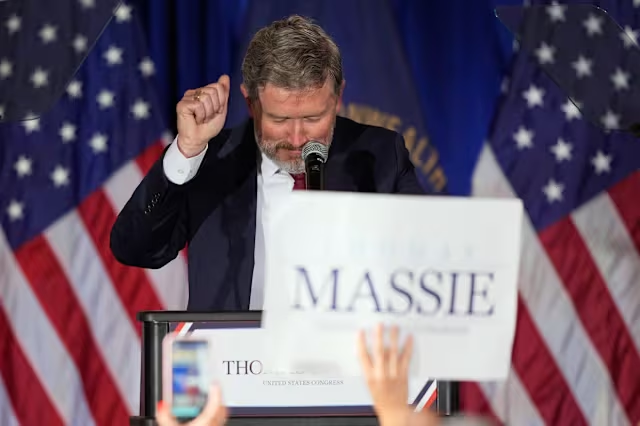
One of the most notable results came from Kentucky’s 4th Congressional District. Incumbent Congressman Thomas Massie, who had held his seat in the House since 2012 and was considered one of the Republican Party’s most influential lawmakers, lost the party’s nomination.
Massie had repeatedly criticized Trump, prompting the former president to launch a public campaign against him and endorse former Marine Ed Gallrein. In the final vote, Massie received 46 percent of the Republican vote compared with 54 percent for Gallrein.
Louisiana Senator Bill Cassidy, another prominent critic of Trump and White House policies, also lost his primary race. He was defeated by Trump-backed candidate Julia Letlow.
Overall, in 24 of the 28 congressional primaries held on May 19, candidates endorsed by Trump won outright. In the remaining four districts, Trump-backed candidates received the highest number of votes but failed to secure enough support to avoid runoff elections.
The results reinforced the view that Trump continues to wield decisive influence over the Republican electorate, with his endorsement outweighing the seniority and institutional standing of many incumbent politicians.
The victories by his allies also increase the likelihood that, after the fall elections, Trump will command a more disciplined and loyal Republican caucus in Congress.