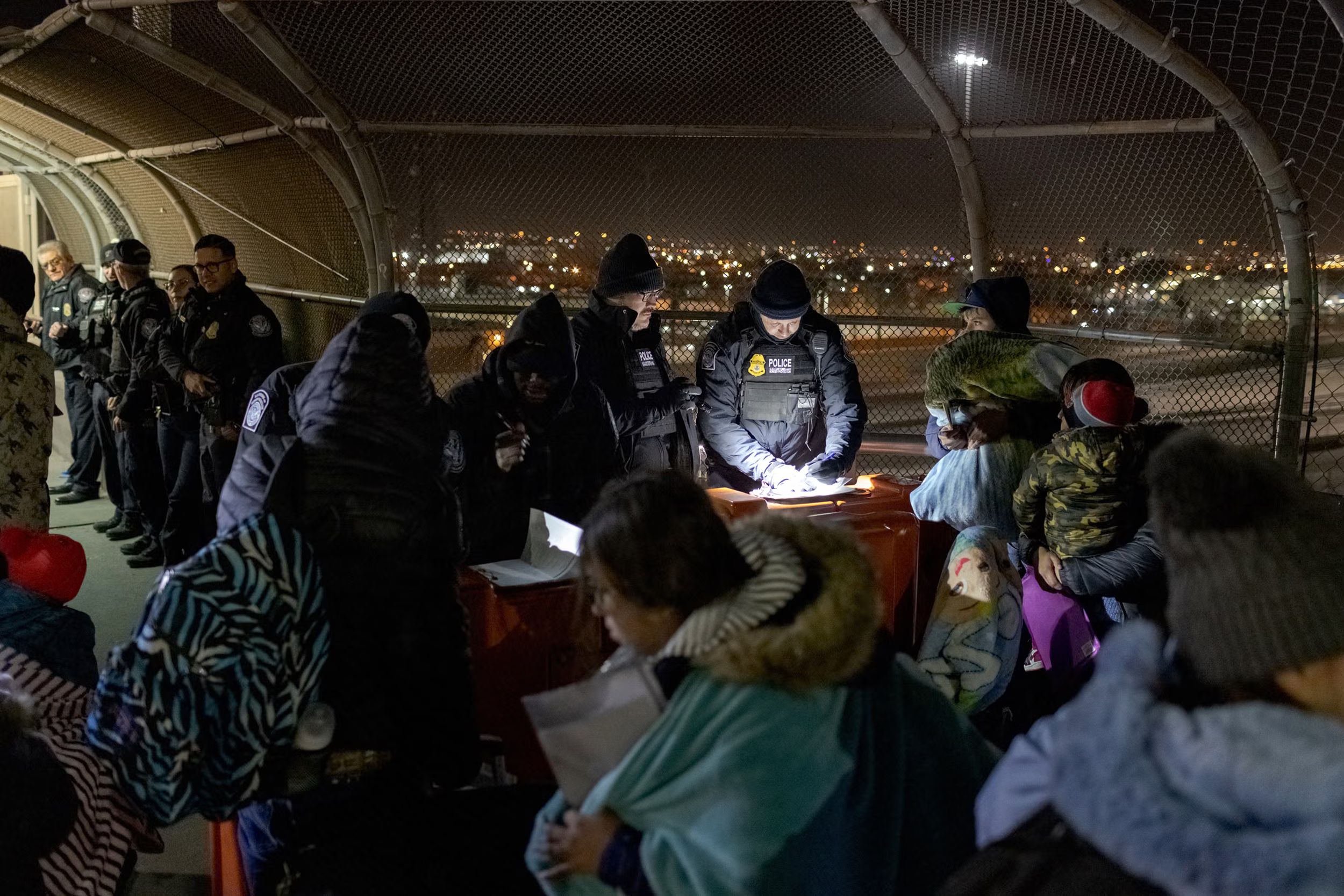
News that the Trump administration had frozen the processing of asylum applications, halted visa issuance for Afghans who assisted the United States during the war, and launched a renewed review of green-card petitions from nationals of countries deemed “of concern” has shocked asylum seekers across the country and pushed them even deeper into uncertainty.
“They say fear travels faster than information. And that is exactly what happened,” said Reza Hussaini, a 23-year-old asylum seeker from Afghanistan who arrived in the United States in 2022 and is still waiting for his interview.
Immigration lawyers and rights advocates are still trying to determine how the Trump administration’s series of decisions curtailing the right to asylum and legal immigration will be implemented in practice. The sweeping measures—designed to sharply narrow lawful immigration pathways—were announced after Donald Trump vowed to “permanently halt” the entry of migrants from “third-world countries” following last week’s shooting in Washington, which left two National Guard service members dead and involved a suspect who was an Afghan national.
The new rules could affect nearly 1.5 million pending asylum applications currently being handled by US Citizenship and Immigration Services.
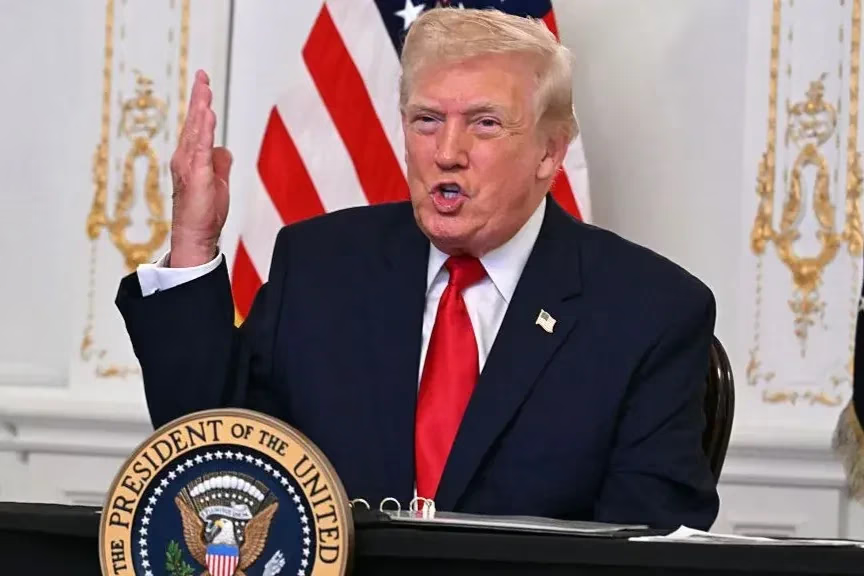
Trump Vows to Permanently Halt Migration From the Developing World
The White House Shooting Becomes the Basis for His New Hardline Immigration Statements
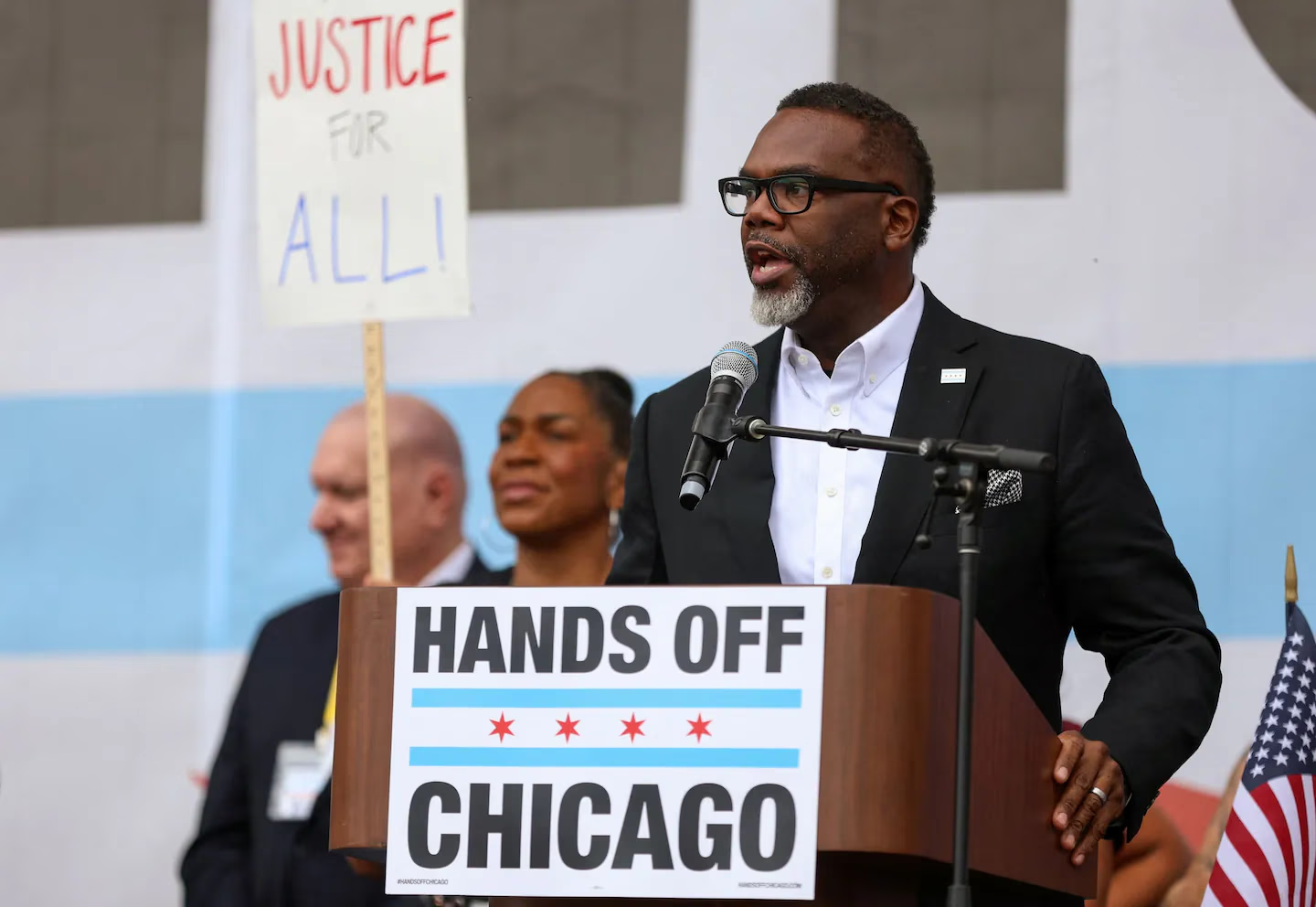
Chicago Mayor Accuses the Trump Administration of Brutal Immigration Raids
He Calls on the UN to Investigate Human Rights Violations in the U.S.
Lawyers expect the sweeping pause in application processing and other changes to face legal challenges. Rights groups warn that the administration’s initiative—aimed at refugees, asylum seekers, and especially Afghan nationals after the shooting—amounts to a form of collective punishment.
Like many other Afghans and asylum seekers in the United States, Hussaini does not know how the new decisions will affect his case or those of his friends and members of his community. “But it feels as if I’m being cornered… Even more than fear, it’s the uncertainty about my status, about what comes next, about what my future will be. What if I’m deported back to Afghanistan—a country where the authorities see me as an enemy?”
He says he survived two terrorist attacks in Afghanistan. As a teenager, he began working with local nonprofits advocating for access to education, women’s rights, and democracy. In 2021, he was detained and interrogated by the Taliban, after which he managed to flee through Pakistan. If the United States expels him now, he fears he will become an even more visible target than before.
“It seems the purpose of these measures is to demoralize people,” said Faisal Al-Jubouri, head of external affairs at Raices, a legal organization handling more than 50 pending asylum cases before USCIS. “The result is that people are left in limbo—the uncertainty and anxiety about the future only intensify.”
He says lawyers and advocates at Raices are trying to explain to asylum seekers and other immigrants that not all the proposed changes may prove lawful, and that attorneys across the country will be pushing for clarity on their consequences. “We cannot rely on assumptions, because right now there is no clear picture at all.”
Only one thing is certain: for asylum seekers, the process will become even more protracted than they had anticipated. USCIS Director Joseph B. Edlow said the agency “has paused all asylum adjudications until it is confident that every noncitizen has undergone the most thorough vetting and screening possible.”
According to Ilyana Johansen-Mendez, who leads programs at the Immigrant Defenders Law Center, the pause will only exacerbate an already rapidly growing backlog. “For those who have waited eight years for an interview, who hoped at last to receive some kind of decision, protection, and stability, the wait will stretch on yet again.”
Yet against the backdrop of an already glacial process, the news of a pause did not land as sharply for some. “The procedure is so slow. So what does it even mean when they say they won’t review cases for a while and will add another year to a wait that already stretches over many years?” said Dave Meyer, a volunteer with the Bloomington Refugee Support Network in Indiana, which helps immigrants adjust, access services, and obtain medical care.
Amir, who left Afghanistan and reached the United States through Mexico last year, said he still does not understand how the new measures will affect his situation. The Guardian is not using his real name for security and privacy reasons.
“I don’t fully understand what this means, but I know that everyone with a pending case is worried,” he said. The USCIS changes pertain to so-called “affirmative” asylum applications—filed by migrants who are already in the United States and are not respondents in deportation proceedings. Amir’s case, however, is “defensive”: he is in removal proceedings and will be able to present his arguments for asylum before an immigration judge at the Department of Justice next year.
“I don’t know what will happen. But I think it’s not fair to blame all immigrants for the actions of one person,” he said. “And I hope that if we haven’t committed crimes and haven’t done anything wrong, then this won’t affect us.”
Even so, he says nearly every asylum seeker and Afghan immigrant he knows is either confused or afraid—and often both. Amir belongs to the Hazara Shia community, which has faced increasingly brutal persecution and attacks in Afghanistan since 2021. “There is no safe place for us in Afghanistan.”
Hussaini, who also assists several Afghans who worked with US forces in navigating their immigration cases, said he has been receiving one anxious message after another from them in recent days.
One of them, who had worked with the US military for twenty years before being forced to flee Afghanistan, only recently obtained asylum after an exhausting, months-long process. On the phone he sounded deflated, worried that the authorities’ decision might strip him of his status. “It’s that feeling of having to start everything from zero again,” Hussaini said.
He admits that he, too, is struggling to maintain a sense of steadiness amid the mounting uncertainty. “I used to think coffee tasted awful. But after everything that’s happened, the only way to distract myself even a little is to run to the gas station every few hours, grab a coffee, drink it, and calm down at least a bit,” he said. “It’s hard. It’s crushing.”