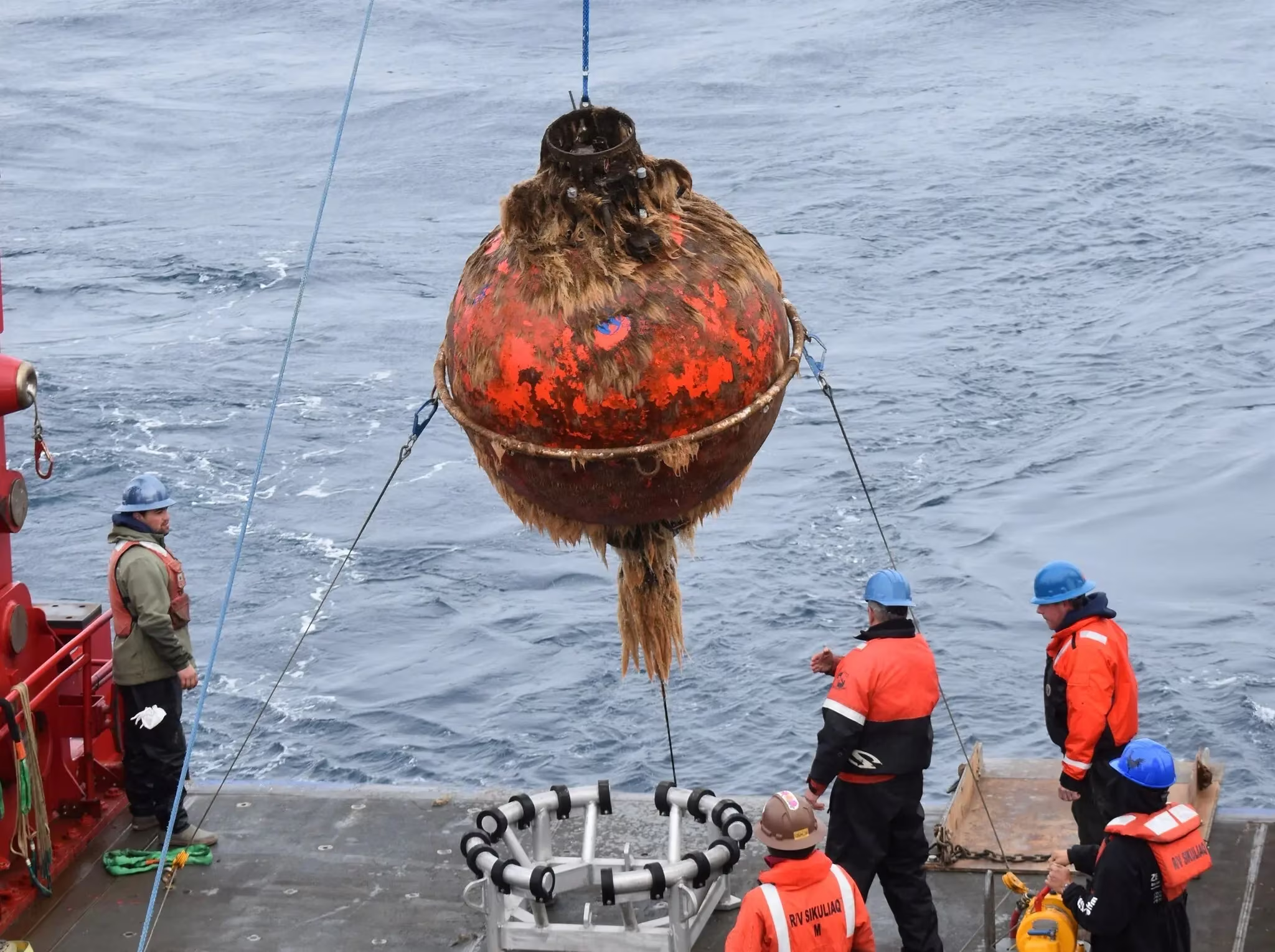
The Trump administration is shutting down a $368 million ocean-monitoring system created to track coastal environments, marine ecosystems and currents that influence the climate. The New York Times reports.
The system was launched in 2016 as part of the Ocean Observatories Initiative. Its director, Jim Edson, described the project as “the world’s most advanced continuously operating ocean-observing system.”
The data it collected were used to study how the ocean absorbs greenhouse gases from the atmosphere, how changes in water temperature affect fisheries and may point to broader climate shifts, and to analyze coastal flooding on the U.S. East Coast. The network of measuring instruments also allowed scientists to gather data remotely, without difficult, dangerous and costly expeditions at sea.
The U.S. National Science Foundation said it will send ships in June to dismantle more than 900 deep-sea instruments installed off the coasts of several states, as well as in the Irminger Sea—an area between Greenland and Iceland. Removing the equipment could take up to 15 months. Seismic sensors around an active undersea volcano off the coast of Oregon, however, will continue operating at least until 2028.
Craig McLean, who served as acting chief scientist at the National Oceanic and Atmospheric Administration during Trump’s first term, sees the decision as part of a broader pattern by the current administration, which “poorly understands the value and importance of science.”
“By dismantling a system like this, the United States is once again stepping back from global scientific leadership,” he said.
The ocean-monitoring system was originally designed to operate for 25 years. Its annual maintenance cost about $48 million. The Trump administration had repeatedly tried to shut down the program, proposing to cut its funding by 80%, but the U.S. Congress objected each time and restored the funding.