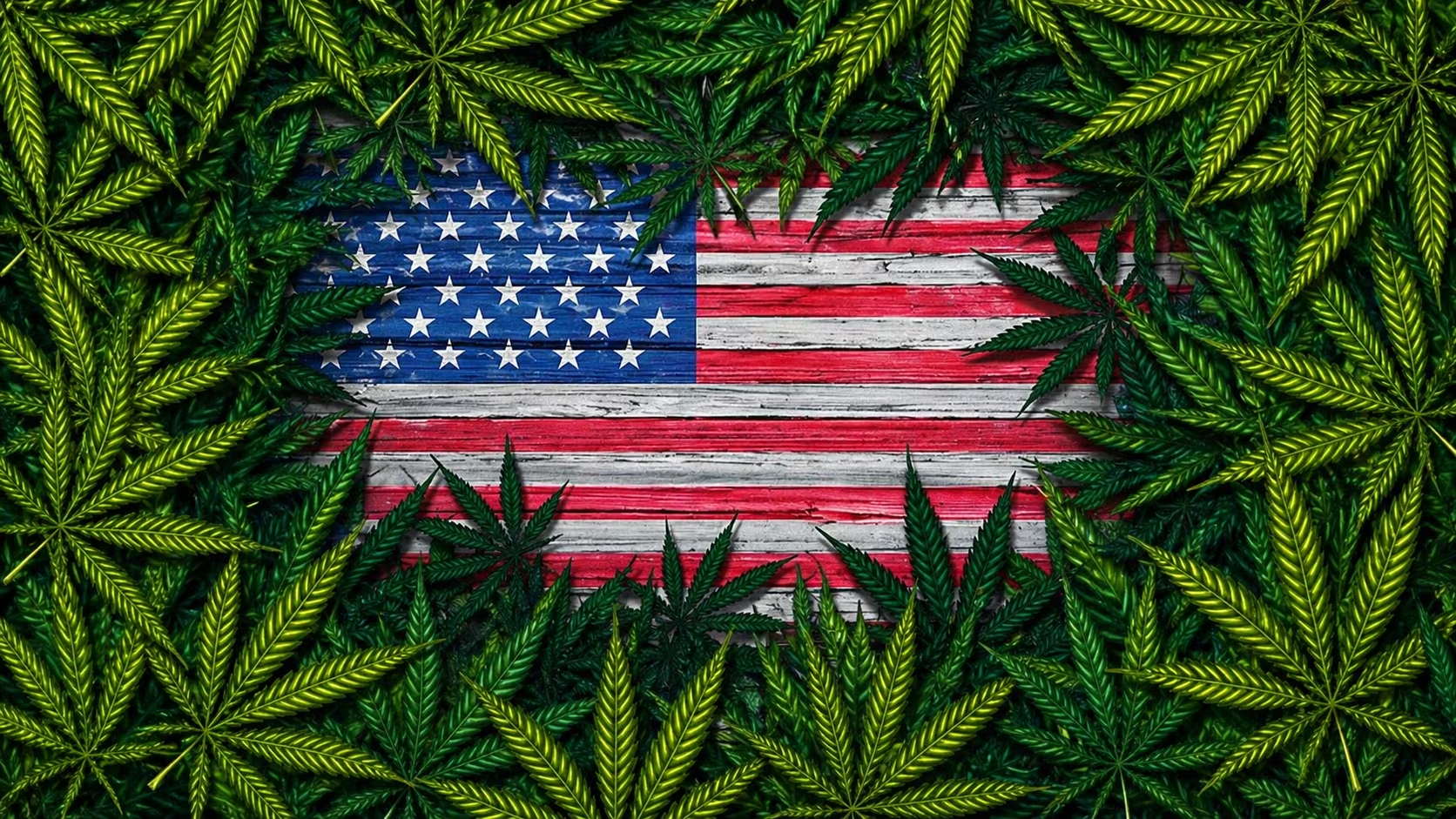
The Trump administration’s moves on marijuana and psychedelics point to a notable shift in the Republican Party’s approach to drug policy. Decisions to fast-track psychedelic treatments and reclassify medical marijuana stand in sharp contrast to the old “just say no” line and the course set in the era of Richard Nixon.
Brian Hubbard, head of Americans for Ibogaine, said: “Regardless of how anyone feels about the president… he seems open to innovation and not bound by dogmatic views.”
Last week, Trump signed an executive order on easing restrictions on psychedelic research as a treatment for mental disorders, including depression and addiction. “Can I have some too?” he joked at a meeting with officials, veterans, Republican lawmakers, and podcaster Joe Rogan.
The document provides $50 million to support state-level efforts and instructs the Food and Drug Administration to accelerate its review of applications, which could ultimately lead to approval of such drugs.
Days later, Acting Attorney General Todd Blanche ordered a review of the status of state-licensed medical marijuana, with a view to moving it into a less dangerous category. In his words, the Justice Department is “fulfilling President Trump’s promise to expand Americans’ access to medical treatment options.”
Taken individually, these steps do little to change the current reality: psychedelics remain illegal, and their recreational use has not been endorsed. Marijuana has not been legalized either and remains in Schedule I at the federal level—alongside heroin and LSD.
Taken together, however, the decisions reflect a change in public perceptions of “soft” substances such as cannabis and LSD, as well as the influence of the Make America Healthy Again movement and Trump’s populist agenda, both of which are fueling greater interest in experimentation in health care.
Hubbard pointed to the role of veterans in changing conservative lawmakers’ attitudes toward psychedelics. Many Republicans pushing the issue have military backgrounds themselves. Congressman Morgan Luttrell and his brother Marcus, both former Navy SEALs, attended the signing ceremony. Luttrell, together with colleagues, leads a congressional group calling for “intensive and urgent clinical research” into psychedelics.
“The military has become the force helping to break the stigma long associated with the left-wing counterculture,” Hubbard said. “They are showing that this is real, that it is legitimate, and that it deserves to be taken seriously.”
Republican strategist Denise Gitsham said the administration is trying to “deliver results for veterans and for those suffering from PTSD.”
Psychedelics have also moved further into the mainstream thanks to figures such as Elon Musk, Joe Rogan, and Health Secretary Robert F. Kennedy Jr., who has made expanding access to such treatments one of his priorities.
Trump acknowledged that he took notice of the issue after hearing from Rogan about ibogaine research: “Sounds great. You want FDA approval? Let’s do it.”
Although the order on marijuana reclassification was signed last year, progress accelerated after the subject was discussed publicly. Experts say that reflects a mix of political and personal motives.
Adam Rosenberg, chairman of the National Cannabis Industry Association, said cannabis has become a kind of “entry point” for rethinking the approach to Schedule I substances and recognizing their therapeutic potential.
Activists also point to a shift in the administration’s approach compared with the previous one. Under Joe Biden, research did go forward, but the Food and Drug Administration rejected an application to use MDMA in PTSD therapy, and the process of reclassifying marijuana was never completed.
“There was an additional layer of political caution under the Biden administration that is not there now,” said Melissa Lavasani, founder of the Psychedelic Medicine Coalition. In her words, dialogue with federal authorities has become more open and is now accompanied by a search for new solutions.
MAPS head Rick Doblin added that a Republican administration may in this case be able to act more boldly: “Sometimes Democratic administrations are afraid of looking too progressive… In a sense, this is a Nixon-goes-to-China story—these are precisely the kinds of steps that are easier for Republicans to take.”
Even so, criticism remains within the party. Conservative opponents of reform warn of the risks. Anne Schlafly Cori, head of Eagle Forum, said: “Trump is known for consuming nothing but Diet Coke, so I can only assume he does not understand the dangers he is unleashing.”
On the eve of the first statement on marijuana reclassification, 22 Republican senators urged him to abandon the idea, citing possible economic consequences and the risks of addiction.
After the latest decisions, Senator Tom Cotton again warned about the dangers associated with cannabis: “Today’s marijuana is far more potent than it was 10-20 years ago, leading to more psychosis, antisocial behavior, and fatal car crashes,” he wrote on X, calling what is happening “a step in the wrong direction.”