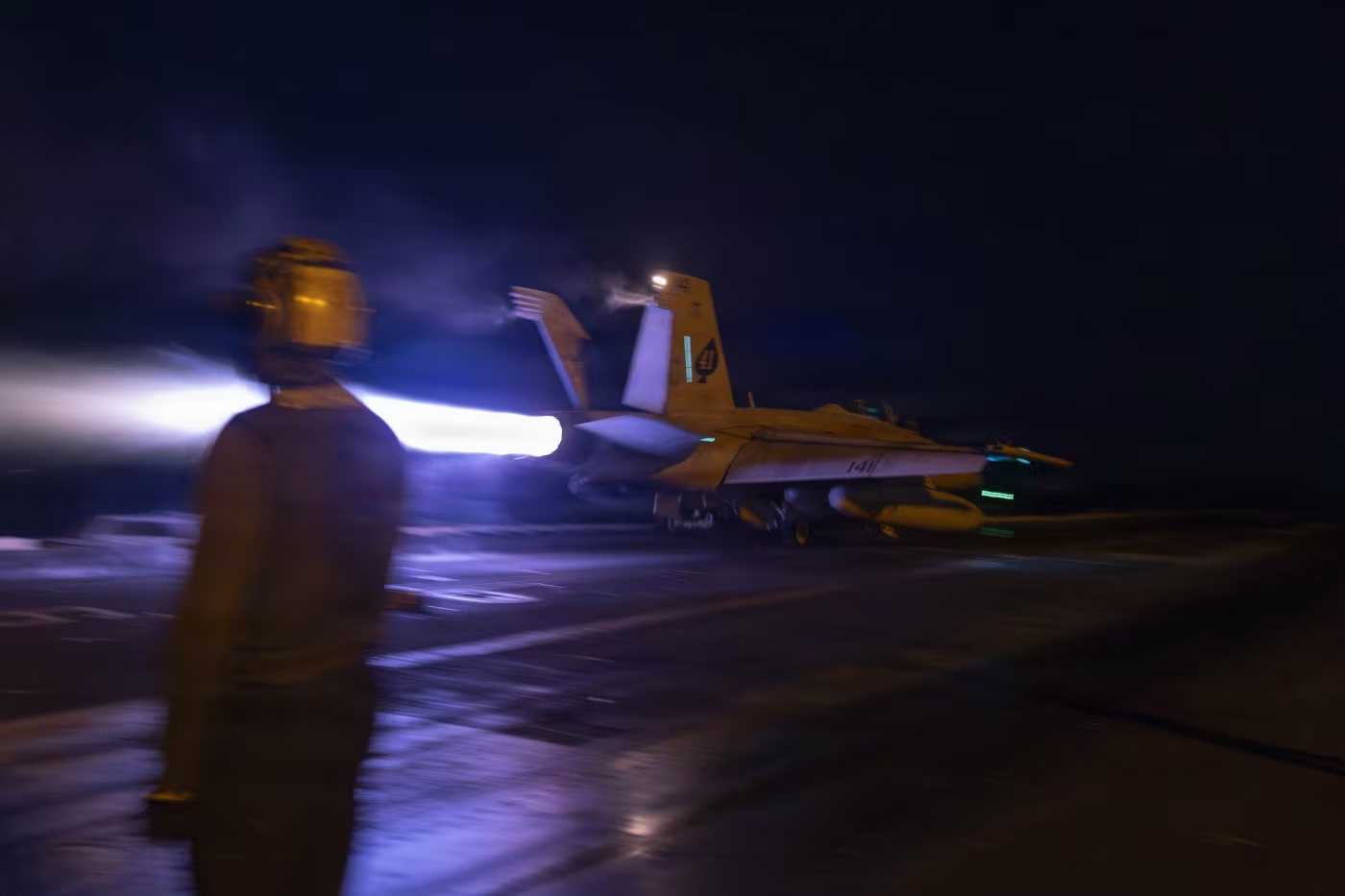
What Is Happening in Israel and the Persian Gulf States
On the night of March 2, Iran carried out another wave of strikes—the ninth in total—against Israel and U.S. targets in the region. Air-raid warning systems were activated in various parts of Israel, but there were no reports of casualties. Reports of explosions also came from Dubai, Doha, and Bahrain.
According to The Wall Street Journal, citing a senior U.S. administration official, Iranian drones attacked Erbil airport in northern Iraq, where a U.S. military base is located. The source said the facility sustained no significant damage and there were no casualties. U.S. Central Command confirmed the strike on the airport.
Videos of the aircraft’s crash quickly circulated, allowing journalists to identify the site west of the city of Al Jahra. Available footage suggests that at least one pilot managed to eject and survived. Iran’s Tasnim news agency, citing sources, claims the pilot was handed over to Kuwaiti security forces.
Footage shows an F-15 crashing west of Al Jahra, Kuwait. Cause (malfunction vs. shoot-down) is currently unknown. Both pilots apppear to have ejected and survived. Geolocated the crash site geolocated to west of Al Jahra in Kuwait (see tweets below). pic.twitter.com/KXR9NAFhqg
— Christiaan Triebert (@trbrtc) March 2, 2026
U.S. Central Command said that since the start of military operations in Iran, American forces have struck more than a thousand targets, employing over 20 types of aircraft, ships, missiles, and other weapons systems. These included B-2 Spirit strategic bombers, as well as “special capabilities that cannot be disclosed.”
The New York Times, after analyzing satellite imagery, video footage, and statements by U.S. military officials, concluded that Iran struck at least six U.S. sites across the Middle East. The attacks targeted military facilities in Bahrain, Iraq, and the United Arab Emirates, as well as three bases on Kuwaiti territory.
What Both Sides of the Conflict Are Saying
Iran has no intention of entering into any negotiations with the United States, Ali Larijani, secretary of Iran’s Supreme National Security Council, said. He wrote this on social media while commenting on a Wall Street Journal report that claimed Larijani had supposedly proposed resuming contacts with the White House through Omani intermediaries. Earlier, Donald Trump said in an interview with The Atlantic that Iran’s new leadership had itself approached him with an offer to return to talks, and that he had agreed.
Who might replace the slain Ayatollah Ali Khamenei remains unclear. In an interview with The New York Times, Trump said he had “three very good options” for Iran’s future leadership, but declined to name them. Asked about a possible transfer-of-power scenario, the U.S. president expressed hope that Iran’s elite military forces would “simply hand over their weapons to the Iranian people,” the NYT reported.
Trump estimated that the operation against Iran would last about four weeks “or even less”, he said in an interview with Britain’s Daily Mail. At the same time, the U.S. president acknowledged that American forces could suffer additional losses. A day earlier, Central Command reported that during Operation “Epic Fury,” three U.S. service members were killed in combat and five more were seriously wounded. “We have three, but we expect casualties. But ultimately, this will be a great deal for the world,” Trump said in an interview with NBC News.
The leaders of Germany, France, and the United Kingdom said they were “outraged” by Iran’s indiscriminate missile strikes on Persian Gulf countries and warned they were prepared to take necessary and proportionate defensive measures aimed at destroying Iran’s ability to launch missiles and drones.
Hezbollah Attacks Israel. The IDF Strikes Lebanon
Hezbollah launched rocket and drone attacks on northern Israel overnight on March 2. The group said the assault was in retaliation for the killing of Iran’s supreme leader, Ayatollah Ali Khamenei. According to the Israeli side, one rocket was intercepted, while several others landed in uninhabited areas; no casualties were reported. In response, the Israel Defense Forces struck targets inside Lebanon, saying they hit Hezbollah’s headquarters and infrastructure facilities.
Shortly before the strike on Lebanon, Israeli forces issued an evacuation warning for residents of the country’s southern regions. Soon after, Israel Defense Forces Chief of Staff Eyal Zamir announced the launch of an offensive operation against Hezbollah. He said Israel had long prepared for a “multi-front” scenario and stressed that any adversary threatening the country’s security would “pay a heavy price.”
Lebanon’s Ministry of Health said that 31 people were killed and another 149 wounded in the Israeli strikes. The television networks Al-Arabiya and Al-Hadath, citing sources, reported that those killed included Mohammed Raad, the head of Hezbollah’s political wing.
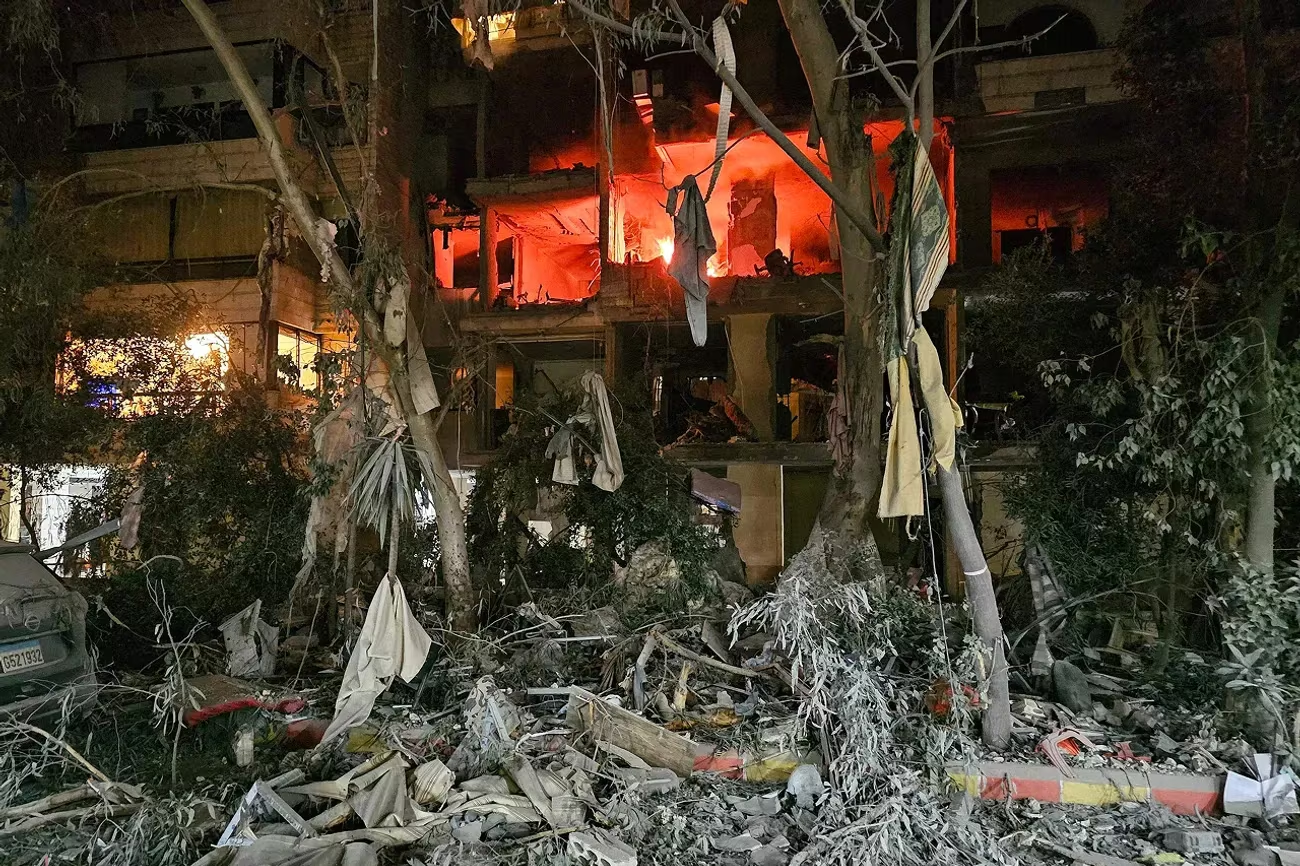
A fire in a building destroyed by an Israeli airstrike in Beirut’s southern suburb. March 2, 2026.
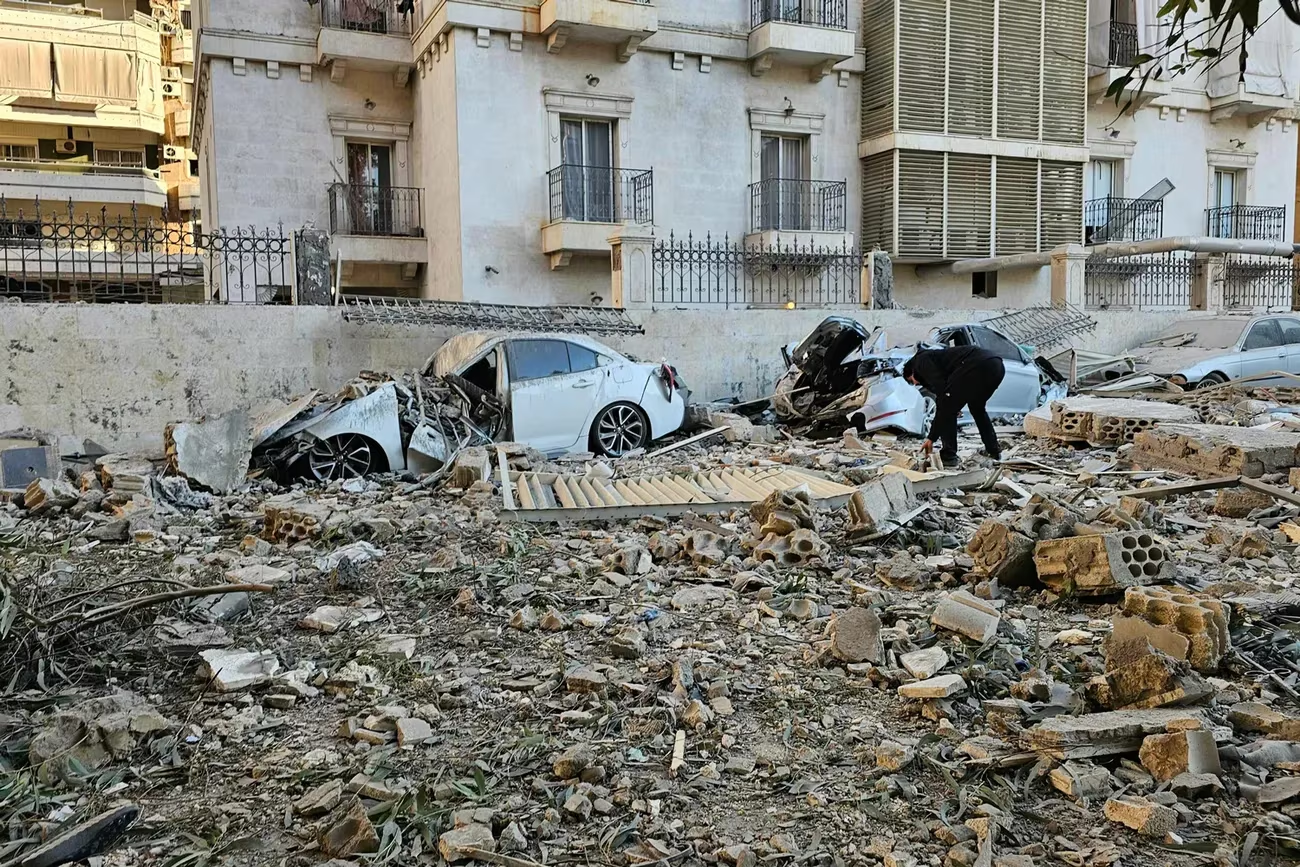
The site of an Israeli strike in Beirut’s southern suburb. March 2, 2026.
How Oil Prices Are Reacting
At the start of trading, Brent crude rose above the $80 mark per barrel. Prices climbed 13%—to $82, the highest level since the summer of 2024. Later in the session, prices pared gains and slipped back to around $79.
Stock markets in the United Arab Emirates will be closed on Monday and Tuesday, March 2–3, the UAE’s Securities and Commodities Authority said. In a statement, the regulator said it would continue to closely monitor developments in the region and regularly assess risks, taking additional measures if necessary. As Reuters notes, the Abu Dhabi Securities Exchange and the Dubai Financial Market list shares of the region’s largest and most valuable companies.