Thailand’s luxury hotels—from Andaman Sea beach resorts to Bangkok’s iconic riverside properties—are increasingly pivoting toward the domestic market, offering steep discounts as the flow of foreign tourists declines. One of the factors has been disruptions to air travel linked to the conflict in the Middle East.
For Thai nationals and expatriates, prices at five-star hotels have fallen to as little as 70% below their usual levels. Rooms that typically cost up to $1,000 per night are now available at significantly reduced rates. At the Mandarin Oriental—the oldest hotel in Bangkok overlooking the river—rooms are being offered for under $300 per night, including butler service and breakfast.
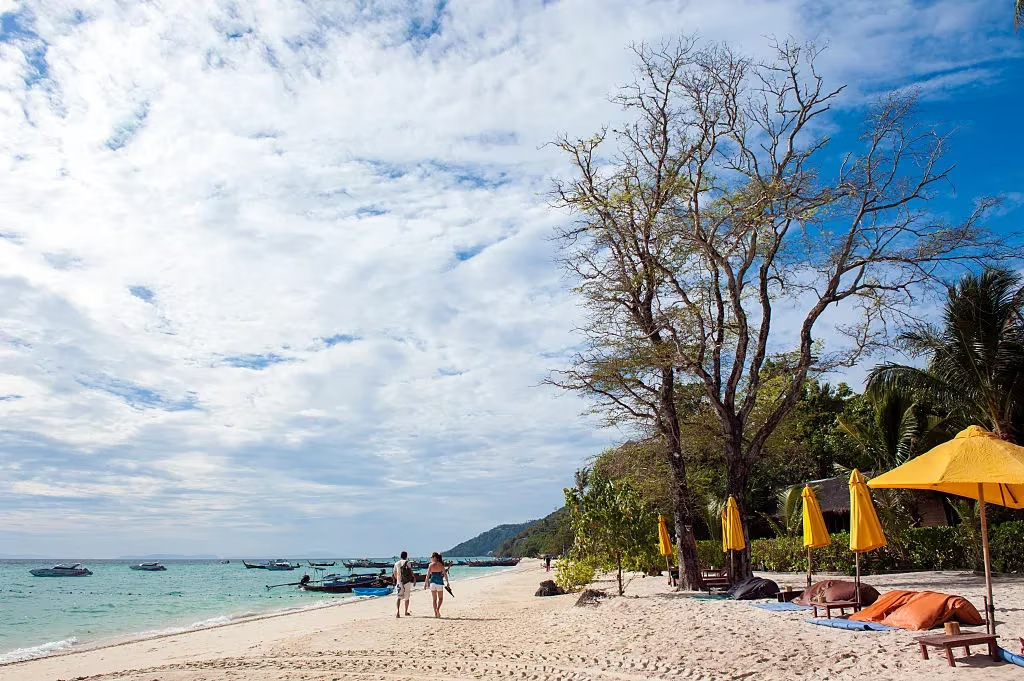
A similar pattern is emerging at resort destinations. One property on Railay Beach, set among limestone cliffs, is offering accommodation from $430 per night—nearly 50% below its standard rate. The offer applies to two-level villas built on the grounds of a former coconut plantation.
Flight reductions and airspace closures resulting from the war with Iran—particularly on routes between Europe and Asia that are critical for Thailand—are making travel more difficult and more expensive, already weighing on tourist numbers. Arrivals from Europe and the Middle East have fallen by 16% compared with typical levels just weeks after the conflict began.
Tourism accounts for roughly one-fifth of the country’s economy, and a prolonged slowdown could hit a sector still recovering from the pandemic.
The Tourism Authority of Thailand expects to welcome around 37 million foreign visitors this year—more than 11% higher than in 2025. Yet these projections are increasingly difficult to sustain: a figure below 33 million would mark a second consecutive year of decline. By mid-March, the country had received 7.9 million visitors, with China, Malaysia and Russia remaining its core markets
Industry representatives also warn that further increases in oil prices could weaken demand even more.
“The situation is deeply concerning—the mass-market segment of tourism will be hit the hardest,” said Bill Barnett, managing director of consulting firm C9 Hotelworks Ltd. “If you look at last year’s figures, can Thailand realistically meet these targets? Clearly, this year’s projections are already under threat.”
Deeply discounted offers are becoming increasingly widespread. A search for “hotel deals for Thailand residents” now yields dozens of properties advertising markedly lower rates. While such promotions are typical during the May–October rainy season—and some are tied to events such as the Mandarin Oriental’s 150th anniversary—the scale of current discounts also points to weakening external demand, echoing the pandemic period when the country lost tens of millions of visitors.
Even in the luxury segment—where guests are typically less sensitive to rising prices—the current markdowns signal a shift, Barnett notes. Room rates, which surged over the past three years, are beginning to adjust—partly due to increased supply, particularly in Bangkok, as well as expectations of weaker demand during the World Cup, when some travelers may opt to stay home and watch the matches.
Similar trends are emerging elsewhere. In Dubai, premium hotels are also cutting rates and promoting staycation packages for residents amid a drop in international arrivals, while across the world tourism operators are offering discounts and alternative options as long-haul demand weakens.