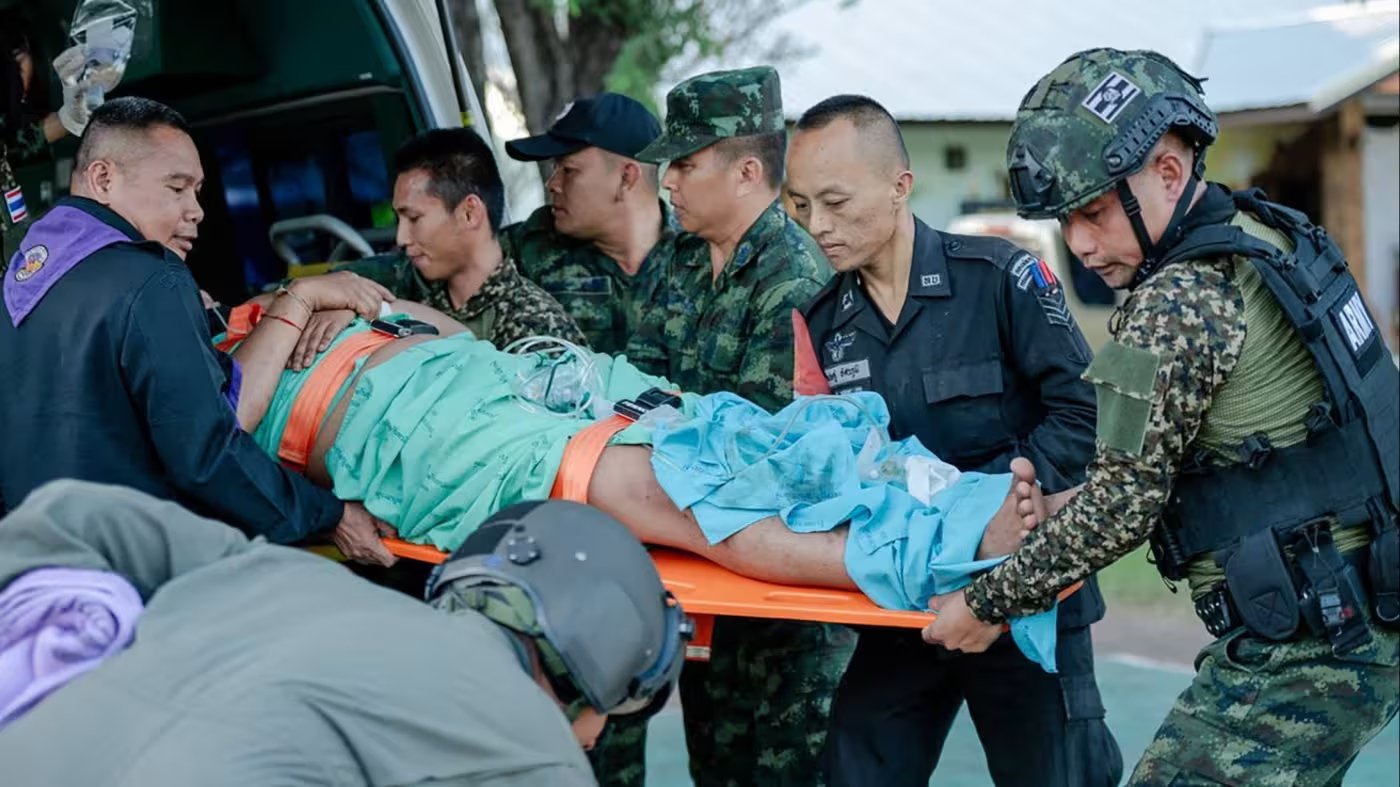
Thailand carried out airstrikes on Cambodian territory after border clashes that left one Thai servicemember dead. The attack effectively shattered the ceasefire brokered earlier with the mediation of Donald Trump.
Both sides accused each other of igniting a new surge of violence—the most serious since the five-day conflict in July, when at least 48 people were killed and around 300 000 residents were forced from their homes.
On Monday, December 8, the Thai army said it launched a retaliatory strike after Cambodian forces opened fire in Ubon Ratchathani province, killing one Thai soldier and wounding eight. According to the military, Cambodia also used BM21 rocket systems, striking a civilian settlement in Buri Ram province.
The Royal Thai Air Force said Cambodia’s actions “posed a direct threat to Thailand’s national security, the safety of residents in border areas, and Thai personnel operating in the region.” The air force stressed that its strikes targeted only military facilities.
Cambodia’s Ministry of Defense, in turn, accused its neighbour of initiating “cruel and inhumane” attacks on its servicemembers. The statement said Thailand “for many days carried out numerous provocations… seeking to trigger clashes.” Cambodia, the ministry added, had not responded in kind and continues to monitor the situation.
The ministry also rejected Thailand’s claims that it had deployed heavy weaponry near the border.
Cambodia’s information minister, Neth Pheaktra, wrote on Facebook that four civilians had been killed and nine wounded. He said tens of thousands of people had been forced to flee their homes.
The renewed fighting has upended the Trump-brokered ceasefire that halted the July clashes—the bloodiest confrontation between the two countries in a decade—rooted in a border dispute that has persisted for more than a century.
In a statement, Hun Sen, Cambodia’s former dominant leader and the father of current prime minister Hun Manet, called Thai forces “aggressors” and urged Cambodia’s military to “exercise patience.”
“The red line for a response has already been drawn,” he said.
At the heart of the conflict are competing territorial claims over several temples along the countries’ shared 800-kilometre border and the surrounding lands.
One of the main flashpoints remains the 11th-century Preah Vihear temple. Cambodia bases its claim on a 1907 map produced under French colonial rule. In 1962, the International Court of Justice recognised the complex as Cambodian territory, yet Thailand has continued to maintain a military presence in the area.
In July, the two sides agreed to a ceasefire after the US president threatened to suspend talks on American tariffs—critical to both economies. In October, they signed a peace accord in Trump’s presence at a summit of the Association of Southeast Asian Nations in Kuala Lumpur.
Tensions, however, persisted. In November, Thailand unilaterally withdrew from the agreement, accusing Cambodia of planting new mines that injured several Thai soldiers in the disputed zone. Cambodia rejected the allegations, saying it remained committed to the deal.
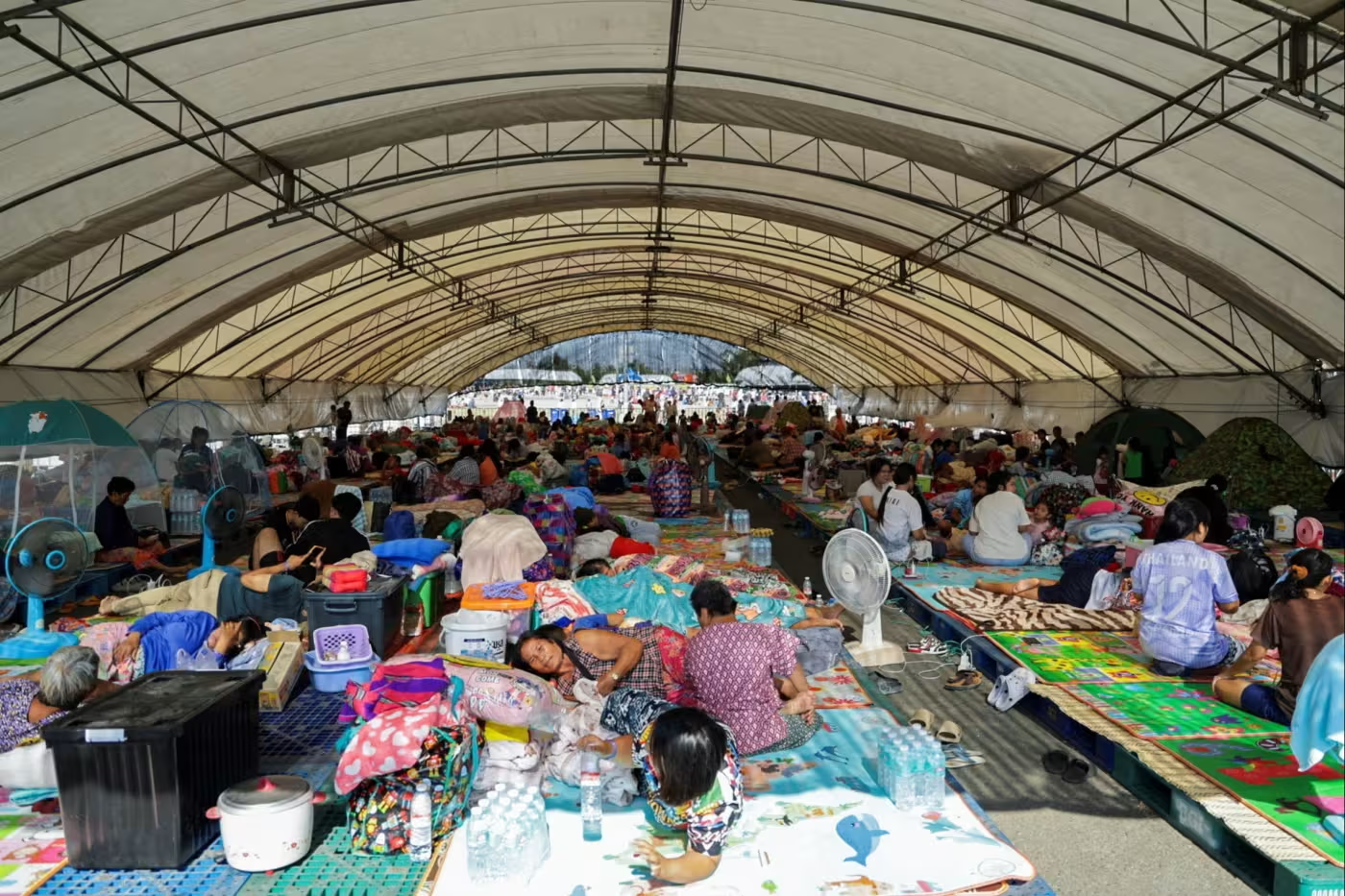
Thai residents take shelter in temporary accommodation. December 8, 2025.
Malaysia’s prime minister, Anwar Ibrahim, who mediated the ceasefire negotiations and witnessed the signing of the peace accord, voiced “deep concern” over reports of renewed fighting and urged both sides to show “maximum restraint.”
According to Tita Sangli, a research fellow at the ISEAS–Yusof Ishak Institute, the truce was never viable because it was “in essence imposed by major external powers and by Malaysia as ASEAN chair.”
She noted that “the core issue is a territorial dispute that is extraordinarily difficult to resolve: the two countries rely on entirely different maps and advance fundamentally different approaches.” Thailand insists on bilateral talks, while Cambodia seeks further rulings from the International Court of Justice.
“Both sides are now likely to strike harder in an effort to gain ground before the next ceasefire,” she said. “How quickly this ends will depend on how—and when—external powers choose to intervene.”