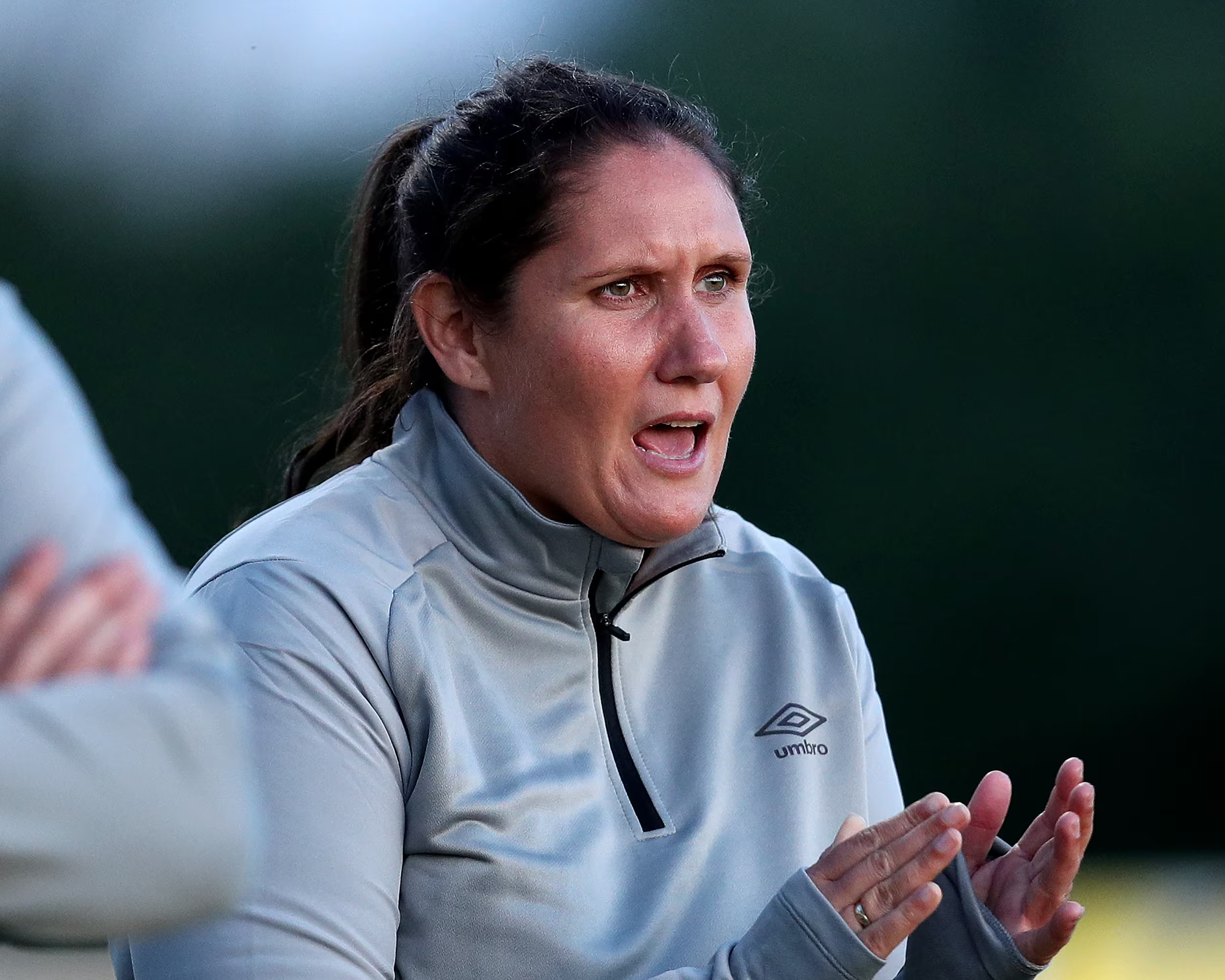
Women face systemic sexism, discrimination and workplace bullying that shut them out of careers in sport, experts told British MPs.
At a meeting of Parliament’s Women and Equalities Committee on Thursday, experts said female coaches are routinely overlooked, undermined and denied opportunities despite their qualifications.
“These hostile environments are terrible for women trying to build a career in sport. It is so bad that it is unfair to put women in those environments,” said Lisa West, head of policy at Women in Sport.
Experts said the consequences extend far beyond individual careers. The first session of the committee’s new inquiry, Beyond Participation: Routes into Sport for Girls and Women, focused not only on girls’ and women’s participation in sport, but also on their access to professional roles.
“A coaching system that sidelines women risks depriving female athletes of role models, narrowing the talent pool and reinforcing the message that, even in a rapidly changing sporting landscape, the most influential positions remain male territory,” said Lisa Williams, head coach of the London All Stars women’s basketball team.
The committee was told that one in five female coaches had experienced harassment or bullying. Participants in the hearing said this reflected entrenched biases that continue to shape who is trusted, who is promoted and whose words are taken seriously in sport.
Experts described the everyday sexism female coaches face from a wide range of people—from athletes’ parents to male colleagues.
“And it is not getting better,” Williams said. “Although women are very reluctant to report incidents—because there are no rules and no sanctions—we are seeing an increase in reports from women about bad experiences.”
The committee also heard that even highly qualified women are still passed over in favor of men with less experience. Hannah Dingley, head of the girls’ academy at Manchester City Football Club, said she herself had been directed mainly toward working with younger age groups.
“I was only offered roles coaching under-9s, even though I was more qualified than many of the male coaches being hired for older age groups,” she said. “It was assumed that I was too maternal, empathetic and soft to work at the highest level of elite sport.”
Despite the growth of women’s sport, women hold only about a quarter of coaching roles in programs funded by UK Sport. Their presence in technical leadership roles is even smaller.
Emily Handisides, head of coaching at UK Coaching, and Amy Fazakerley, national partnerships manager at the Coach Core Foundation, pointed to the scale of the problem.
“The number of women in coaching fell by 10% in grassroots sport between 2022 and 2024—and by 6% at the elite level,” Handisides said. “The steepest decline we are seeing is among women aged 18 to 34.”
A recent UK-wide survey by UK Coaching and Women in Sport found that harassment, bullying and discrimination remain key reasons why women leave coaching altogether. Many respondents said they do not feel safe or supported in an environment dominated by men.
India Perris-Redding, women’s talent ID manager at Sale Sharks Women, cited unpublished research commissioned by Premiership Women’s Rugby and the Rugby Football Union. According to that research, 76% of female coaches believe there is a gender gap in how professional performance is assessed in high-level rugby.
“We do not have a single woman as a team head coach, and nor is there one internationally with the England team,” she said.
Emma Hayes, the former Chelsea Women head coach from 2012 to 2024, was one of the most outspoken figures in elite sport to speak about the culture women face in football. “The reality is that male privilege has always been at the center of football in this country,” she said in 2023, adding that women in the sport “regularly face systemic misogyny and bullying.”
England women’s head coach Sarina Wiegman has also spoken about the structural imbalance in football. “I think in every sector women are in higher positions, so it is a little strange that this is not the case in football. Hopefully, that will change quickly,” she said. “We need more women in football, so extra things need to be done for that.”
Former England head coach Tracey Neville has also said women are “still fighting for recognition and respect for what we do.”