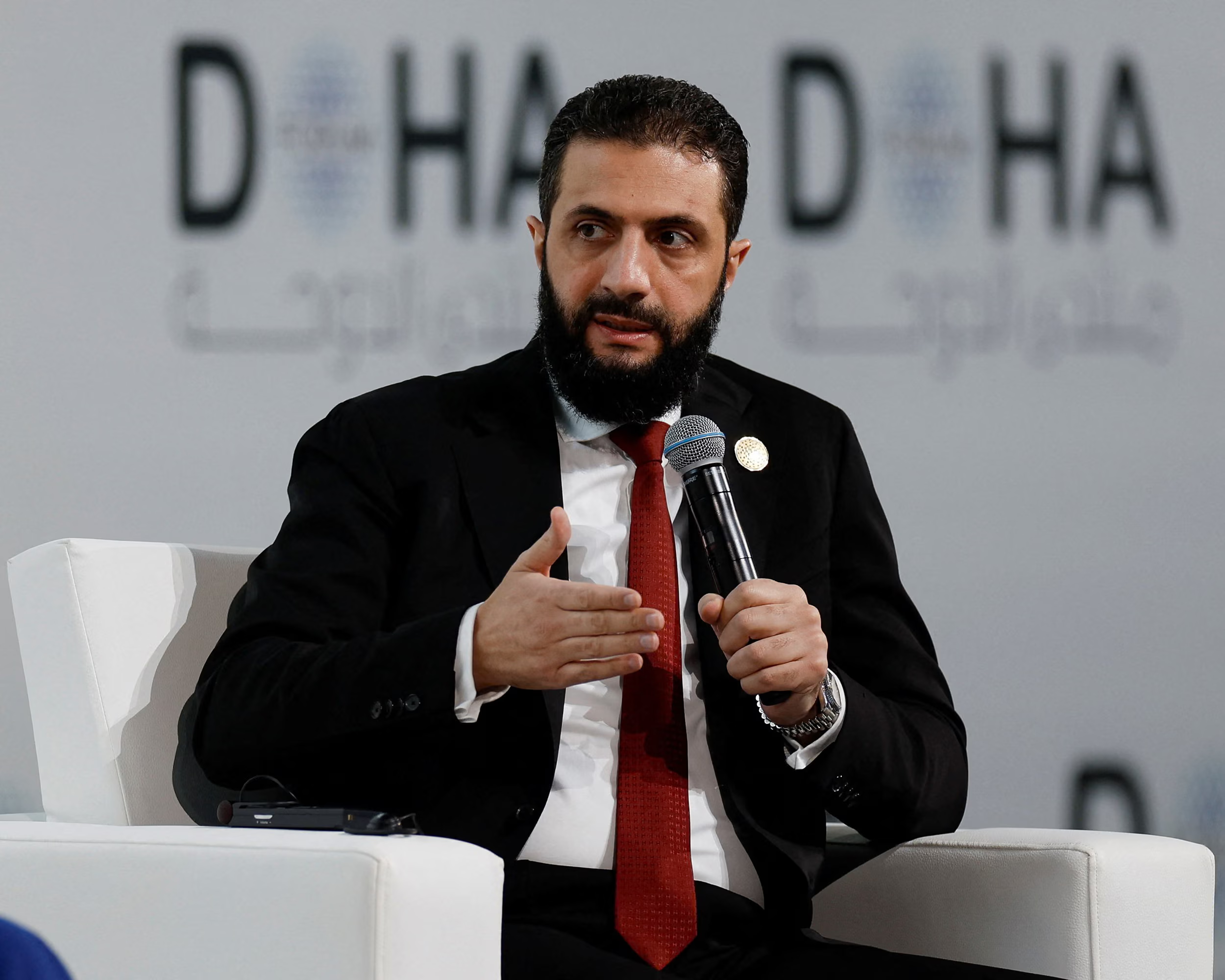
Syria’s interim president has accused Israel of waging a war against “ghosts” and offloading its own crises onto other countries in the aftermath of the Gaza conflict.
Ahmed al-Sharaa’s remarks came amid continuing Israeli airstrikes and incursions in southern Syria. Speaking at an international conference in Doha on Saturday, he noted that Damascus had consistently upheld the 1974 disengagement agreement, which, he said, “has held for more than 50 years—in one form or another it remains a successful accord”. Efforts to revise it “and to pursue alternative arrangements, such as a demilitarised zone, could push us into a dangerous situation with unpredictable consequences”.
After the fall of Bashar al-Assad’s regime a year ago, Israeli forces entered the UN-patrolled buffer zone in the occupied Golan Heights and have since carried out regular incursions deeper into Syrian territory. The sense of insecurity among residents in the districts south of Damascus is growing.
Sharaa stressed that since taking office a year ago he had been sending Israel “positive signals in favour of regional peace and stability”. Yet, he said, Israel “projects” its conflict with Hamas militants onto a wider circle of states and justifies aggressive actions in the name of security. “Israel has become a state fighting ghosts,” he said. “They justify everything with security claims—they take October 7 and extend it to everything happening around them.” He added that Israel had become a country that “exports crises”.
According to Sharaa, “Israel responded to Syria with extreme brutality, carrying out more than 1 000 airstrikes and conducting 400 incursions into its territory. The latest attack was the massacre in the town of Beit Jinn on the outskirts of Damascus, where dozens were killed.”
He said Syria was working with “influential” states to press Israel to withdraw from occupied territory. “Talks with Israel are under way, the US is participating alongside us, and all countries support our demand to return to the lines that existed before December 8.”
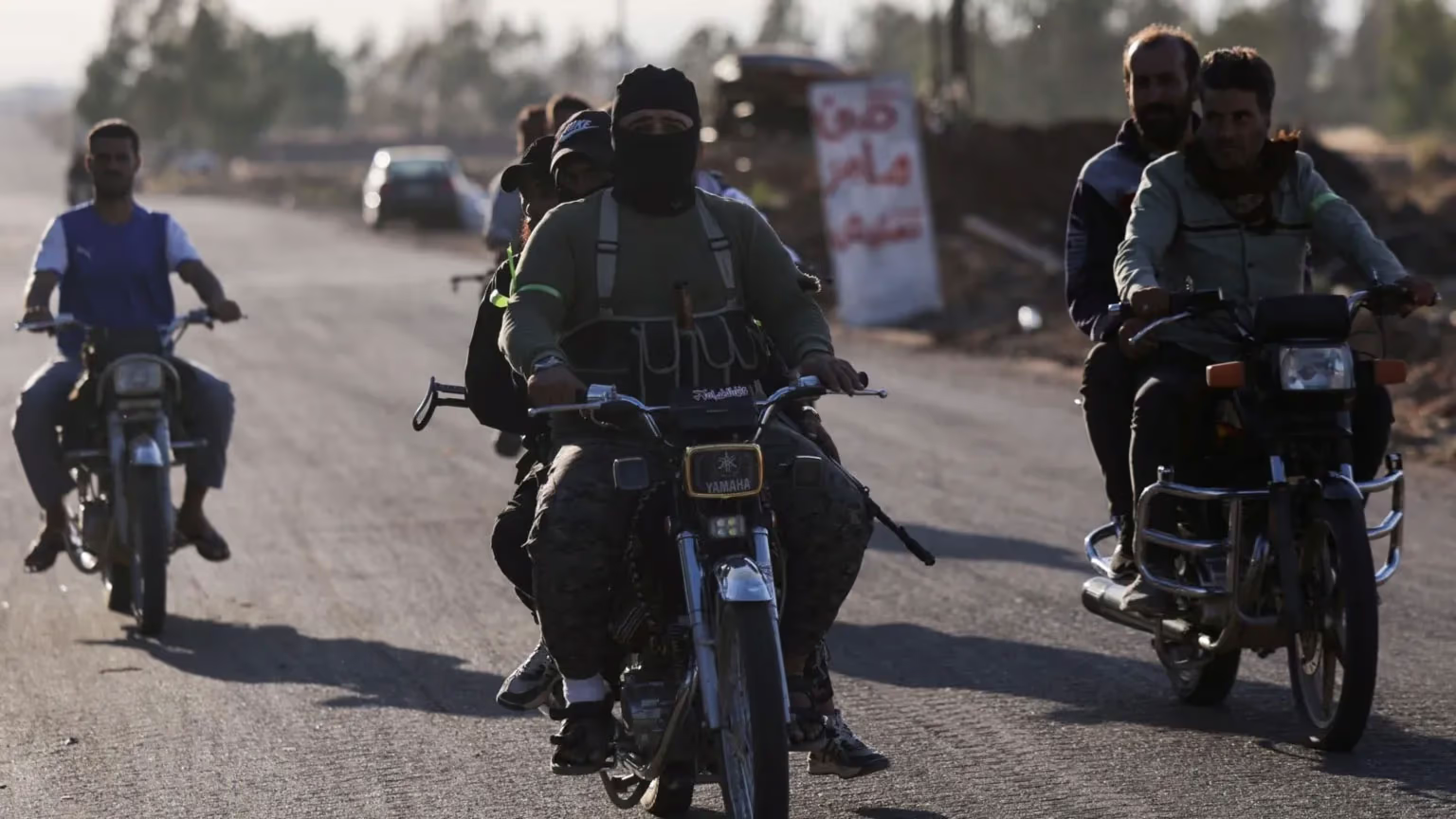
594 Killed in Suwayda in One Week as Syrian Army, Druze, and Bedouins Fight for Control of the Province
Israel Strikes Syria, Citing the Need to Protect the Druze
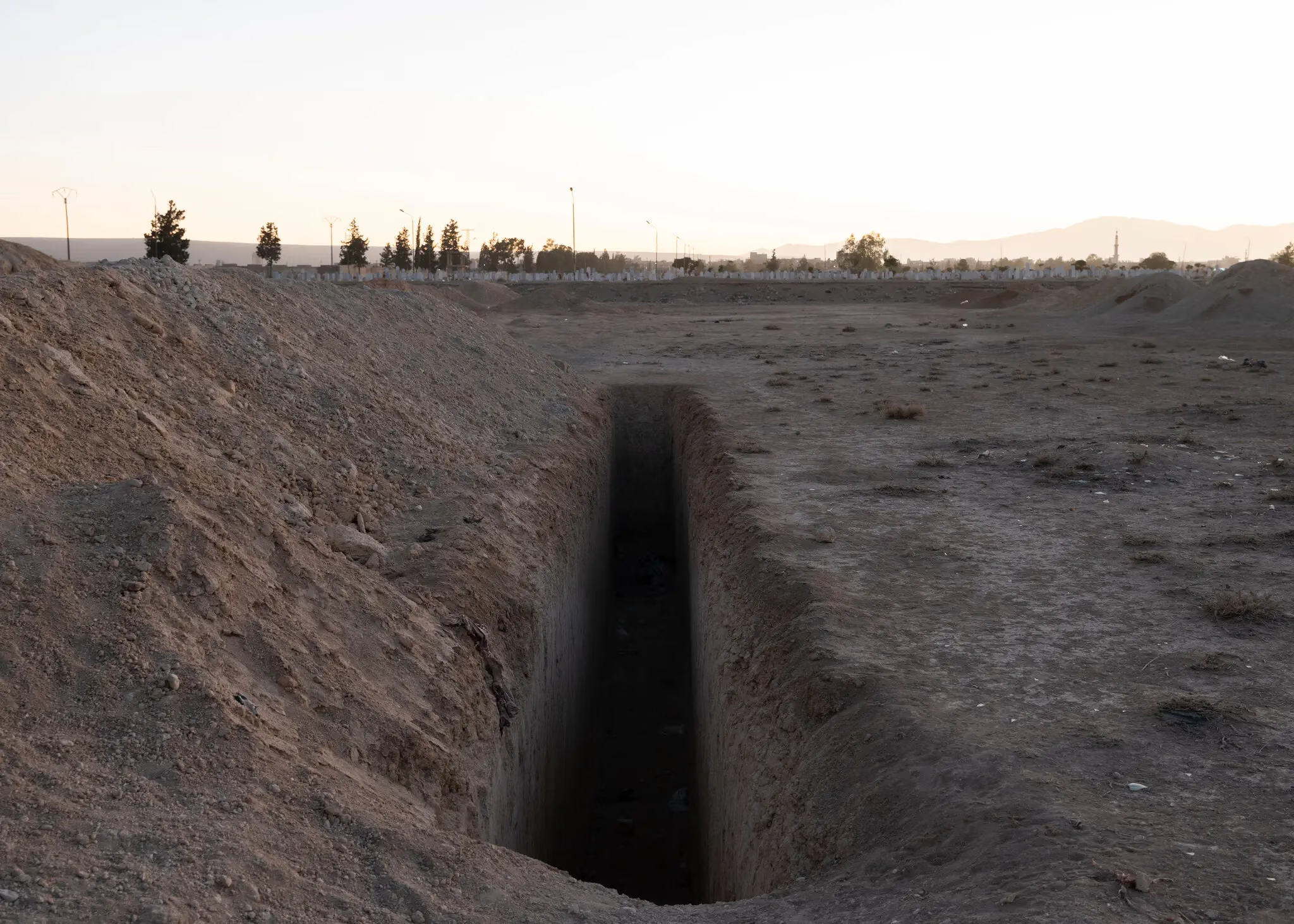
Thousands of Syrian Families Are Still Searching for Those Missing During the War
The Uncovering of Mass Graves Is Moving Slowly: the New Authorities Lack Both Resources and Technical Expertise
Donald Trump warned Israel last week that it must work with the Syrian president, signalling that he does not support Israeli incursions on Syrian territory.
Sharaa noted that the idea of establishing a demilitarised zone raises numerous questions for Syria, above all: “who would safeguard such a zone in the absence of the Syrian army?” Israel claims it fears the infiltration of groups linked to Hamas or that Sharaa could move into Israel without a reliable buffer. Israel has taken control of 400 sq km of the demilitarised zone in southern Syria.
Sharaa, who spent time in US-run prisons in Iraq, was received as a star at the conference. He stressed that “any agreement must take Syria’s interests into account, because it is Syria that is coming under attack from Israel”.
He also asserted that “Syria is a developed state”, pointing to the recent elections to the People’s Assembly. The vote was criticised as structurally tilted in favour of the current interim leadership. Sharaa insisted the election had been held “in a form appropriate for the transitional phase”, adding that “the people’s right to choose those who govern them is a fundamental principle”.
He pledged to hold fully fledged elections in four years and said women in Syria have nothing to fear—the ones who should be concerned, he suggested, are men.