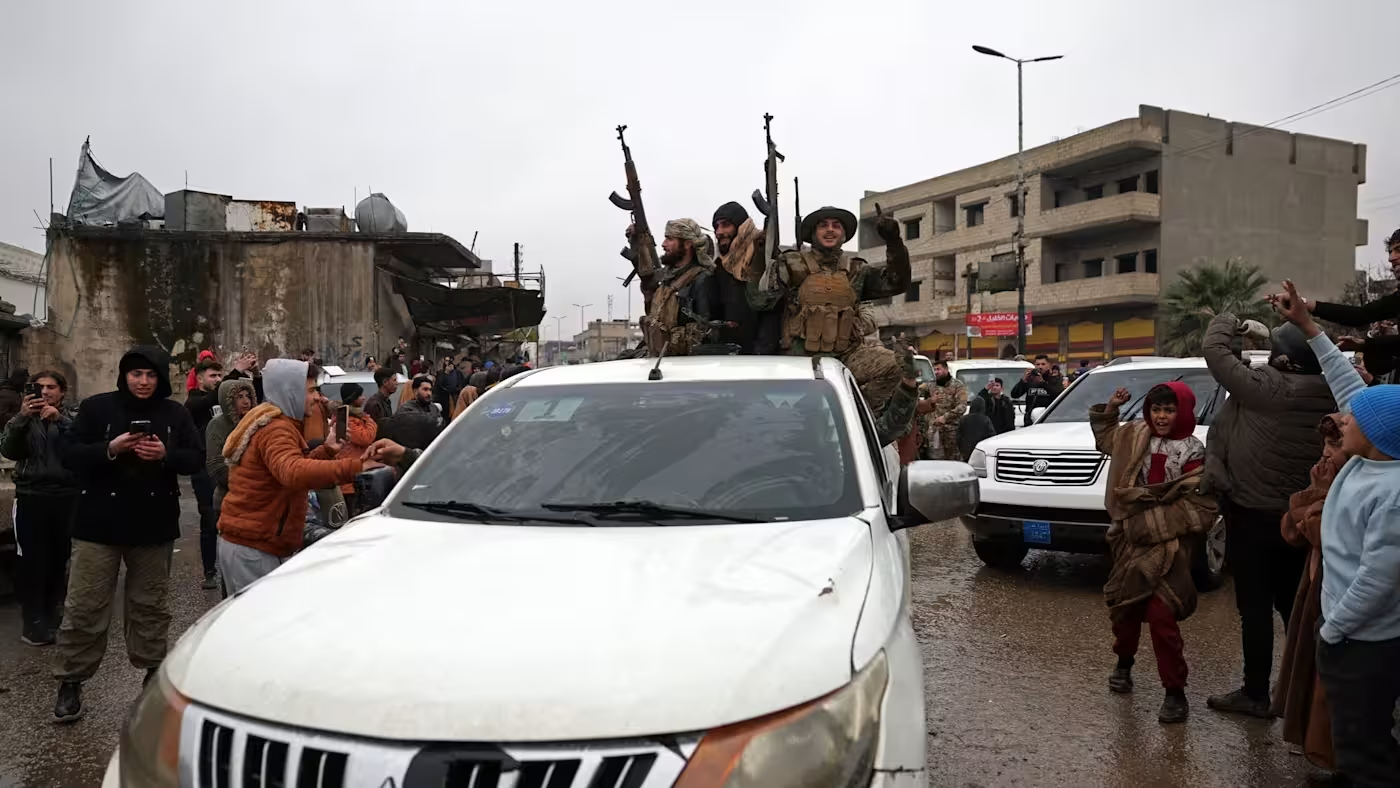
Syrian government forces have launched a large-scale advance in the country’s northeast, capturing the city of Tabqa and dozens of settlements previously controlled by Kurdish authorities. The offensive has triggered new clashes with the Syrian Democratic Forces and cast doubt on the survival of Kurdish control over territories they had administered on an autonomous basis for many years.
Syrian government forces have pushed into northern territories previously held by Kurdish authorities, seizing a number of settlements and provoking new clashes. These developments threaten the Kurds’ ability to retain regions they had effectively governed on an autonomous basis for years.
The military said that on Sunday the city of Tabqa in northeastern Syria had been taken, along with dozens of predominantly Arab-populated settlements west of the Euphrates River.
The advance marks a sharp escalation in ongoing operations against the Syrian Democratic Forces—a predominantly Kurdish armed formation that has refused to integrate into the armed forces of President Ahmed al-Sharaa since his rise to power in December 2024.
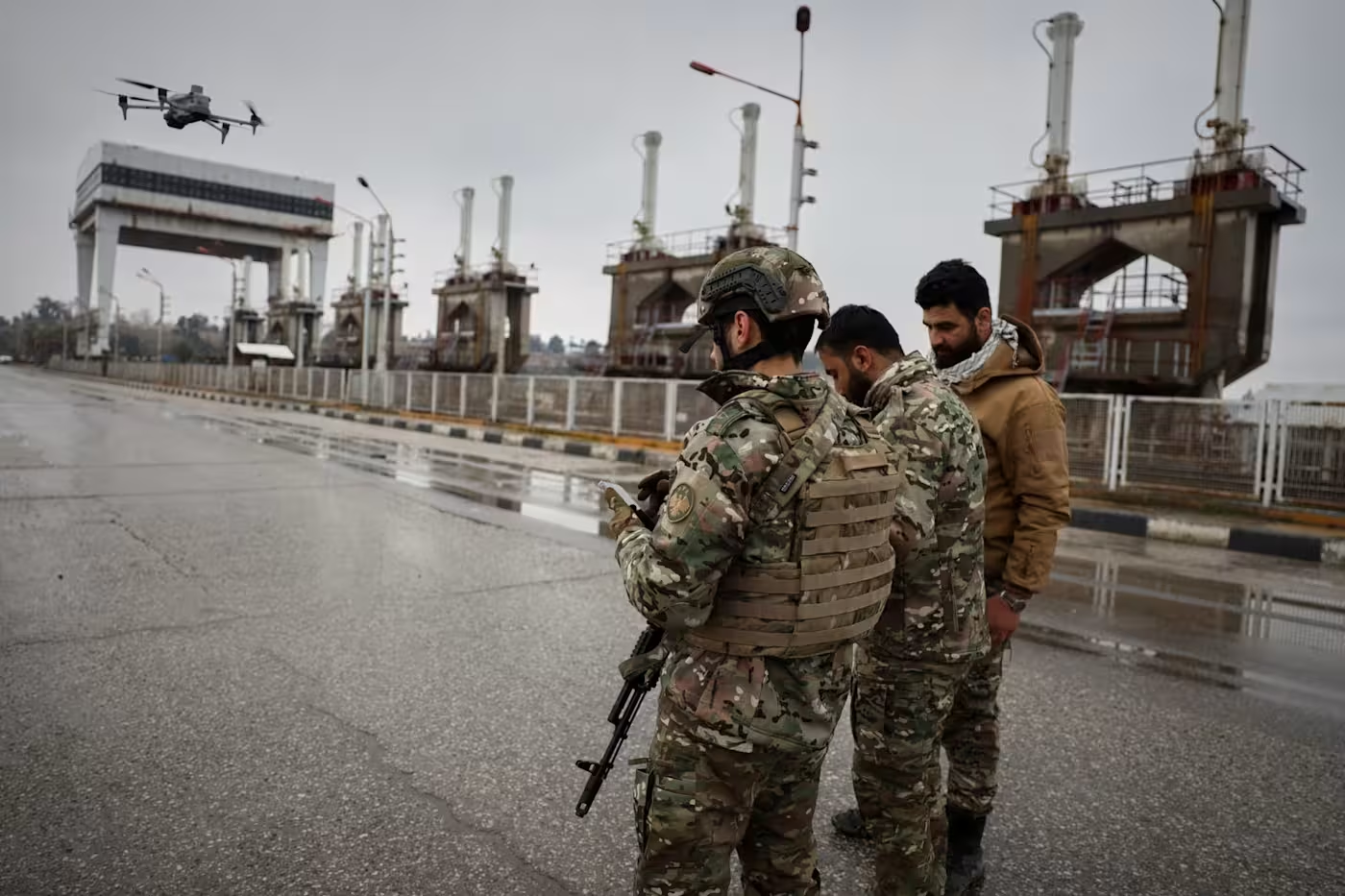
It remains unclear how far government forces intend to push into Kurdish-held areas. Tabqa, however, carries strategic weight: it hosts a military base and a key dam that regulates water supplies southward—to other areas controlled by the SDF. The city also sits on the approaches to Raqqa, the largest urban center administered by Kurdish authorities.
Earlier this month, government troops wrested the major northern city of Aleppo from the SDF—a force that in the past had enjoyed Washington’s backing in the fight against Islamic State militants.
Syria’s state news agency SANA reported on Sunday that Kurdish forces had blown up a bridge in Raqqa, apparently in an attempt to slow the advance of government troops toward the city.
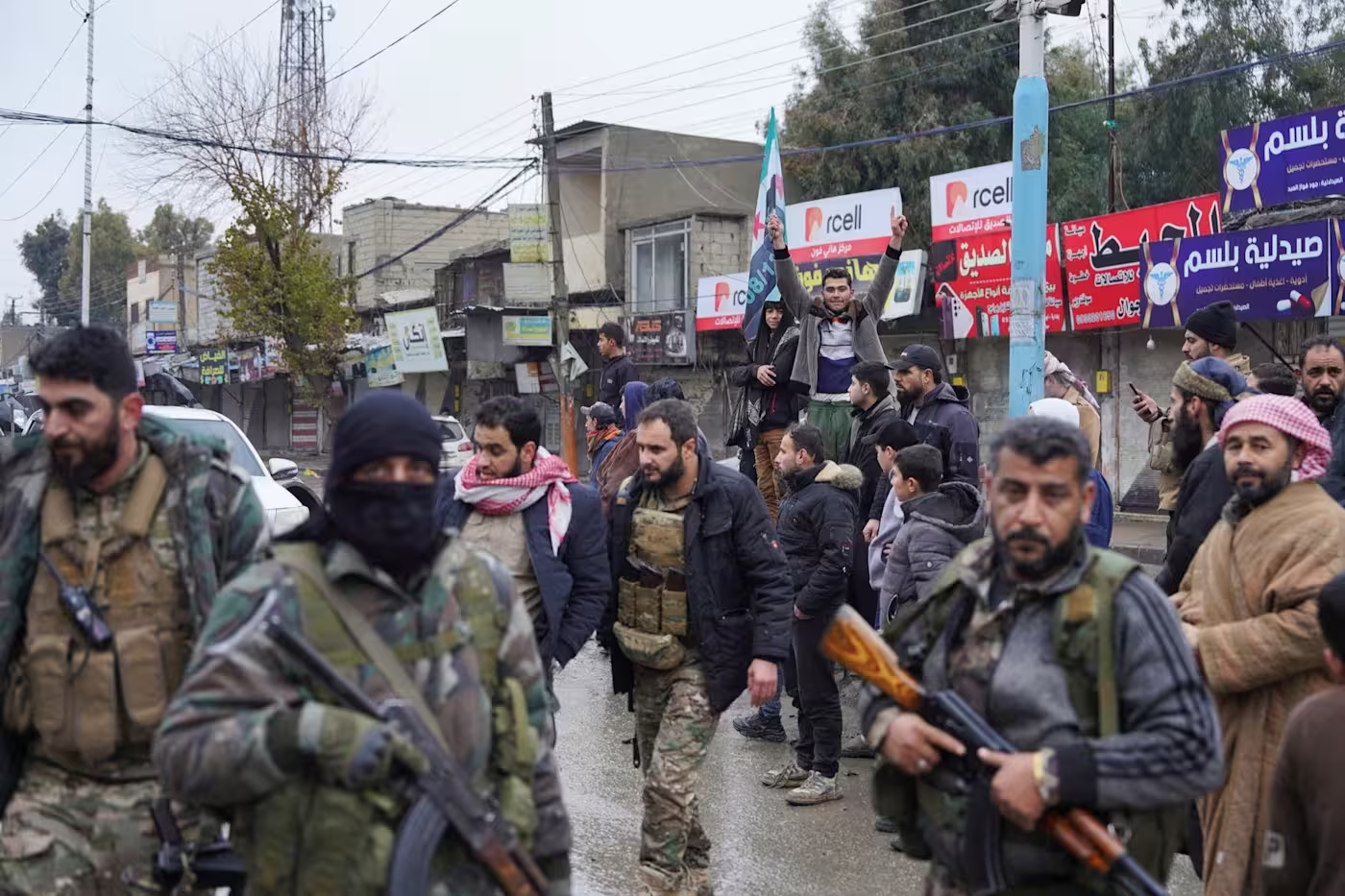
Government forces have also stepped up operations in Deir ez-Zor province, which is divided between the Syrian Democratic Forces and Damascus, hosts US troops, and contains several oil fields under Kurdish control. According to unconfirmed reports, formations loyal to Damascus have begun asserting control over at least two such sites. Their loss would deal a serious blow to the SDF, whose financial viability depends to a large extent on revenues from oil production.
For many years, the SDF have controlled vast swaths of northeastern Syria, administering them through their own system of self-rule that has also extended to areas with Arab majorities. Under their authority are prisons and detention centers holding tens of thousands of Islamic State fighters and members of their families.
However, after the overthrow of former dictator Bashar al-Assad in December 2024, the United States deepened security cooperation with Ahmed al-Sharaa. This has fueled concern within the SDF leadership that Washington’s backing could be withdrawn.
This week, following bloodshed in Aleppo, units of the Syrian army began deploying west of the Euphrates and opened a humanitarian corridor to evacuate civilians to government-held areas. SDF leader Mazloum Abdi said he was prepared to pull the group’s forces east of the river, but fighting resumed after government troops pushed deeper into Kurdish-held territory.
In an effort to open a dialogue with Syria’s Kurds, Ahmed al-Sharaa on Friday signed a decree reaffirming the rights of the minority. In a video address accompanying the document, he said: “Do not believe claims that we want to harm our Kurdish people.”
Since seizing power more than a year ago, Sharaa has pledged to reunite a fragmented country after 14 years of civil war. Yet he has struggled to consolidate control and win the trust of minorities wary of his Islamist orientation and the weak discipline of the forces under his command.
In March last year, Damascus and the Syrian Democratic Forces agreed to integrate Kurdish military and civilian structures into Syria’s state institutions by the end of 2025. Even so, despite months of negotiations, little tangible progress has been made, deepening frustration both in Damascus and among Western allies.
Washington has urged restraint and is pressing for a return to negotiations that the United States has actively helped broker over the past year.
In an effort to halt the fighting, US special envoy Tom Barrack traveled to northern Iraq on Saturday, where he met with SDF leader Mazloum Abdi and Kurdistan Regional Government president Masoud Barzani. According to Barrack, the United States is “in close contact with all parties in Syria—to de-escalate tensions, prevent escalation, and return” to negotiations.