On Monday evening, February 9, thousands of people gathered in the square in front of Sydney’s historic Town Hall. As chanting began and flags appeared, the rally quickly settled into the familiar rhythm of such protests—the participants expressed solidarity with Palestinians and protested Israel’s actions in Gaza.
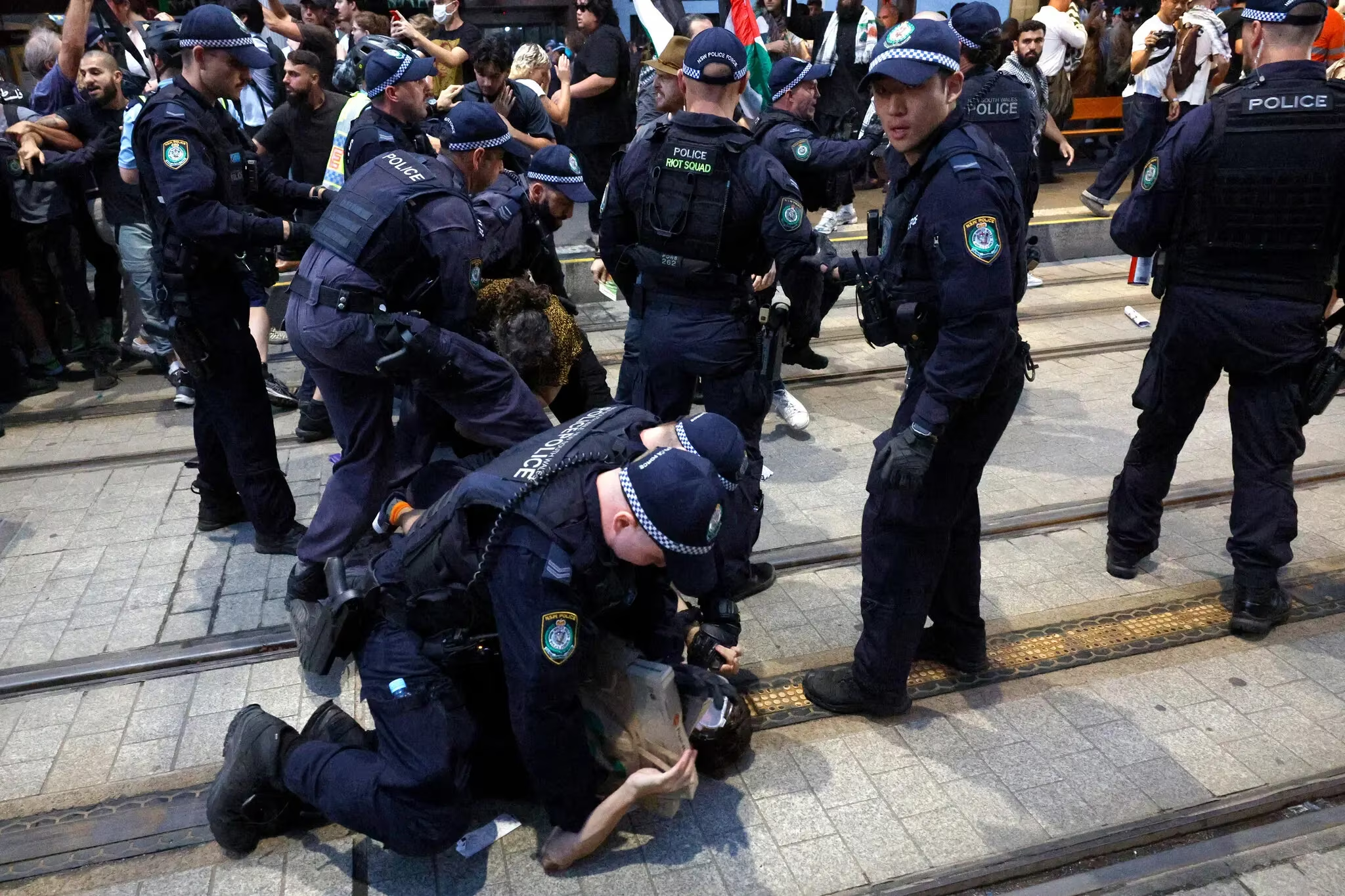
Several hours later, the situation changed. Some of those gathered attempted to move north, toward the Harbour Bridge. Their path was blocked by a line of armored police officers acting under expanded powers, who began pushing the protesters back.
Violent clashes followed. People were shoved, charged, sprayed with pepper spray, and thrown to the ground. Two police officers pinned a man in worn denim shorts to the asphalt and struck him several times on the head and side. One mother hurried her family away, wiping away tears—her eyes were red and irritated.
What unfolded reflected the uncertain and unfamiliar reality Australia has faced since the Bondi Beach shooting. For many protesters, the scenes appeared unprecedented for the country and resembled police crackdowns they had previously seen only on television in the United States. Some spoke of a narrowing of civil rights and freedoms.
Authorities detained 27 people. Nine of them—aged between 19 and 67—were charged with resisting police or assaulting officers.
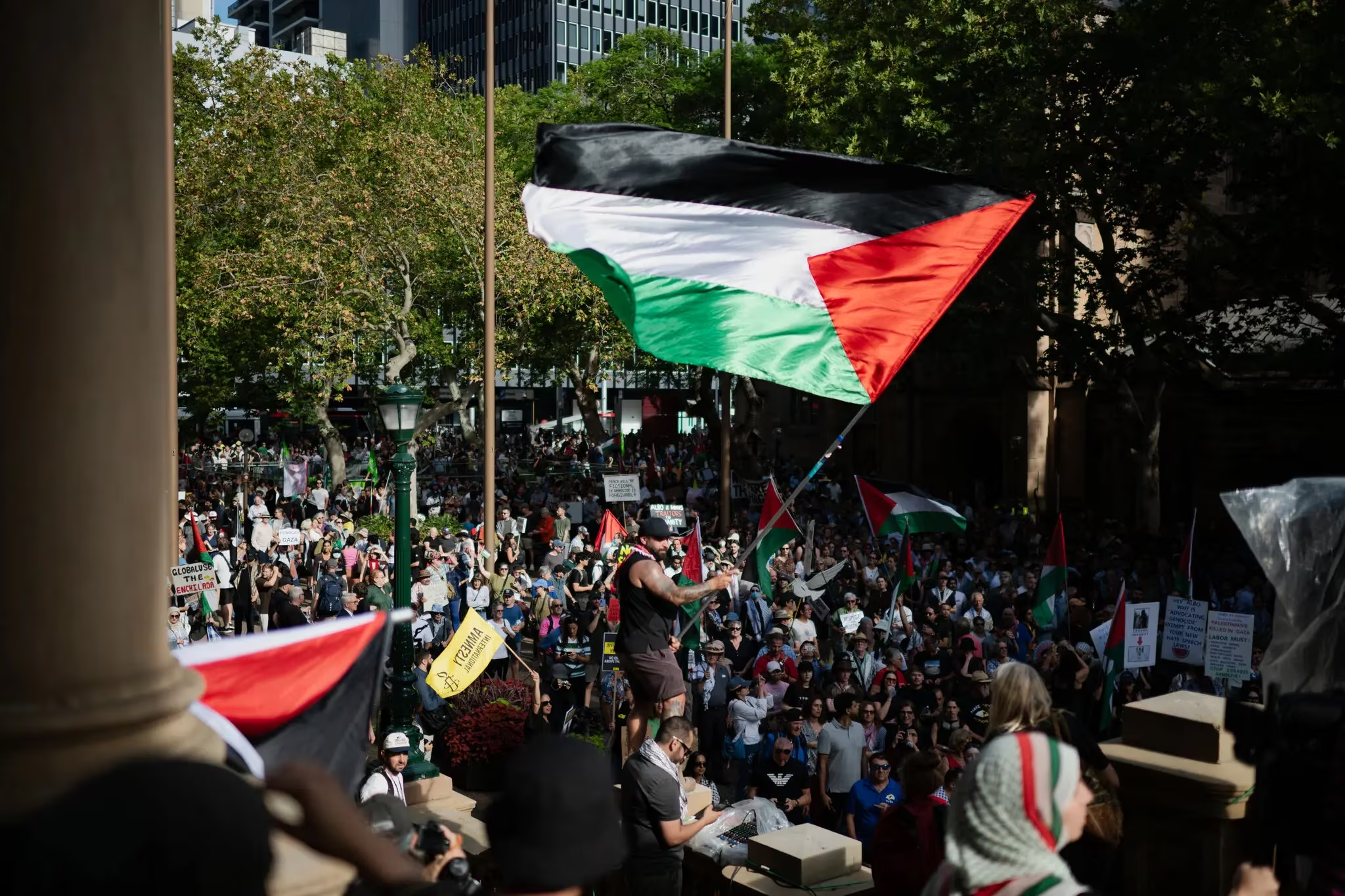
Protesters outside Sydney’s City Hall. Some participants said the clashes with police pointed to a threat to civil liberties in Australia. February 9, 2025.
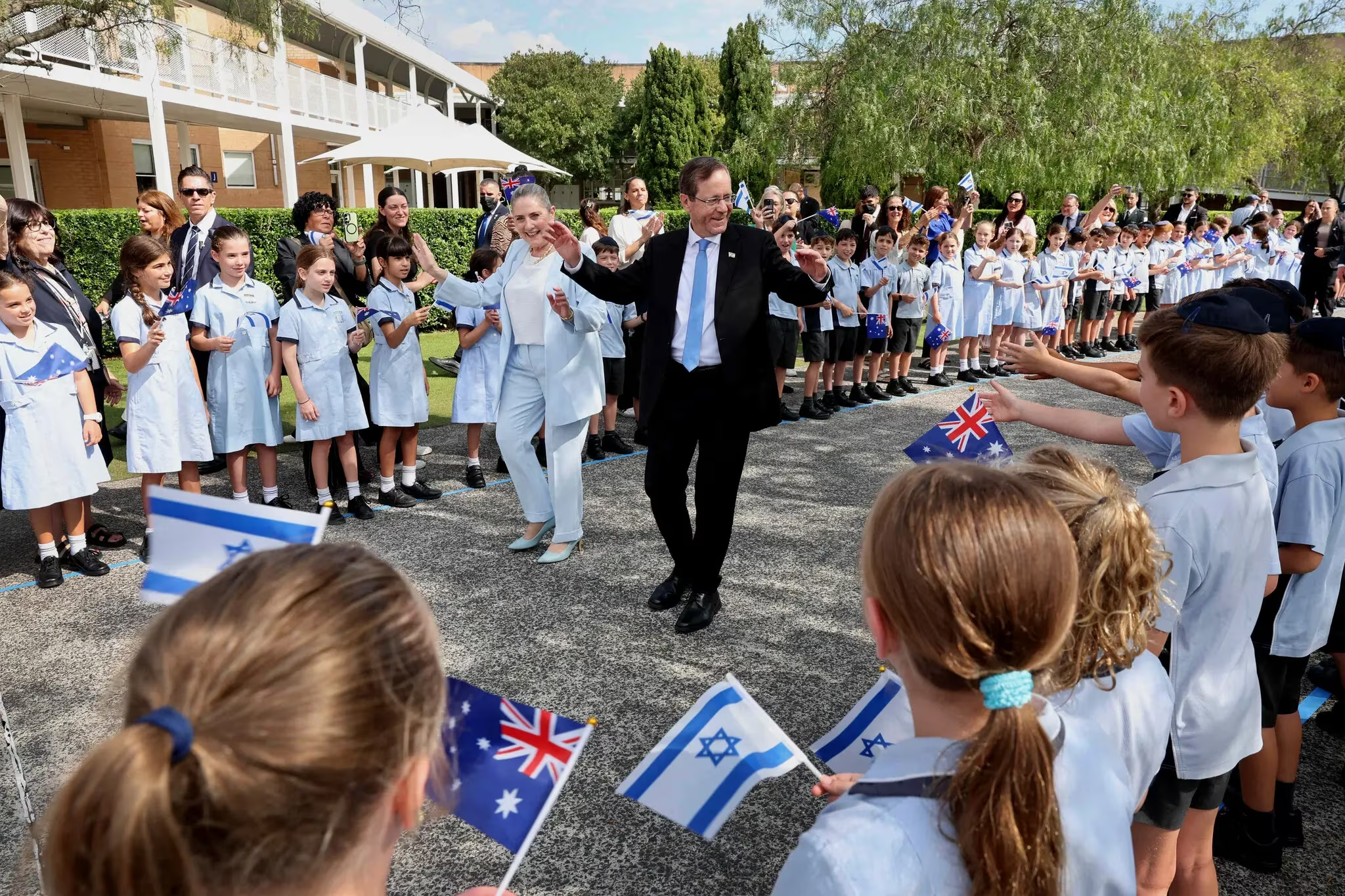
Tensions had been building even before Monday evening. Israeli President Isaac Herzog arrived in Sydney on a four-day visit to commemorate 15 people killed in December during a Hanukkah celebration. At the time, two armed men opened fire on participants; according to authorities, the attackers were guided by the ideology of the Islamic State and deliberately targeted Jews.
Authorities classified the incident as a terrorist attack. In its aftermath, state and federal leaders fast-tracked new laws expanding police powers, including measures to restrict protest activity and criminalize certain forms of expression. They justified the steps as a necessary response to what they described as a rise in antisemitism that had preceded the deadly attack.
Herzog was invited by Australian Prime Minister Anthony Albanese, who said the Israeli leader’s visit was intended to support the country’s Jewish community. After the Bondi Beach killings, however, some representatives of Australian Jewry said Albanese had previously done too little to counter the threat of antisemitism.
For critics, Herzog’s visit amounted to a de facto endorsement of Israel’s actions in Gaza following the attacks carried out on October 7, 2023, by Hamas militants. They pointed to Herzog’s statement that “the entire nation bears responsibility,” interpreting it as an attempt to justify civilian deaths resulting from retaliatory strikes.
Protesters outside Sydney’s City Hall. Some participants said the clashes with police pointed to a threat to civil liberties in Australia. February 9, 2025.
Among those who joined Monday’s rally was Lara Sherry, a 47-year-old piano teacher, who came with her 18-year-old daughter. She carried a placard reading, “Peaceful protest is the foundation of democracy.”
She had not previously taken part in demonstrations focused on Gaza, but decided to join after the Bondi Beach attack because, she said, she felt Australia’s civil liberties were under threat. “I see what is happening in the United States, and I don’t want us to go down that path,” she said. “The right to protest is a cornerstone of a properly functioning democracy, and I’m concerned that it is being eroded.”
The rally took place after authorities in New South Wales, the state that includes Sydney, designated Herzog’s visit a “major event.” The decision granted police additional powers typically used to manage crowds at large sporting events or concerts.
The Palestine Action Group, which has organized many of Australia’s largest protests against the war in Gaza, sought to overturn the designation in court. About an hour before the rally began, however, the court rejected the application.
On Tuesday, New South Wales Premier Chris Minns defended the actions of the police. He said the tough measures were necessary to ensure the safety of Sydney residents—including thousands of people gathered nearby for an event involving Herzog—in what he described as a “powder keg” environment. “It was an explosive situation that had to be brought under control,” he said.
Frank Bongiorno, a historian and professor at the University of Canberra, noted in turn that laws “passed in panic” after the Bondi Beach attack were restrictive in nature and largely set the stage for Monday’s clashes. “Minns has repeatedly spoken of the right to protest as strictly conditional, reserving the right to decide,” he said. “This government determines when a protest is deemed acceptable and in what form it is permitted.”
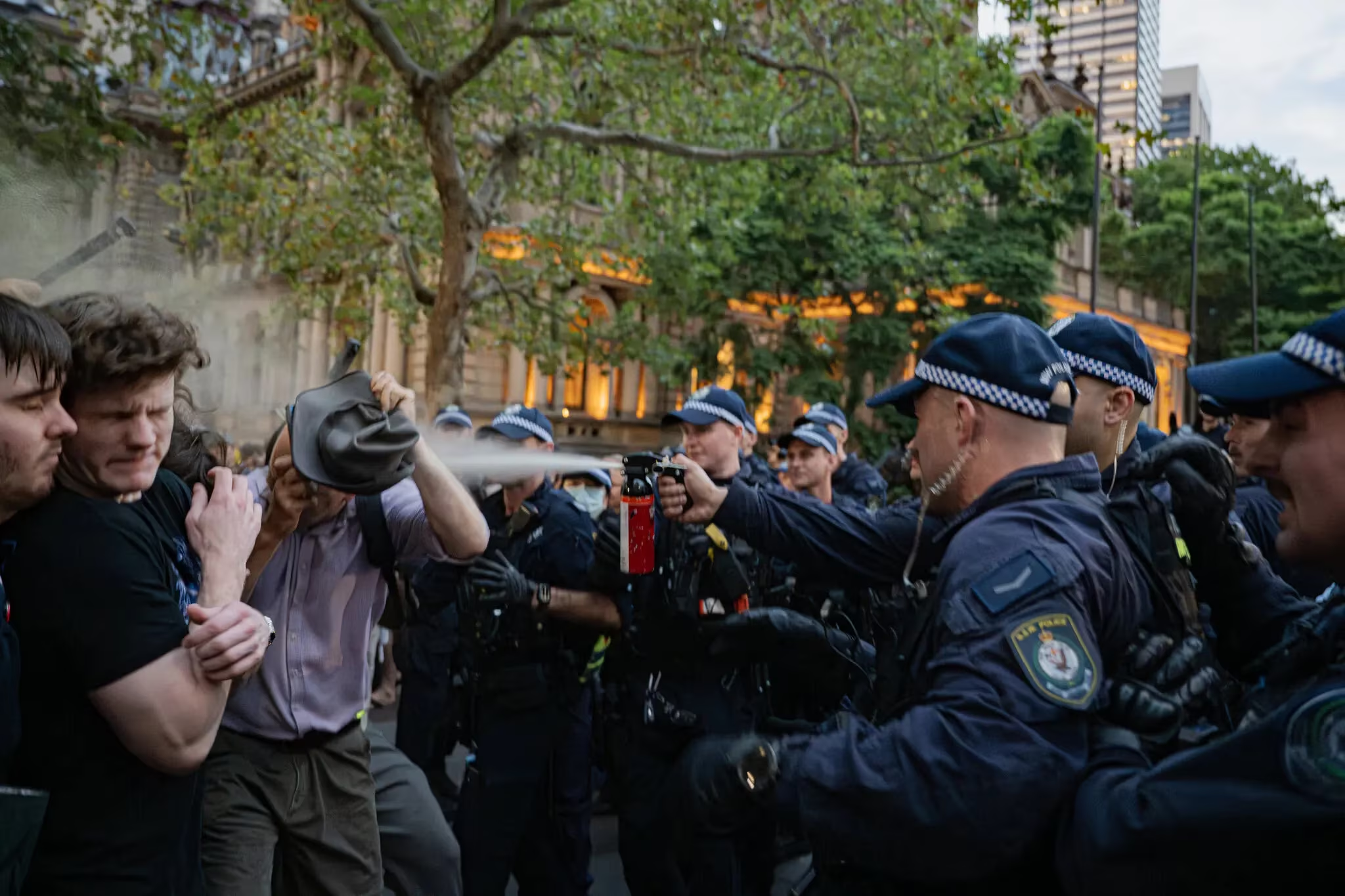
Police use pepper spray against protesters. February 9, 2025.
Alex Ryvchin, co-chair of the Executive Council of Australian Jewry, said that after a terrorist attack such as the one in Bondi, the curtailment of civil liberties was inevitable, and that responsibility lay with the extremists behind the assault.
He said Herzog’s visit—given that the Israeli president holds a largely ceremonial role—was an important source of moral support for a community in mourning. “When you are struck in such a brutal way, you want your own around you—people who have experienced antisemitism, who know exactly what you are going through, and who understand what it means to bury the dead,” Ryvchin said.
At the same time, another Jewish organization—the progressive Jewish Council of Australia—warned last month that Herzog’s presence would “pour fuel on the flames of division” in Australia and would “inevitably spark mass protests,” given the broad public reaction to Palestinian deaths and Israel’s actions in Gaza.
“People are simply protesting for peace and against genocide, and that is being conflated with the shooting of children” at Bondi Beach, said Daniel Alcaide, 42, who attended Monday’s rally. He said he grew up identifying as a Zionist and that his father is Jewish. “After Bondi, they really tried to silence the voices of many Australians,” he said.
Israel rejects accusations that it is committing genocide in Gaza.
Josh Lee, one of the organizers of the Palestine Action Group, said police actions on Monday evening resembled recent high-profile crackdowns on dissent in the United States. “Chris Minns appears to be trying to import elements of Donald Trump’s America into Sydney,” he said. “That cannot be allowed.”
Toyah Shears, 70, who attended the protest with her 76-year-old husband, Laurie, said she feared the violence on Monday would be used by authorities as a pretext to further restrict the right to protest. A former nurse and aviation security instructor, she said she intended to continue taking to the streets to defend her rights. “I will keep showing up because I see myself as a guardian of our democracy and I have the right to do so,” she said. “If not me, then who?”