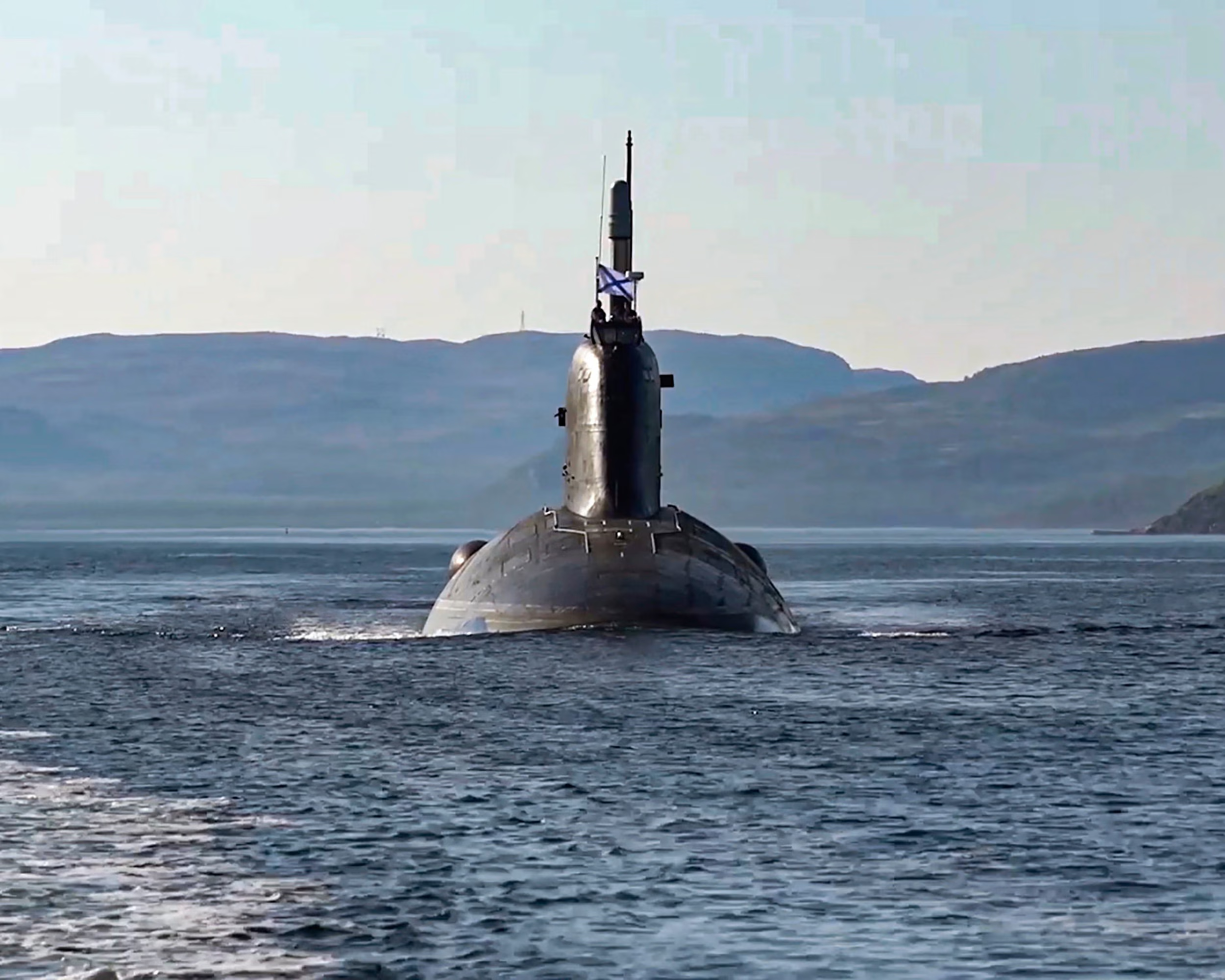
Swedish forces report spotting Russian submarines in the Baltic Sea almost weekly and are preparing for a possible surge in activity should the war against Ukraine enter a ceasefire or freeze. Captain Marko Petkovic, head of operations for the Swedish Navy, said Moscow is “constantly strengthening” its presence in the region, making the monitoring of its vessels a routine part of naval operations. Such encounters, he noted, are “very common,” and their number has increased in recent years.
The Baltic region is confronting a widening array of threats, from alleged hybrid attacks using drones to suspected sabotage of underwater infrastructure and a steady flow of ageing tankers from the shadow fleet carrying Russian oil.
Last month, Britain’s defence secretary said a Russian intelligence ship had entered UK territorial waters and directed lasers at military pilots, warning that the country faces “a new era of threats” from hostile states.
Sweden recently hosted the major Nato anti-submarine exercise Playbook Merlin 25, involving nine nations including Sweden, Germany, France and the United States. Hundreds of service members trained to detect submarines in the Baltic’s particular conditions, preparing for potential underwater attacks.
The seabed in Sweden’s part of the Baltic Sea makes submarine detection more difficult — its uneven terrain and underwater ridges offer natural concealment.
Petkovic noted that Russia is expanding its naval capabilities, launching roughly one Kilo-class submarine each year in St Petersburg and in the Kaliningrad exclave between Poland and Lithuania. The Russian fleet, he said, is undergoing a “deliberate and continuous modernisation programme.”
“When a ceasefire or truce eventually comes in Ukraine, we can only assume — and this is our assessment — that Russia will strengthen its capabilities in this region,” he said. “With that in mind, the Swedish Navy must keep evolving and focus on the full strategic picture.”
He added that Russia’s shadow fleet of tankers sailing under civilian flags is also a source of concern, and did not rule out the possibility that such vessels could be used to launch drones. “The shadow fleet is not a military problem in itself, but it can affect our countries from a military perspective,” Petkovic said.
According to him, the Baltic’s particular underwater conditions — more limited visibility than at the surface, as well as distinctive patterns of salinity and temperature — make subsea infrastructure especially vulnerable. This applies above all to Sweden, Norway, Finland, Estonia and Lithuania, which “are entirely dependent on maritime routes for supplies, communication and the functioning of our societies.”
Even so, he believes intensified Nato monitoring is delivering results. Since the launch of Operation Baltic Sentry in January, he said, “we have not recorded a single cable incident in this region.”
He added: “Above all, it shows that the alliance is functioning and remains cohesive. We are establishing a common line against a specific threat. Baltic Sentry has proved that. Regardless of whether earlier incidents were caused by state action, negligent navigation or something in between, the commercial fleet is becoming more aware that it must exercise greater caution in our regional waters.”