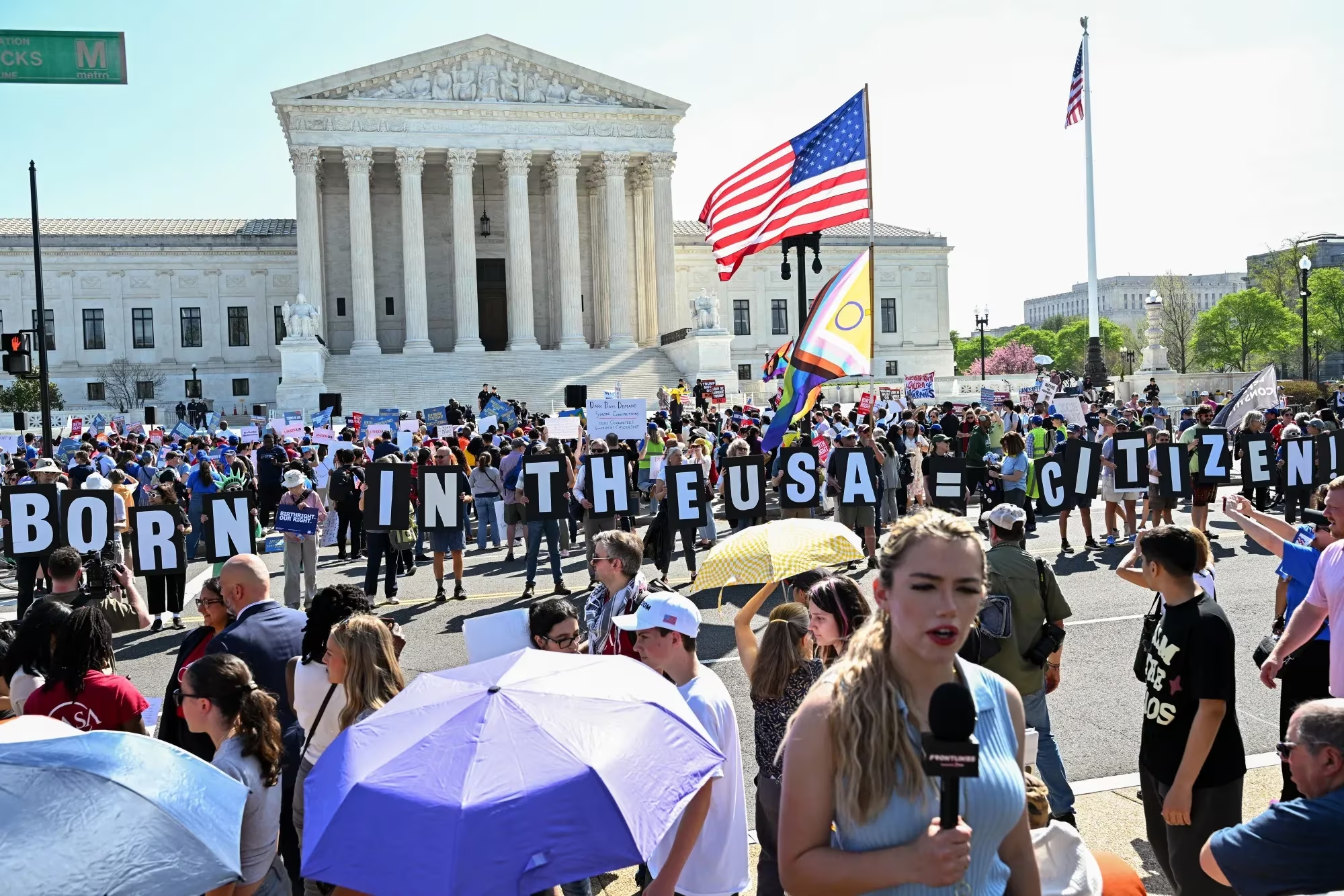
The US Supreme Court cast doubt on Donald Trump’s attempt to end automatic birthright citizenship, signaling that the justices are likely to rule against him once again and strike down a central part of his immigration agenda.
During Wednesday’s hearing, which Trump attended for part of the time, justices from across the ideological spectrum questioned whether the executive order—signed within hours of his inauguration—could be reconciled with the Constitution and federal law. The Fourteenth Amendment has traditionally been understood to guarantee citizenship to almost everyone born on US soil.
Chief Justice John Roberts dismissed arguments from the administration’s top Supreme Court advocate, Solicitor General D. John Sauer, who contended that the country was confronting a “new reality” in which so-called birth tourism and other developments had eroded the old understanding of the rule.
“Well, yes, the world changes,” Roberts said. “But the Constitution remains the same.”
The case goes to the heart of what it means to be American. Trump’s order, signed on the first day of his presidency last year, would restrict birthright citizenship so that it applies only to children with at least one parent who is a US citizen or green-card holder. It is estimated to affect about 250,000 children a year born to undocumented migrants and temporary visitors.
Democrats argue that the measure could strip millions of current Americans of their citizenship—and with it, the right to vote and obtain passports.
Trump sat just a few feet from the justices, some of whom he had previously attacked over rulings striking down his global tariffs. He left the courtroom midway through the session, roughly as Sauer was concluding his argument. Before that, no sitting president had attended a Supreme Court hearing in recorded history.