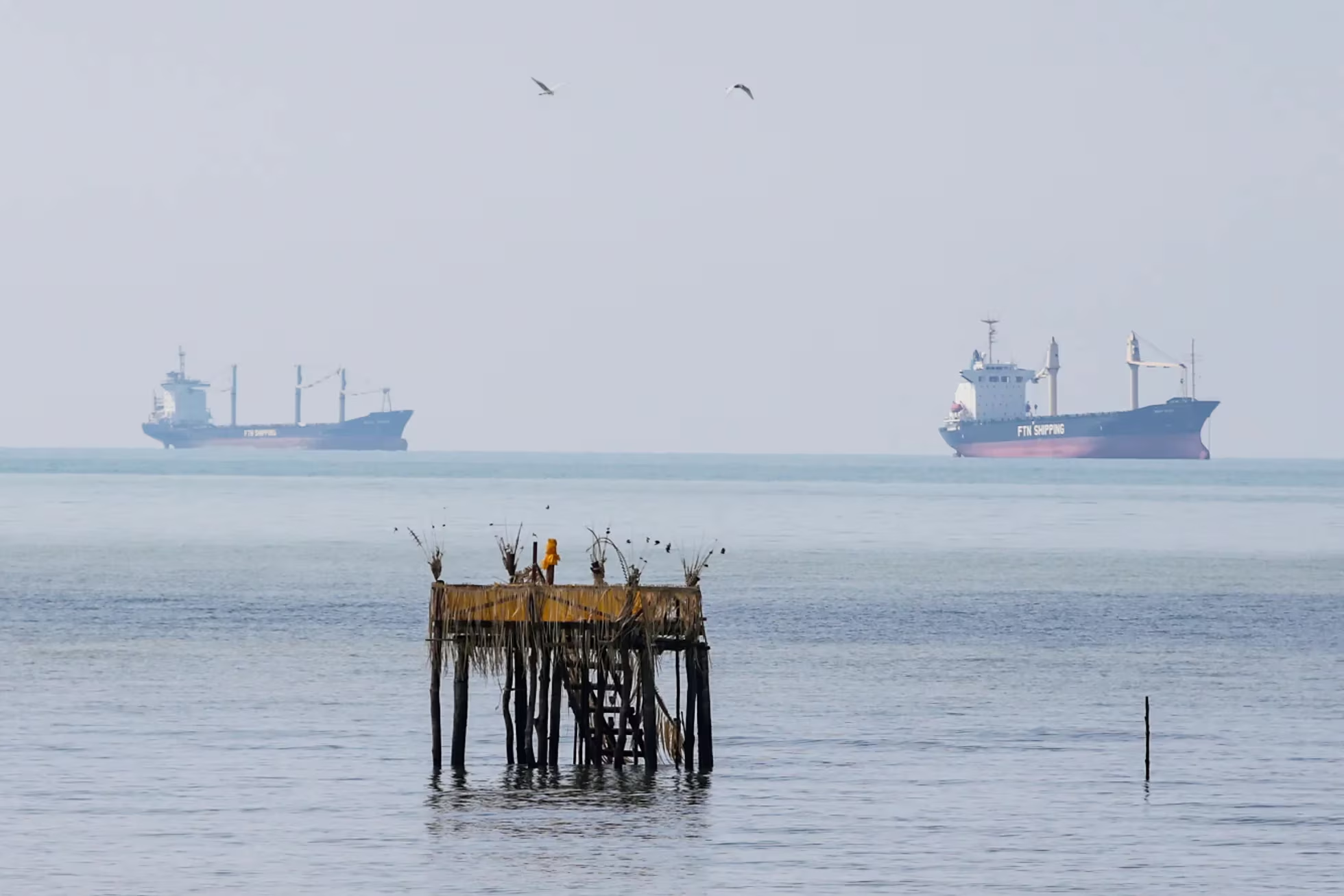
The key outcome so far of the US and Israeli war against Iran has been the effective mutual blockade of the Strait of Hormuz. As a result, shipping traffic through it has fallen by 95%, while oil and gas prices in Europe and Asia have risen by 35–60%. The situation has vividly demonstrated how the closure of a single maritime corridor can destabilise global trade.
Against that backdrop, attention has shifted to another critical node in global logistics—the Strait of Malacca, which separates Malaysia and Indonesia. Last week, Indonesia’s finance minister raised the possibility of imposing a fee for passage through it. Although he later walked back the remark, the statement itself caused considerable alarm. That underlines the importance of the Strait of Malacca—and the vulnerability it represents, especially for China.
Why Is the Strait of Malacca So Important?
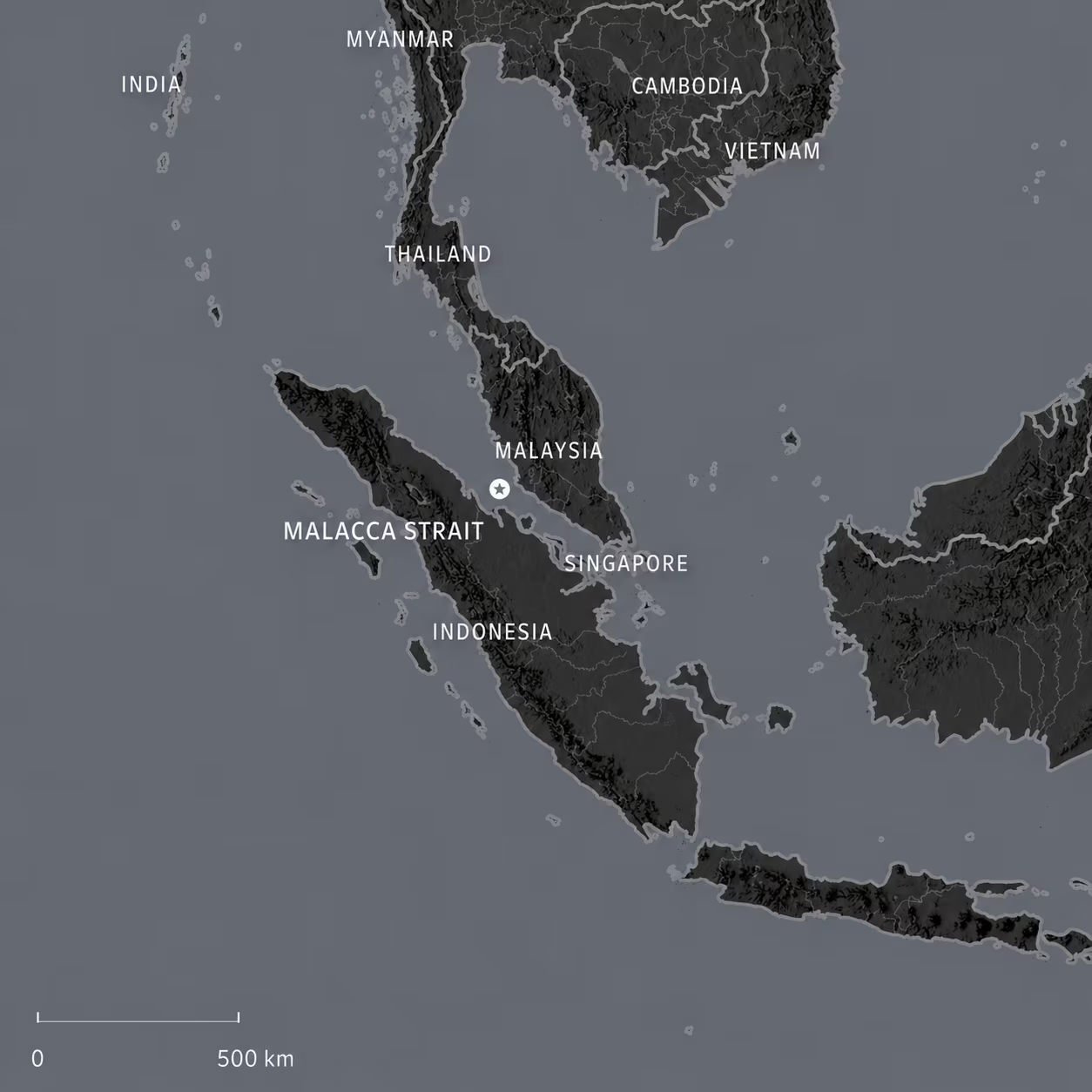
It is the shortest sea route from East Asia to the Middle East and Europe. The strait lies between Malaysia and Indonesia; Thailand borders it to the north, and Singapore to the south. Almost 22% of global seaborne trade passes through the Strait of Malacca. It carries a wide range of cargo—from oil and liquefied natural gas to coal, palm oil, and iron ore.
The US Energy Information Administration classifies the Strait of Malacca and the Strait of Hormuz as the world’s principal chokepoints for oil transit. In recent years, the volume of oil shipped through the Strait of Malacca has at times even exceeded that passing through Hormuz.
And Why Is the Strait Vulnerable?
The strait stretches for about 800 kilometres, and at its narrowest point it contracts to just 2.7 kilometres across—for comparison, the Strait of Hormuz is 34 kilometres wide at its narrowest. Such a configuration increases the risk of collisions and groundings, especially in the busiest sections. Even minor disruptions can slow traffic and raise transport costs through the Strait of Malacca, Bloomberg notes. Alternative routes through the Indonesian archipelago do exist, but they are less convenient and more difficult from a navigational standpoint.
Who Controls It?
The Strait of Malacca adjoins the territorial waters of Malaysia, Indonesia, Thailand, and Singapore. These countries jointly patrol it, but the strait itself has international status. That means the coastal states have no right to restrict transit or impose passage fees, although charges for certain services are permitted.
That is precisely why remarks by Indonesia’s finance minister, Purbaya Yudhi Sadewa, who last week publicly raised the possibility of imposing a duty on ships passing through the Strait of Malacca, citing Iran’s example, drew a noticeable international response—even though he almost immediately backed away from the idea. Singapore and Malaysia stressed that the introduction of such fees is not under serious consideration.
Why Is the Strait So Important for China?
China remains the world’s largest importer of oil, and a substantial share of those supplies passes through the Strait of Malacca. That dependence leaves the country especially vulnerable to any disruption in its operation: a blockage caused by military conflict, an accident, piracy, or another crisis could produce serious interruptions in energy supplies and hit foreign trade more broadly. Beijing has long understood the problem—it is known there as the “Malacca dilemma”. In response, China has sought to reduce its dependence on the route, including by developing alternative supplies through oil and gas pipelines from Myanmar and Russia.