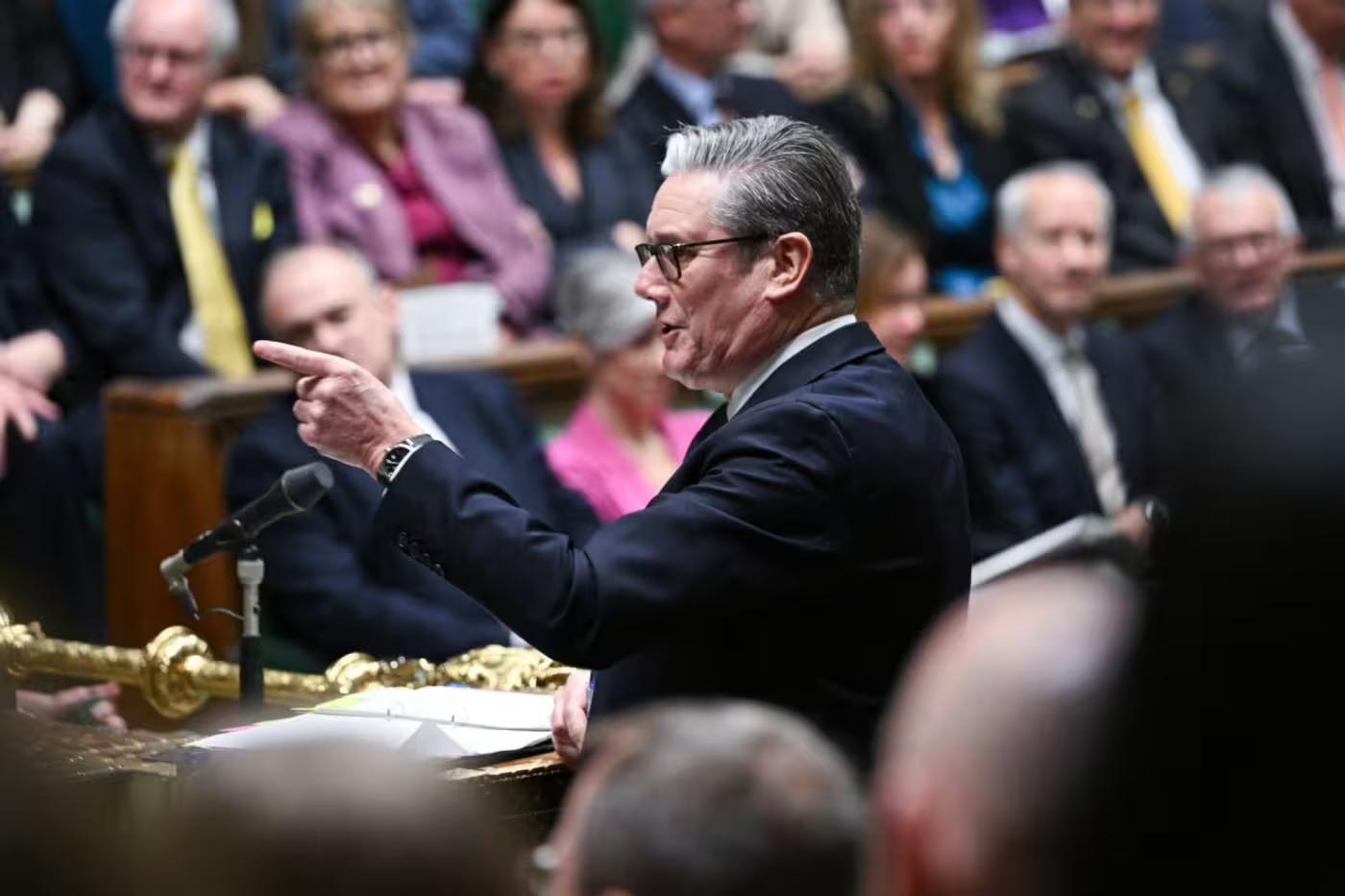
Keir Starmer delivered his strongest rejection yet of proposals for Britain to rejoin the EU customs union, arguing that such a move would “undo” recently concluded agreements with the United States on automotive manufacturing and pharmaceuticals.
His stance indicates that he prefers Britain’s post-Brexit capacity to strike trade deals around the world—chiefly with President Donald Trump—to the complexity of negotiating a return to the European customs area. The prime minister also aims to concentrate on ongoing talks with Brussels to reduce trade barriers in food and energy and to establish a youth-mobility scheme, rather than embark on a sweeping renegotiation of the Brexit settlement.
On Wednesday, December 10, Europe minister Nick Thomas-Symonds arrived in Brussels for what he described as “productive” discussions on the new arrangements. Addressing the House of Commons, Starmer said he expected “a closer relationship than the one we have at the moment” but cautioned that rejoining the customs union would overturn recent deals with Trump, which have been particularly beneficial for Jaguar Land Rover. “We have now struck significant trade agreements with other countries, including the US and India, which are hugely important to the JLR workforce and to the pharmaceutical sector, and it is not sensible to unravel what is, in effect, the best deal with the US anyone has secured,” he told MPs.
Liberal Democrat leader Ed Davey said: “The truth is that this government cannot succeed unless it restores sustained economic growth, and the best way to achieve that is through a customs union with Europe.” According to Joël Reland of the UK in a Changing Europe think-tank, rejoining the customs union—an idea supported by some Labour MPs—would at the very least require Britain to align its tariffs with EU rules. Such a step, he added, would offer certain economic advantages but would affect post-Brexit trade agreements that grant reduced tariffs to specific countries, including Australia, India and the United States. “A customs union would strip the UK government of the ability to pursue an independent trade policy—it would have to scrap any preferential tariffs that fall below EU levels,” Reland stressed. He added: “If the EU imposed substantial duties on American goods, the UK would be obliged to do the same. The era of using lower tariffs to extract concessions from the White House would come to an end.”
Thomas-Symonds’s meeting with his EU counterpart, Maroš Šefčovič, was intended to keep the dialogue moving after talks collapsed last month over the size of Britain’s contribution to the EU’s €140bn defence fund. Despite assurances that the discussions were “productive,” disagreements persist over the youth-mobility scheme, which is meant to allow 18–30-year-olds from the UK and the EU to live, study and work in each other’s countries for a set period. London insists that any such scheme must be “limited” and rejects Brussels’s demand that EU students be given the same tuition terms as their British counterparts.
The proposed “youth mobility scheme” has exposed public divisions between the two sides and jeopardised progress in other areas, including a so-called veterinary agreement to lift border checks and the effort to reconnect the EU and UK carbon-pricing systems.