Donald Trump said that Keir Starmer is “no Winston Churchill.” Yet the British prime minister does share one point of resemblance with a wartime leader—in a moment of global crisis, his position is becoming increasingly vulnerable to political rivals.
Starmer has no shortage of reasons for concern. Relations with the United States have publicly faltered, turning him into a convenient target for the president. At the same time, borrowing costs are rising, the risk of inflation is increasing amid the war with Iran, and the Bank of England’s hawkish rhetoric has already led markets to price in three rate hikes this year—instead of the cuts that had previously been expected.
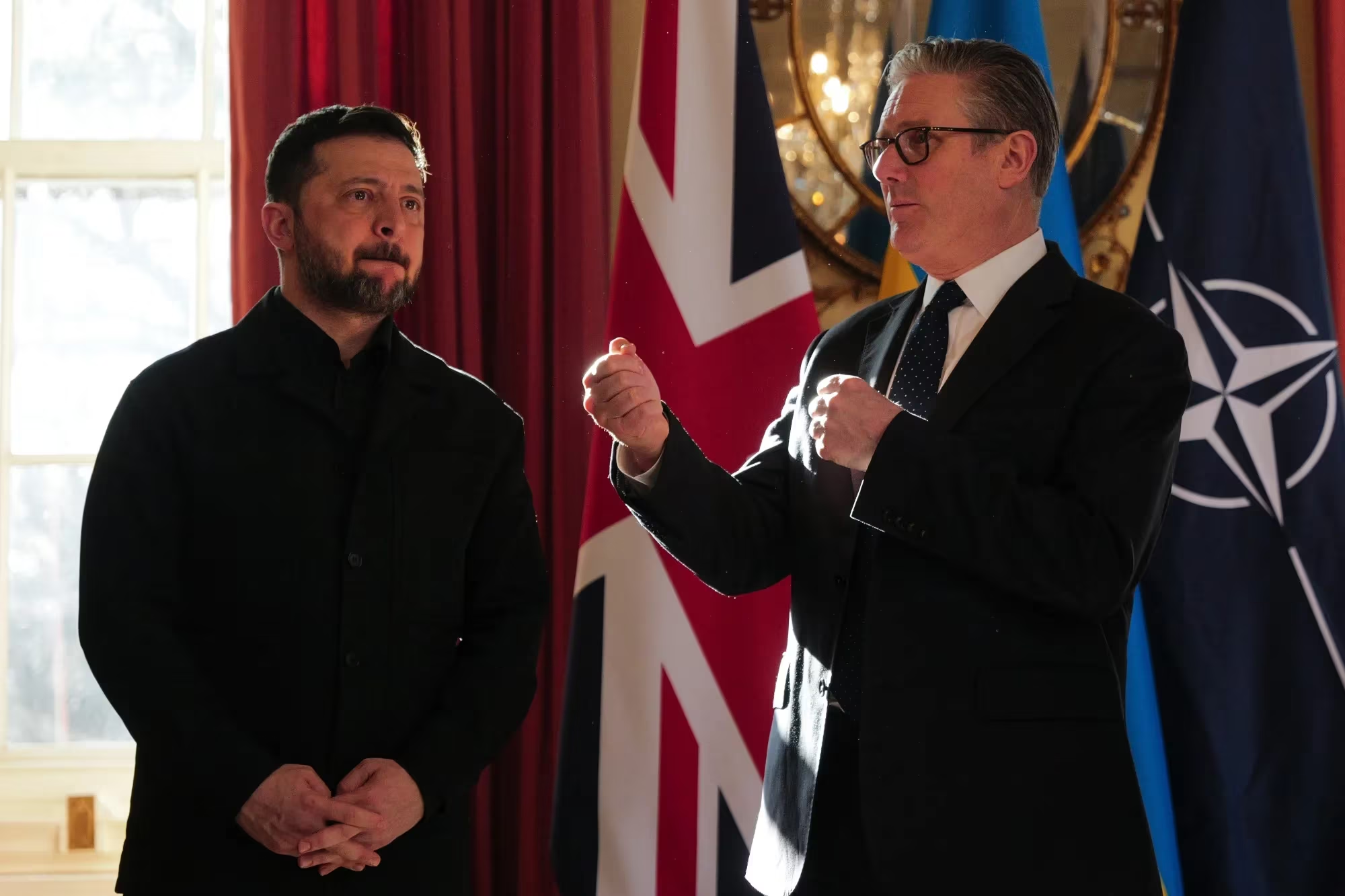
Against this backdrop, the prime minister—effectively isolated on Downing Street—has been holding emergency meetings on surging energy prices while receiving military briefings on countering drones. He hosted Volodymyr Zelensky, seeking to shore up weakening support for Ukraine, and discussed with European leaders the possibility of facilitating the reopening of the Strait of Hormuz—even as there is broad recognition that such efforts are unlikely to succeed.
At the same time, just minutes from the government quarter, in a Westminster pub, the bookmakers’ favourite to succeed him has effectively already begun a leadership campaign.
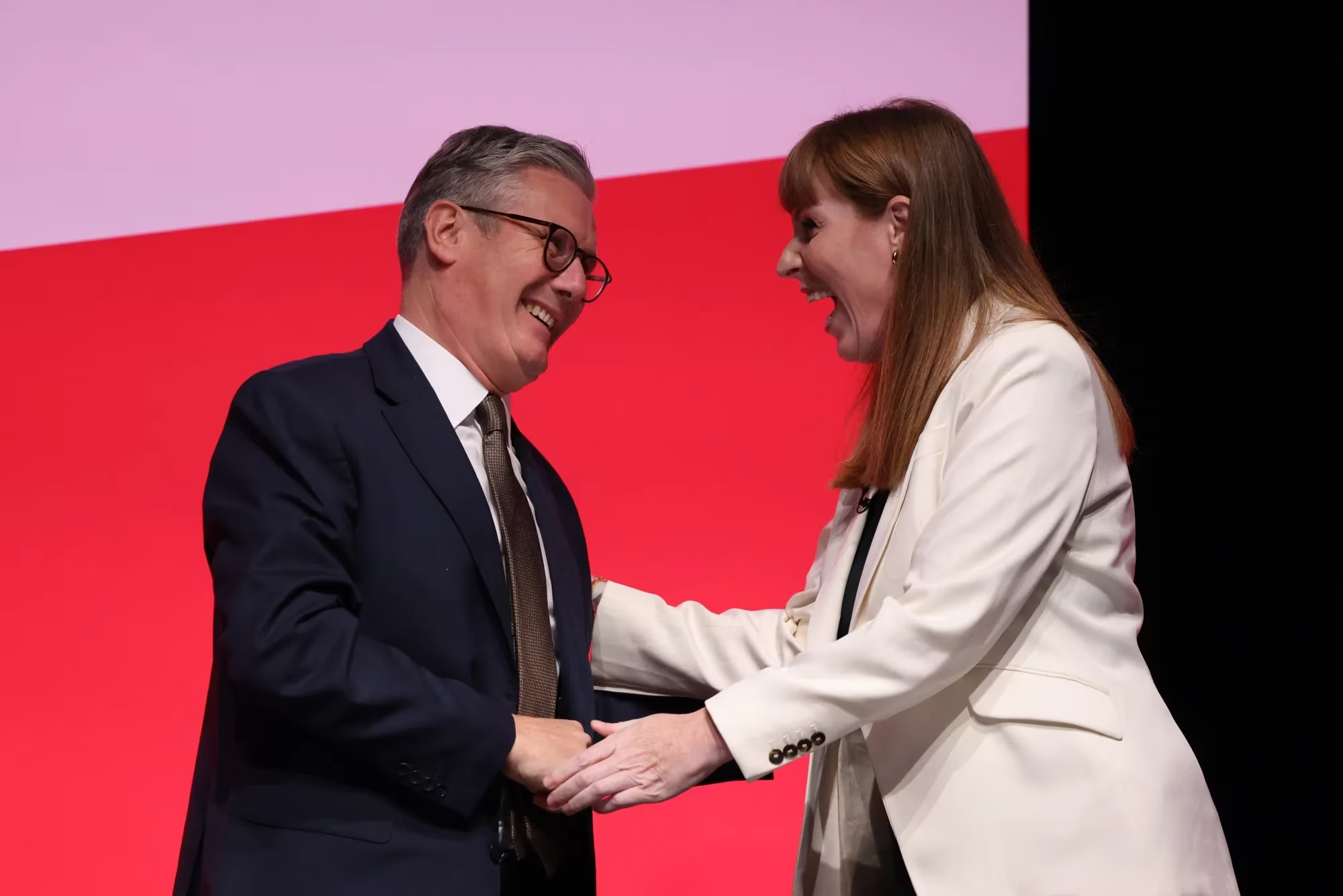
Angela Rayner, his former deputy and a figure on the party’s left, said the government is “running out of time” to deliver on its promises to voters. Without substantial change, she warned, “the survival” of the party itself is at stake. Her allies have also indicated that an investigation into her tax affairs may soon conclude in her favour—clearing the way for her to enter a potential leadership contest.
This pointed intervention clearly signalled the threat Starmer could face as early as May. Polling suggests the Labour Party risks losing a significant number of seats in local elections, potentially triggering an internal challenge to his leadership. Pressure from the left could intensify further if the Greens continue to gain ground in Labour’s traditional strongholds—after seizing a parliamentary seat from them in a by-election last month for the first time.
This would further intensify pressure on the prime minister and the chancellor, Rachel Reeves, to ease fiscal constraints. Starmer’s allies, however, insist that these rules are “not up for revision.” At the same time, the government is expected to increase spending on household support and public services—steps that are likely to unsettle markets, which in recent years have been particularly sensitive to any shifts in the UK’s economic policy.
It is still too early to speak of a sharp fiscal loosening, and markets have yet to price in higher government spending. However, such a scenario is becoming more likely as pressure on ministers grows to help households cope with rising energy bills.
Reeves has already announced support for households that rely on oil heating. Most consumers, however, remain shielded by a price cap, which will be lowered next month—effectively freezing tariffs through the end of June. Thereafter, according to Cornwall Insight, bills could rise by £332 a year from July.
Any signs that Reeves is loosening fiscal discipline to support households could weigh on the bond market. Yields on two-year government bonds have already risen by more than one percentage point since the start of the conflict with Iran last month, while ten-year borrowing costs have increased by 76 basis points, reaching their highest level since 2008.
Starmer and rank-and-file MPs in his party are likely to share concerns over the rising cost of living. Yet the heightened focus on Rayner amid the ongoing conflict with Iran underscores a widening gap between the issues Labour debates in Parliament and the day-to-day responsibilities of a prime minister forced to operate in conditions shaped in large part by Trump’s policies.
“Not only the usual critics are thinking about Keir’s successor,” said Karl Turner, one of his most outspoken opponents. “A significant portion of the Labour parliamentary party is. We need to do better.”
Rayner’s barely veiled criticism echoes what figures on the party’s so-called soft left have been saying for months. Another potential rival to Starmer, Greater Manchester mayor Andy Burnham, also said colleagues should heed her position. According to one of Rayner’s allies, she has strengthened her status as the frontrunner in a leadership contest, and her intervention was received more positively by MPs than earlier moves by Burnham and the health secretary, Wes Streeting.

For some of Starmer’s supporters and figures on the party’s right, this looked like a display of disloyalty at a particularly ill-timed moment. One minister admitted he found it hard to believe that Rayner had effectively launched her first полноценную leadership campaign just as the prime minister is dealing with the consequences of a war initiated by Trump. Another official noted that, in the midst of a crisis, it would have been more advantageous for her to hold back. An ally of home secretary Shabana Mahmood also criticised Rayner for publicly attacking her migration policy, suggesting that if she were to take power she would either shift to the right on the issue or quickly lose voters’ trust.
In private meetings in recent weeks, Rayner has sought to reassure investors of her fiscal credibility. However, as UK government bonds led a global sell-off on Thursday, one Labour figure warned that a leadership change and the rise of a more left-leaning politician would carry significant market risks.
Meanwhile, a strategic vacuum is being felt on Downing Street following the departure last month of Starmer’s key adviser, Morgan McSweeney. Figures on the party’s right are pressing for a more pro-market course, with cabinet ministers already circulating a policy paper intended to offer the leadership a new direction.
The document, prepared by leading figures within the Labour Growth Group, calls for a “transformative agenda” and warns that the current system in Britain “rewards those who benefit without effort and penalises those who work.” It argues that restoring a direct link between work and reward is critical if the party hopes to regain support on both its left and right flanks.
Measures under discussion include shifting the tax burden from labour to land and rents, merging employee national insurance contributions with income tax, overhauling outdated property taxes, and creating new incentives for entrepreneurs. Targeted deregulation and adjustments to clean energy policy—with a focus on reducing costs—are also proposed.
Amid these internal disputes, some of Starmer’s allies believe the war with Iran could become a turning point for his government. In their view, it offers a chance to adopt a tougher stance towards Trump, support households through the energy shock, and restore Britain’s international role—through higher defence spending and closer alignment with the European Union.
Nevertheless, those around him understand that any shocks hitting the economy and the mortgage market—even if driven by Trump’s policies—tend to end badly for the incumbent government.
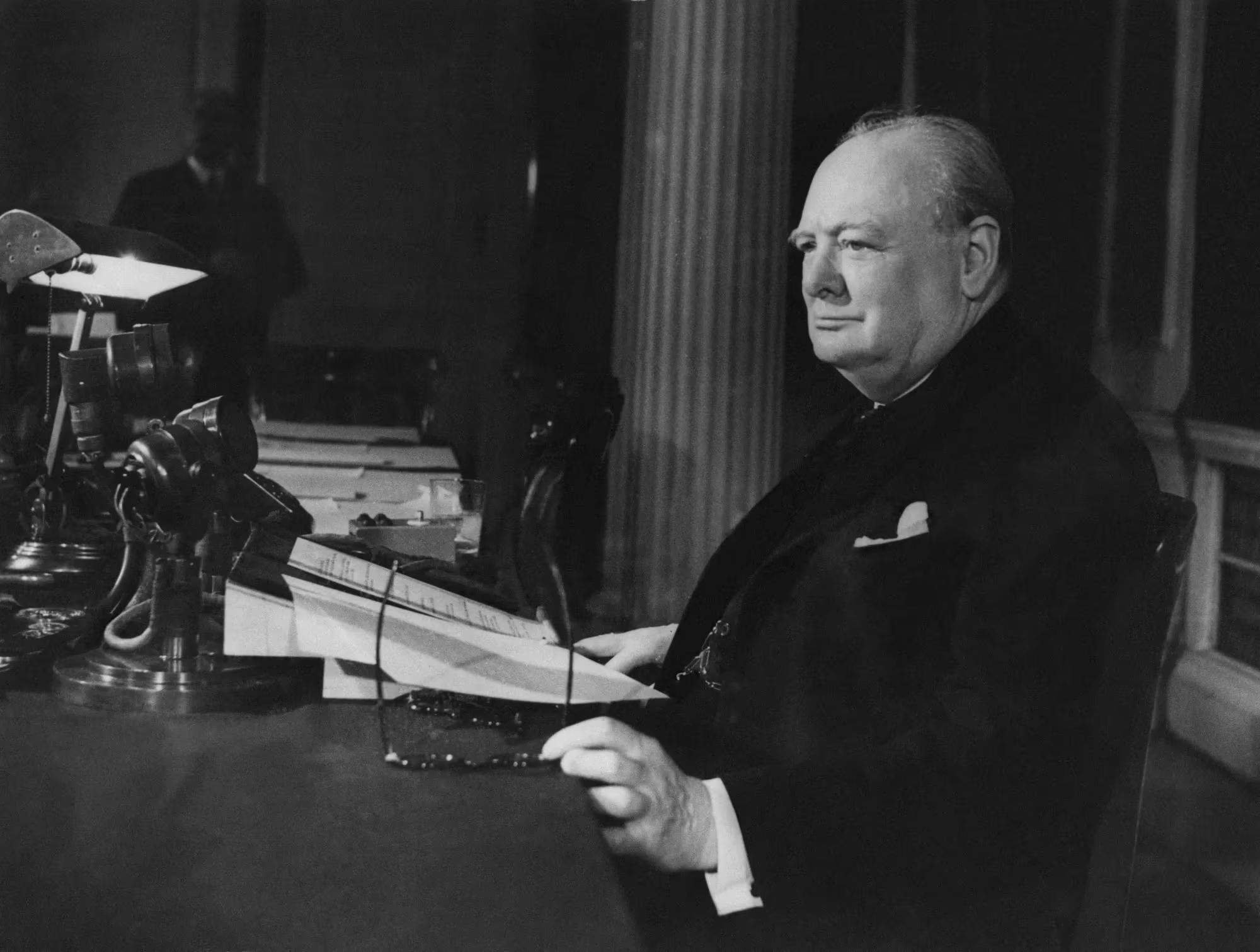
A historical precedent is instructive. At the height of the Second World War, in 1942, Churchill’s rival Stafford Cripps delivered a series of public speeches across the country, going beyond his ministerial duties. A Labour representative in the wartime cabinet of the Conservative prime minister, he was seen as a potential contender for Churchill’s position. Churchill himself faced two votes of no confidence that same year—a test Starmer has yet to encounter.
As one of the prime minister’s allies notes, the current head of government is far more comfortable operating in a global crisis than navigating intra-party rivalry and factional struggle. Yet Churchill’s experience suggests that even major successes on the international stage do not guarantee political durability: once the war ended, voters removed him from office.