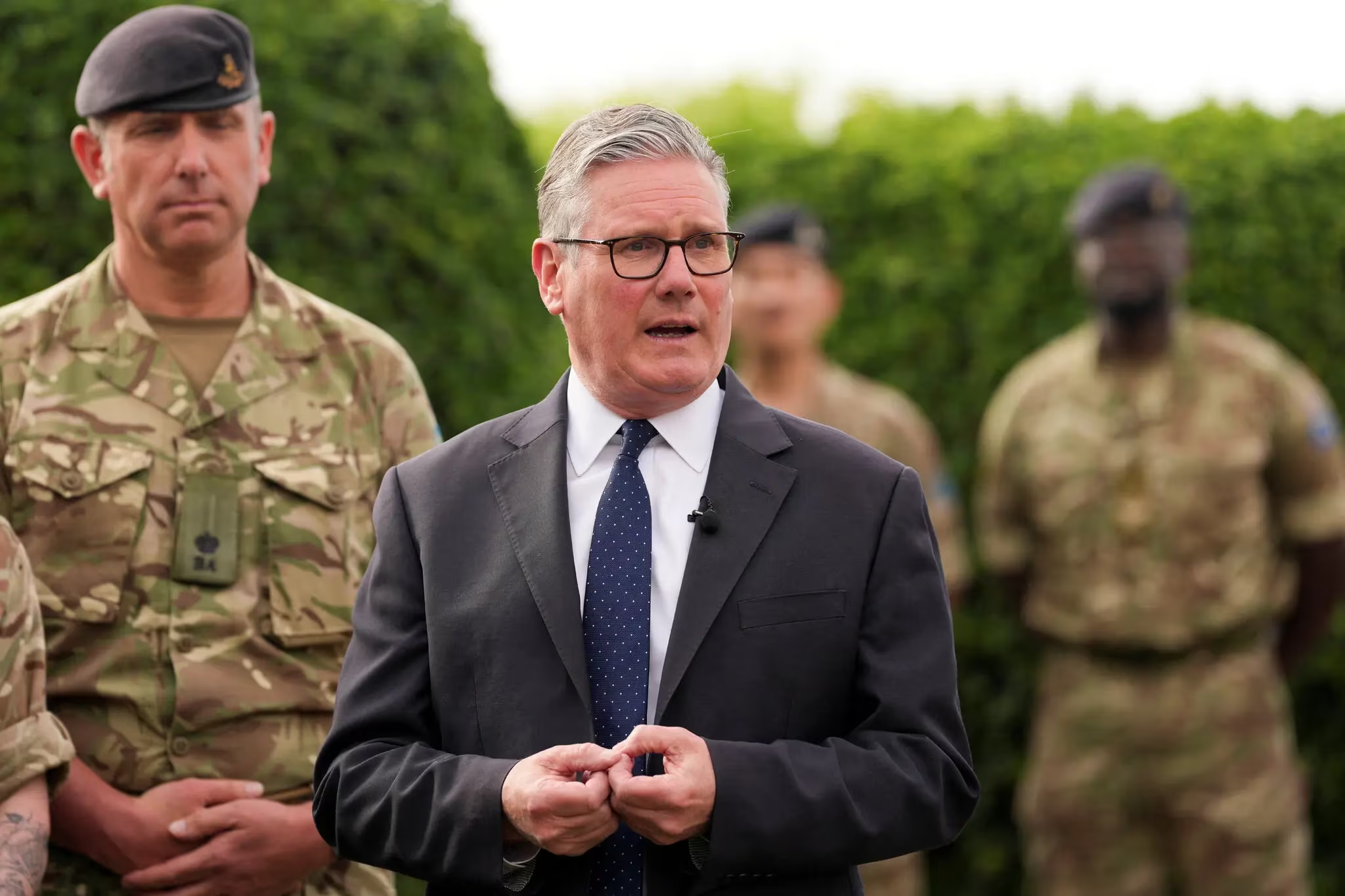
British Prime Minister Keir Starmer spoke plainly on Monday morning—his country does “not support” Donald Trump’s threat to impose a military blockade of the Strait of Hormuz after diplomatic talks between the United States and Iran collapsed over the weekend.
In an interview with the BBC, he stressed that he was focused on “bringing countries together to keep the strait open, not closed,” adding that “it is critically important to ensure that it remains fully and freely operational.”
At the same time, Starmer declined to place personal responsibility on Trump for rising energy prices in Britain, saying it was Iran’s actions that had driven up oil prices by making passage through the strait too dangerous for commercial shipping.
When the presenter repeatedly noted that Tehran’s actions had come in response to Trump’s decision to launch the war, the prime minister ultimately limited himself to a brief reply—“I am not going to get into that.”
The interview laid bare a longstanding problem Starmer faces as he tries to manage relations with Trump and his unpredictable foreign policy.
On the one hand, London’s refusal to join the US-Israeli military campaign against Iran has angered Trump. The prime minister himself has stressed that he will not yield to “pressure” from the president to draw Britain into a new conflict in the Middle East.
That stance appears to have found support at home—against that backdrop, Starmer’s approval ratings have edged slightly higher.
On the other hand, the prime minister, a lawyer by training and instinctively cautious, is careful not to push confrontation with Trump too far, given the dense web of ties linking Britain and the United States in security, economics and culture. Starmer has stressed that he still sees the “special relationship” between the two countries as valuable and worth preserving.
The balance between these conflicting imperatives could come under fresh strain if hostilities with Iran resume in full—the ceasefire expires on April 21.
European leaders have taken different positions toward Trump, but all have refused to back offensive military action.
Spain’s defence minister, Margarita Robles, said on Monday that the plan to blockade the Strait of Hormuz was “devoid of sense.” Spanish authorities remain among the most critical of the US-Israeli campaign.
“Since the start of this war, nothing has made sense,” Robles said on state television. “This is another episode in the downward spiral into which the world has been dragged.”
French President Emmanuel Macron wrote on social media the same day that “France stands ready to play its full role, as it has consistently sought to do.” He did not directly mention the blockade threat, but stressed “the need to restore free and unimpeded navigation through the Strait of Hormuz as quickly as possible.”
In recent weeks, London and Paris have been consulting with dozens of countries in an effort to coordinate diplomatic and military steps that would keep the strait open once the fighting ends.
Macron said another conference on these issues is planned in the coming days, adding—“This strictly defensive mission, unrelated to the parties to the conflict, must be deployed as soon as circumstances allow.”