The publication of the first batch of documents related to the appointment of Lord Peter Mandelson as the United Kingdom’s ambassador to Washington has given fresh momentum to a scandal that has already inflicted political damage on Prime Minister Keir Starmer.
The released materials indicate that before Mandelson’s confirmation to the post, the prime minister had received warnings about potential risks linked to his candidacy, including his close relationship with Jeffrey Epstein, who was convicted of sex offenses.
The documents also show that Downing Street approved a payment of £75,000 to Mandelson after the former cabinet minister was dismissed in September last year. The sum included a discretionary payment exceeding £34,000.
Starmer’s opponents immediately seized on the materials released Wednesday as evidence of a rushed vetting process and the dismissal of warning signs. Thousands of documents related to the case, however, remain unpublished.
What Have We Learned About Mandelson’s Appointment Process?
Before Lord Peter Mandelson was confirmed as the United Kingdom’s ambassador to Washington, Prime Minister Keir Starmer received a warning that his relationship with Jeffrey Epstein posed a “general reputational risk.” This is stated in briefing materials prepared for the head of government on December 11. They noted that a 2019 JPMorgan report—previously reported by the Financial Times—pointed to an “especially close relationship” between Mandelson and the financier, who was found dead in a New York prison cell in 2019.
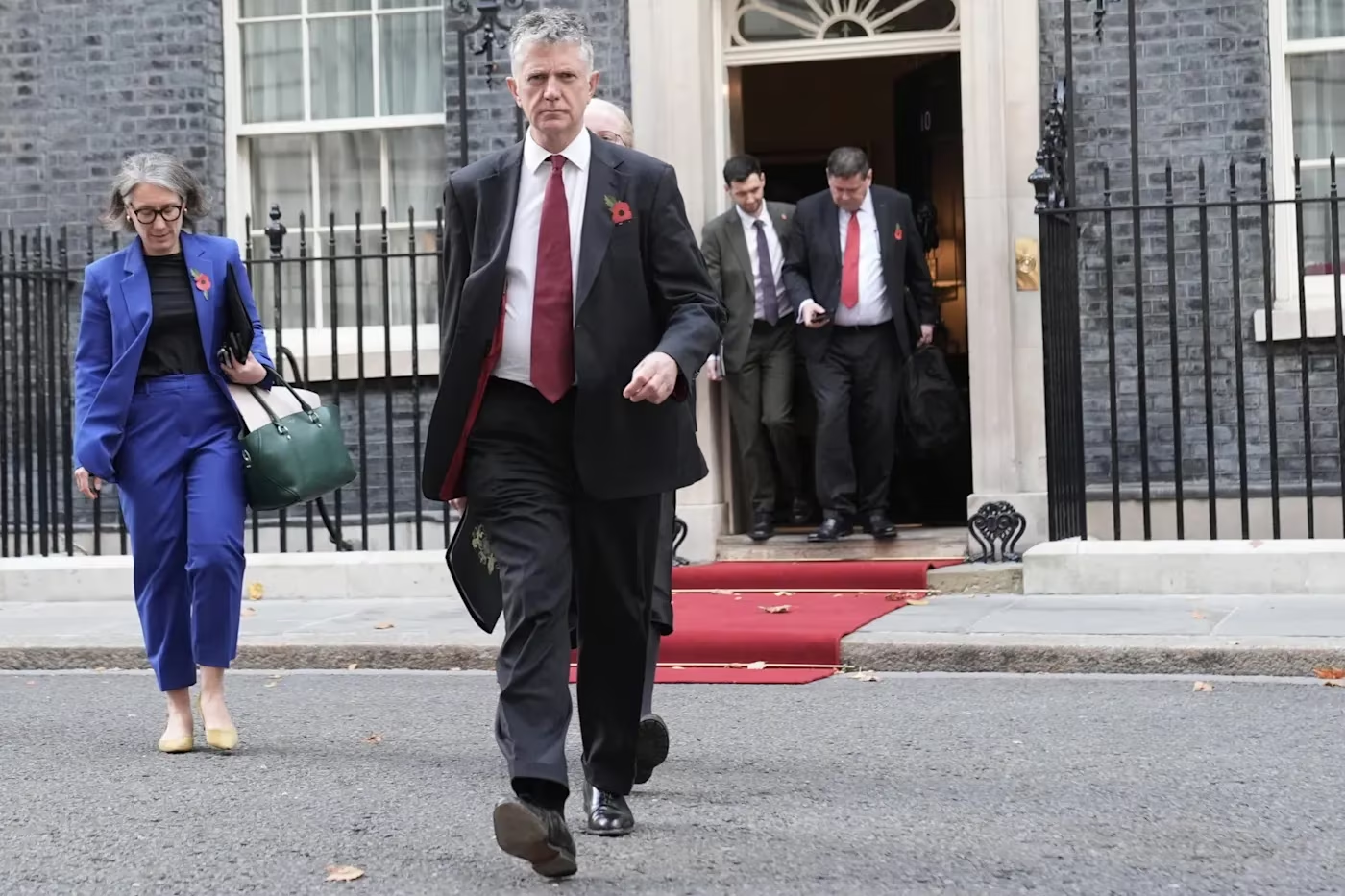
In a memo, Jonathan Powell noted that the appointment process had been “unusual” and “weirdly rushed.”
Another memorandum among the released materials records the position of the United Kingdom’s national security adviser Jonathan Powell—a veteran of the New Labour era. According to him, the appointment process had been “unusual” and “weirdly rushed.” The document, which contains a record of a phone conversation between officials the day after Mandelson’s dismissal, notes that Powell “raised issues concerning the candidate himself and possible reputational damage in a conversation with Morgan McSweeney (MM).” McSweeney stepped down as Starmer’s chief of staff last month amid the escalating scandal.
According to the same record, the then permanent secretary at the Foreign Office, Sir Philip Barton, also “had doubts about the appointment.”
Starmer had previously acknowledged that he knew about Mandelson’s friendship with Epstein, but claimed that the peer had “repeatedly lied” about the extent of their relationship.
At the same time, a key document linked to additional questions that the prime minister’s office sent to Mandelson regarding his contacts with Epstein has still not been published. Its release has been delayed at the request of London’s Metropolitan Police so as not to interfere with an investigation into possible abuse of office.
Last month Mandelson was detained and later released under an obligation to cooperate with investigators. He insists that he has committed no crimes and was not motivated by financial gain.
A spokesperson for Mandelson previously said that he “regrets—and will regret for the rest of his life—that he believed Epstein’s lies about his crimes.”
Nevertheless, the materials already released have forced the government to acknowledge shortcomings in the vetting procedure. On Wednesday the cabinet said that “the Mandelson case has shown—more needs to be done,” announcing the start of a review of the national security vetting system for candidates.
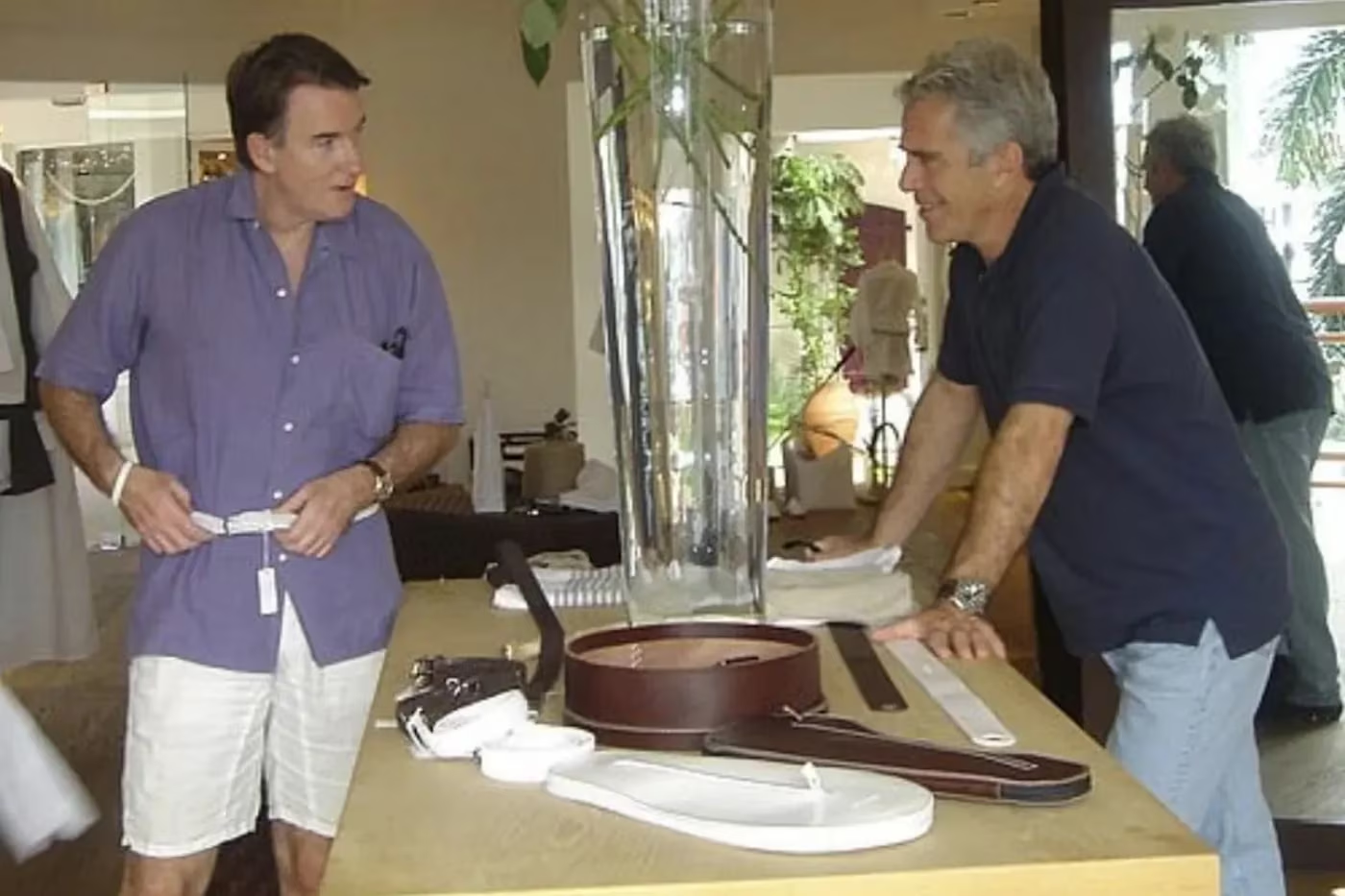
Sir Keir Starmer was warned that Peter Mandelson’s relationship with Jeffrey Epstein posed a “general reputational risk” before the peer was confirmed as ambassador. December 2024.
The documents published in the first tranche of materials also indicate that senior officials did not treat Mandelson’s security clearance as a key prerequisite before granting him access to sensitive information.
One email states that Mandelson received “developed vetting” clearance on January 29, 2025. Yet another email, sent by Philip Barton to Mandelson a month earlier, explicitly noted that from January 6 the peer was expected to receive briefings “at higher levels.”
Why Did Mandelson Receive a £75,000 Payment?
The most contentious element of the released materials was the £75,000 payment to Mandelson following his dismissal—a sum nearly twice the average annual salary in the United Kingdom.
According to the documents, Mandelson—whose annual salary was £161,318—initially demanded £547,000 in compensation, a figure intended to cover the remainder of his four-year contract. He argued that his dismissal would significantly affect his ability to find other employment.
In the end, the agreed compensation package included a discretionary payment of £34,670 upon leaving the post of envoy to the United States, as well as £40,329 to which he was entitled in lieu of notice. In total, the sum amounted to five and a half months of salary.
The materials also point to tense negotiations between the government and Mandelson over the size of the compensation. The documents state that the peer “gave to understand” that he had sought legal advice from a lawyer of King’s Counsel rank and questioned the “justification” of Starmer’s decision to remove him from office.
During discussions over the payment terms—ultimately agreed on October 16, 2025—Starmer’s private secretary for foreign affairs recommended that colleagues ensure daily welfare checks on Mandelson for a period of time.
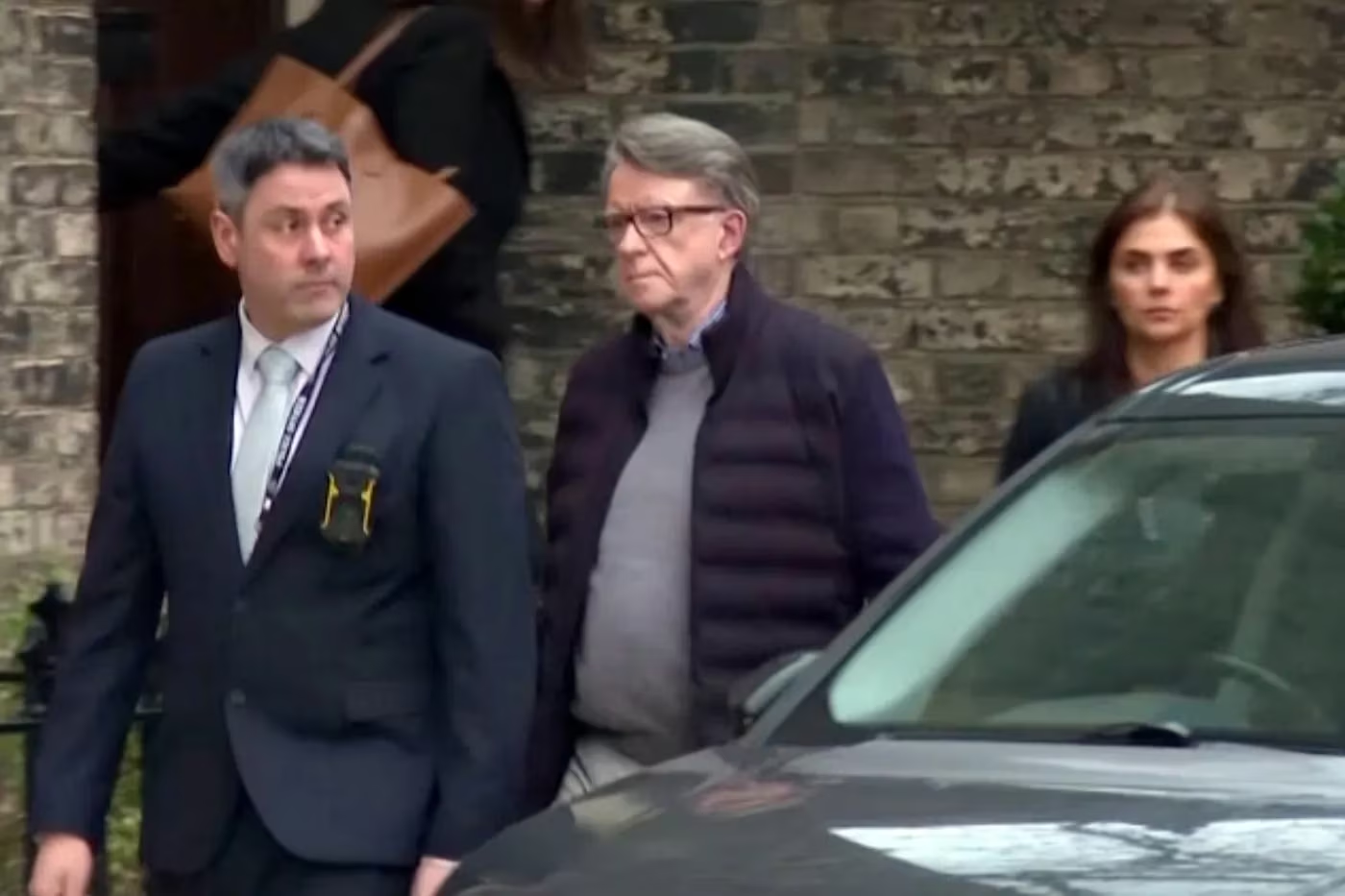
Lord Peter Mandelson, who was detained last month and later released under investigation, insists he committed no criminal acts and was not motivated by financial gain.
Mandelson’s contract stipulated that the government had the right to dismiss him at any time “without notice or payment in lieu of notice” if it concluded that he had committed a serious breach of duty or gross misconduct.
Government officials nevertheless expressed concern about the potential costs and reputational consequences should Mandelson decide to challenge the decision in court.
Alex Burghart, the Conservative Party’s shadow cabinet minister, said that “many of our voters will be outraged” when they learn about the size of the payment.
What Happens Next?
Ministers are bracing for a new wave of revelations—with the release of thousands of documents that have yet to be made public.
One reason for the unease on Downing Street is that only a small portion of the materials—just 147 pages—was published on Wednesday. Yet the parliamentary “humble address” mechanism, through which the Conservatives secured the disclosure of the documents, covers a far larger body of correspondence—possibly as many as 100,000 documents.
Under the requirements, the government must provide all communications between Mandelson and senior officials for the six months preceding his appointment, as well as for the period of his tenure as ambassador. The only exception will be for messages that the parliamentary Intelligence and Security Committee—whose members come from different parties—deems to pose a serious threat to national security.
This correspondence could reveal tensions between ministers, criticism directed at Starmer himself, and the extent of the influence Mandelson—one of McSweeney’s key mentors—exerted over several areas of government policy.
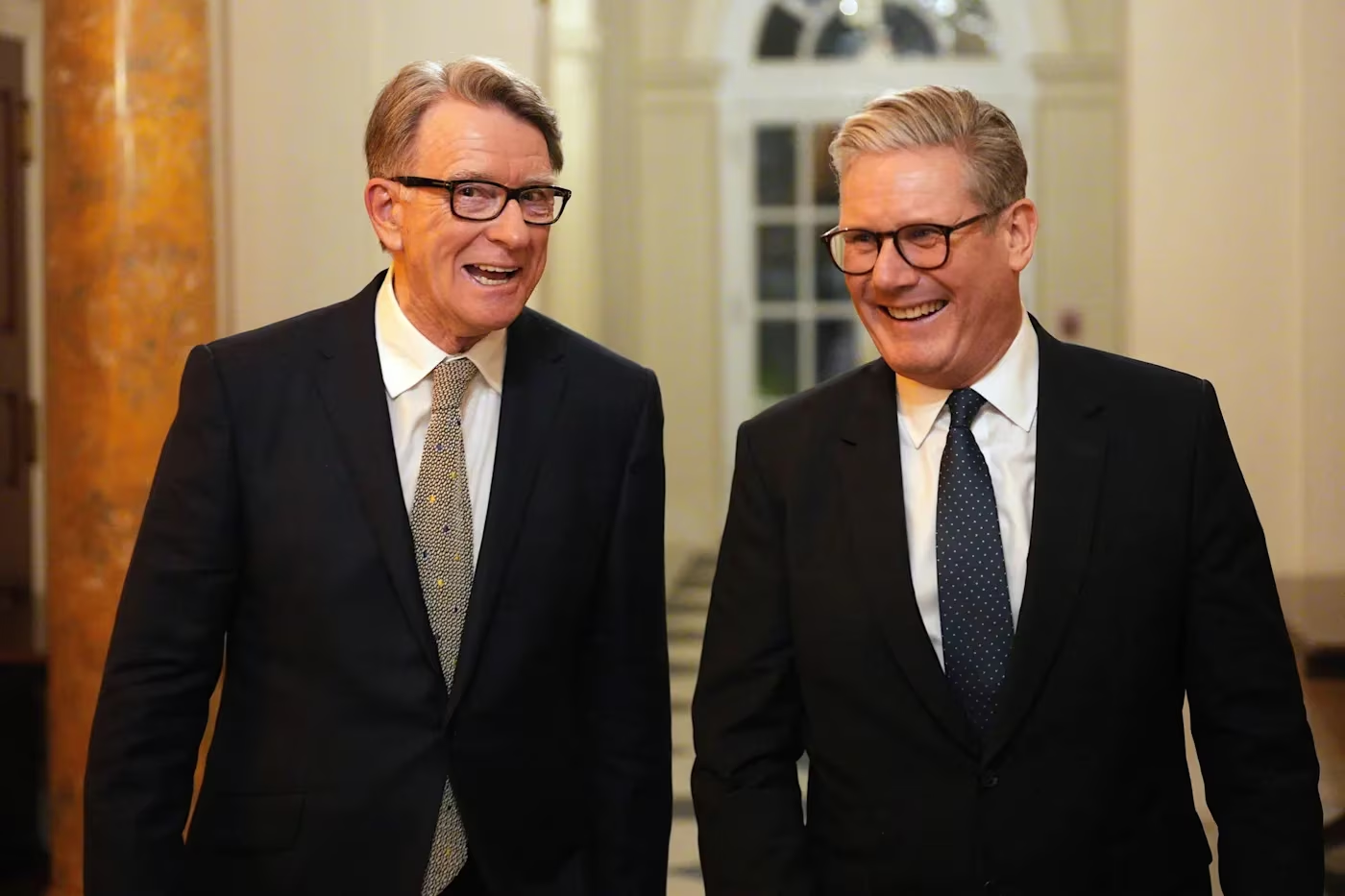
Sir Keir Starmer had previously acknowledged that he knew about Peter Mandelson’s friendship with Jeffrey Epstein, but claimed that the peer had “repeatedly lied” about the extent of their relationship.
Tensions between London and Washington—already heightened by Britain’s stance on the war with Iran—could intensify further if the correspondence shows that Labour figures expressed criticism of US President Donald Trump and his administration.
Journalists will also closely examine the next batch of documents in an effort to determine whether any government correspondence was shared with Mandelson during the six months preceding his appointment as ambassador.
According to materials published Wednesday, during that period Mandelson held the position of “president and chairman of the international advisory board” at the lobbying firm Global Counsel, which he himself founded.
Among Global Counsel’s clients—the company was recently forced to begin bankruptcy proceedings amid a scandal—were the US technology firm Palantir, the social platform TikTok, the oil major Shell, and the English Premier League.