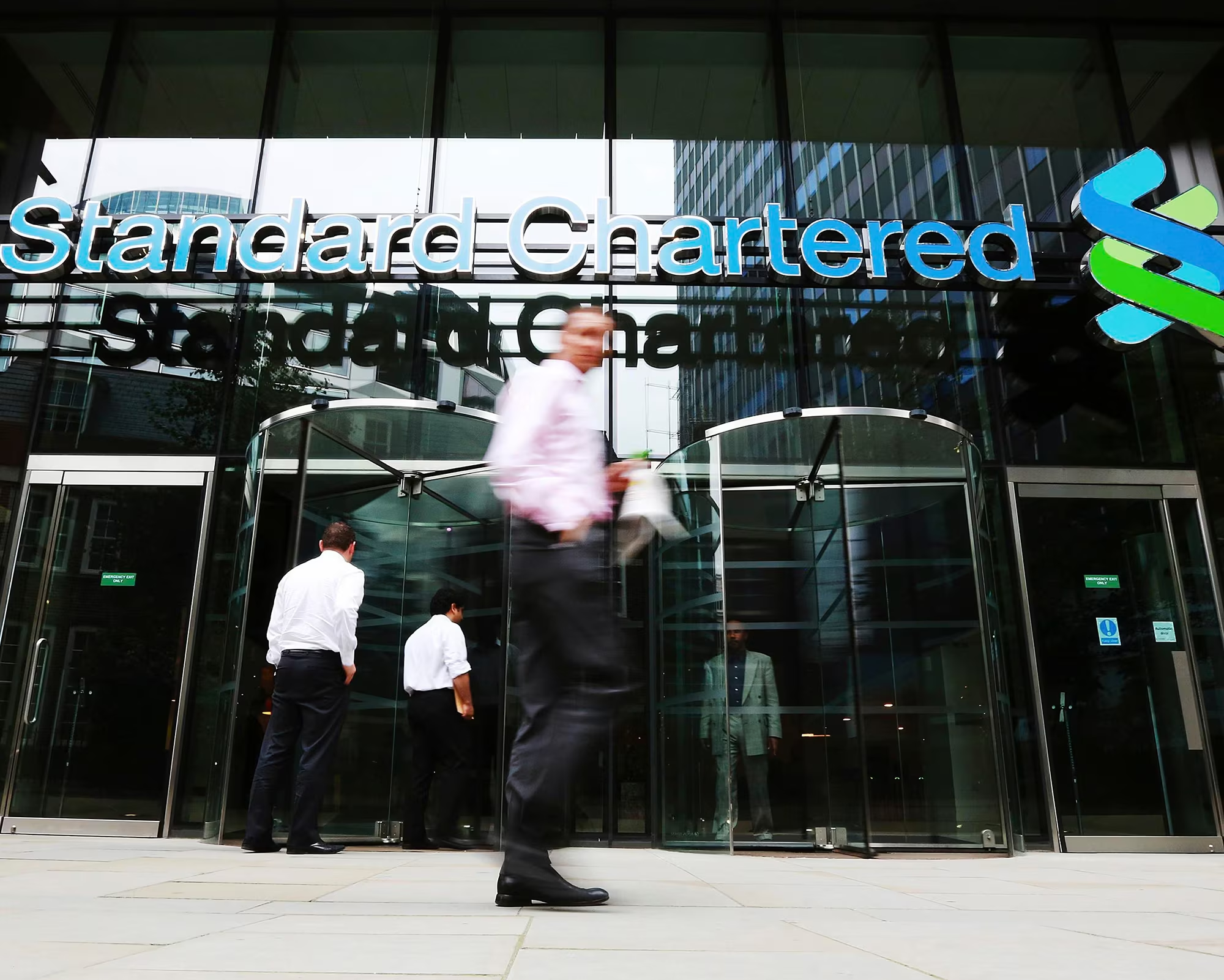
British bank Standard Chartered plans to cut more than 7,000 jobs over the next four years as it expands the use of artificial intelligence and automation.
The London-headquartered lender has become one of the first major international banks to publicly link large-scale staff reductions to the rollout of AI. Standard Chartered says it aims to improve efficiency, lower costs, and strengthen profitability amid intensifying competition.
On Tuesday, the bank said it plans to eliminate about 15% of administrative and support roles by 2030. The cuts will affect roughly 7,800 employees out of more than 52,000 working in back-office operations. Standard Chartered employs nearly 82,000 people overall.
Chief executive Bill Winters said the reductions would take place gradually as processes become automated and AI systems are introduced, alongside retraining programs for part of the workforce.
The most significant changes, he said, will affect the bank’s operational hubs in Chennai, Bengaluru, Kuala Lumpur, and Warsaw.
“This is not simply about cutting costs. In some cases, we are replacing lower-value human labor with financial and investment capital that we are deploying into technology,” Winters said.
The measures form part of the latest stage in the bank’s long-running transformation effort, which over the past decade has sought to move Standard Chartered away from being viewed as a potential takeover target and toward a more consistently profitable business model. At the same time, the bank raised its return targets for shareholders.
The cost-cutting drive reflects a broader trend among multinational companies and banks that are rapidly integrating AI to improve efficiency and automate operations. Financial institutions are also accelerating adoption of new AI systems amid growing cybersecurity threats.
“Of course, we are using AI throughout this entire process. It will become a key tool and accelerator for the automation of our core banking systems,” Winters said.
The updated strategy was unveiled amid discussions about a possible leadership transition after Winters’ 11 years as chief executive. Standard Chartered said he would remain in charge for several more years to oversee implementation of the new plan.
The bank is also trying to maintain growth momentum as geopolitical uncertainty intensifies across its key markets.
Analysts warn that banks across the Asia-Pacific region may face pressure to further increase provisions for potential loan losses if the conflict around Iran drags on. Rising energy prices and slower economic growth are increasing strain on borrowers.
Standard Chartered, whose core business is concentrated in Asia and Africa, already set aside $190 million in the first quarter for potential risks linked to the situation in the Middle East.
“We remain extremely resilient,” Winters said, commenting on the impact of geopolitical and market risks on the bank’s ability to meet its stated targets.