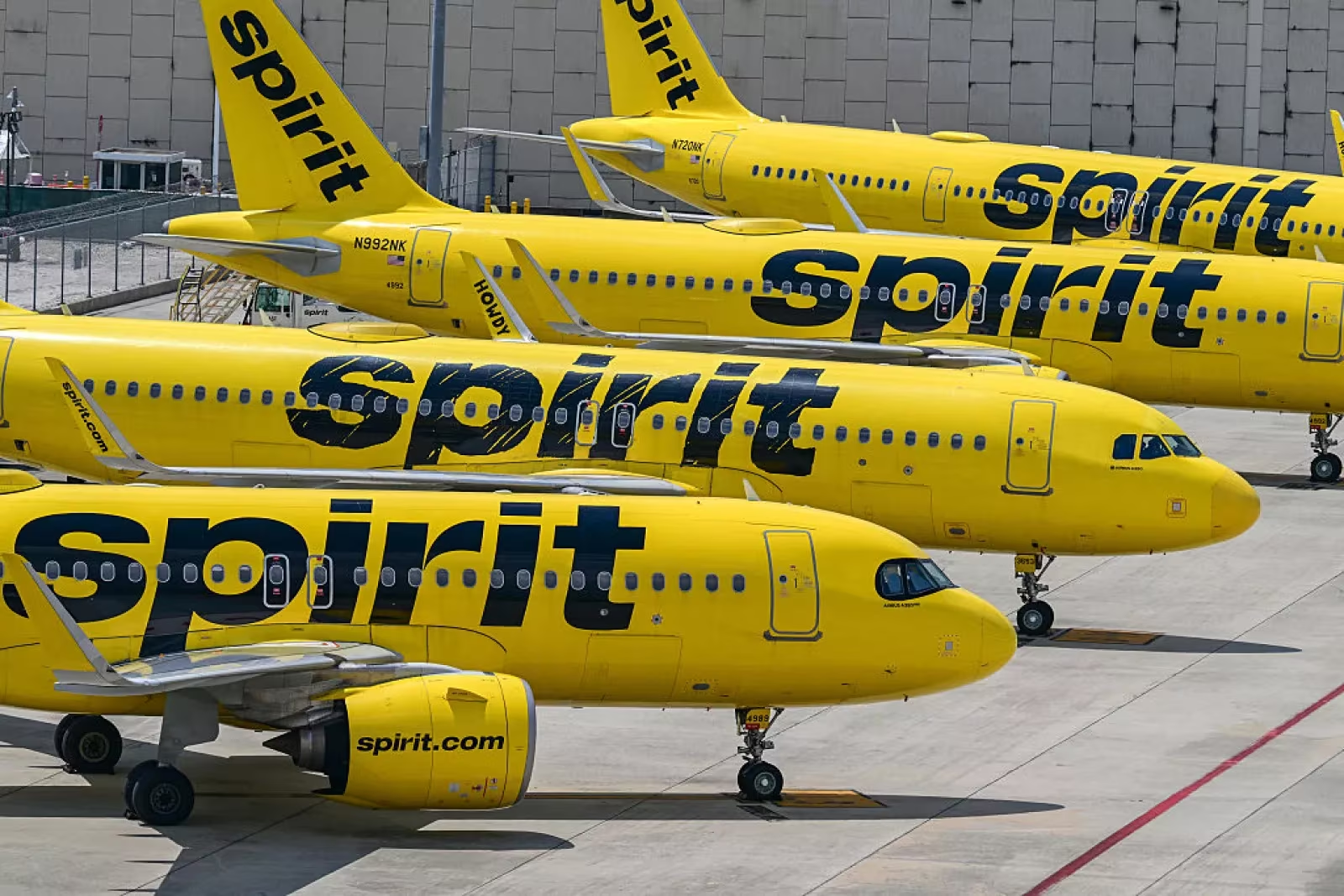
After Spirit Airlines halted operations, most of the carrier’s aircraft were grounded. But several of the airline’s bright yellow jets are still flying—without passengers, carrying only skeleton crews ferrying planes into storage in Arizona.
One such flight was Nomadic Flight 189, which departed from Spirit’s former Florida hub for Phoenix Goodyear Airport. The aircraft was being transferred there for long-term preservation.
The airline’s collapse left more than 90 aircraft stranded at dozens of airports across the United States. Spirit is now attempting to liquidate virtually every asset it can—from planes and engines to real estate, maintenance facilities, airport slots, and boarding gates.
Days after shutting down operations, the company’s lawyers asked a court for permission to begin an “orderly wind-down of operations.”
Most of Spirit’s aircraft, however, are not owned by the airline itself. According to court filings, more than 60 jets—nearly two-thirds of its active fleet—were leased, and lessors are demanding their return as quickly as possible.
“Everybody is trying to move the planes out as fast as they can,” said Steve Giordano, managing partner of Nomadic Aviation Group. His company specializes in ferrying aircraft across the country and works with six of Spirit’s leasing firms.
According to Giordano, some aircraft are already being prepared for re-leasing, others will have their engines removed for installation on different jets, while some may ultimately be dismantled for parts.
“With some of them, nobody really knows what to do yet,” he said.
Spirit is also hoping to profit from the sale of 28 Airbus A320-family aircraft it owns outright, as well as an office building in South Florida, maintenance bases, and other assets.
Particularly valuable for the market are the airline’s boarding gates and airport slots. Analysts note that Spirit controls attractive positions at airports in Houston, Dallas, Las Vegas, and Los Angeles.
“I wouldn’t be surprised if other airlines try to grab at least some of those gates,” said Atmosphere Research Group analyst Henry Harteveldt.
Spirit also owns sought-after takeoff and landing slots at New York’s LaGuardia Airport and Newark Liberty International Airport in New Jersey.
“Those kinds of slots are easy to sell, and there will almost certainly be a line of buyers,” said Ahmed Abdelghany, a professor at Embry-Riddle Aeronautical University.
One of the biggest problems for aircraft owners has turned out to be not future use, but the return process itself. Many jets remain parked at terminals or stranded at the airports where they happened to be when the airline shut down.
“It’s total chaos. Nobody wants to touch them. There’s no clear return mechanism,” Giordano said.
To ferry the planes, Nomadic hires certified pilots, including former Spirit employees. But because they no longer wear airline uniforms and because of the broader confusion, they often find themselves explaining their actions to police, security personnel, and airport authorities.
“You walk up and say, ‘I need access to this airplane, I’m repossessing it.’ And the first response is always, ‘No, no, no,’” Giordano recalled.
The situation in fuel markets has created an additional complication. According to Harteveldt, the sharp rise in aviation fuel prices—up roughly 70% since the start of the war with Iran—has made many of Spirit’s aircraft less attractive to buyers.
He believes soaring fuel costs were among the factors behind Spirit’s collapse, while other airlines are now facing similar financial pressure.
“There will be buyers. But the sales process will probably move much more slowly than it would have a few years ago—or even three months ago,” the analyst said.
That means many of Spirit’s aircraft could remain parked in the Arizona desert for a long time.