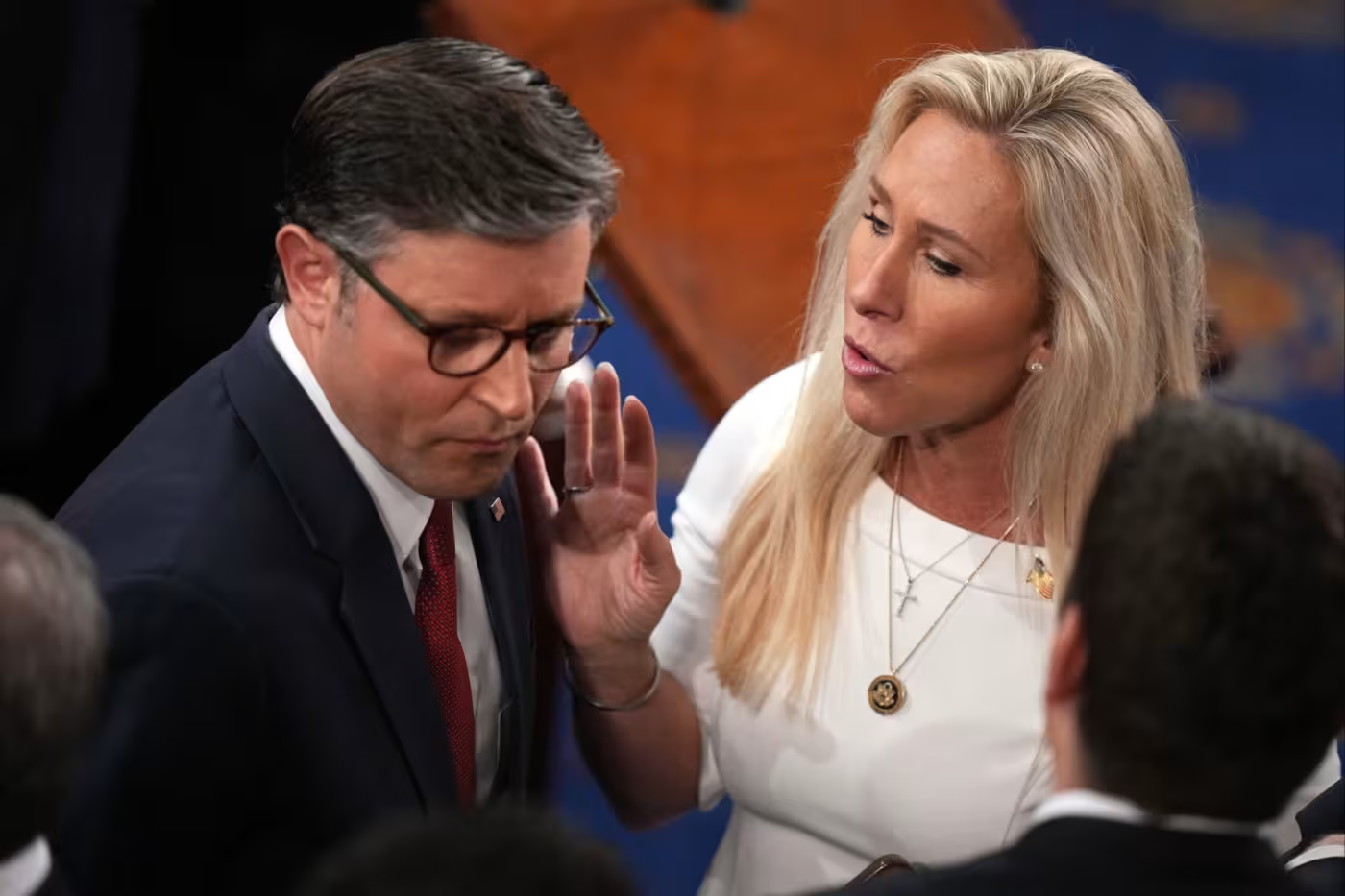
After a string of failed campaigns and a slide in Donald Trump’s approval ratings within the Republican Party, discontent with the House leadership has intensified. Speaker Mike Johnson, who rose to the position with Trump’s backing, now faces criticism from Republican women accusing him of delaying decisions, breaking promises, and refusing to put a key bill mandating the divestment of shares to a vote. The escalation coincides with a wave of retirement announcements and mounting anxiety ahead of the 2026 elections, when Republicans will have to defend their fragile majority.
The rift within Donald Trump's Republican Party is no longer concealed after the disappointing midterms: House Speaker Mike Johnson has come under heavy fire from fellow Republicans. A group of Republican women has turned against him, calling into question the discipline and loyalty that long shaped how most rank-and-file members responded to Trump’s second-term agenda—and to Johnson himself as his dependable ally in Congress.
This internal struggle reflects growing Republican concerns about their prospects in the 2026 elections, when they must defend a precarious House majority against the backdrop of Trump’s low ratings. “Politicians have a good sense of what’s happening,” said longtime GOP strategist and former senior congressional aide Doug Heye. “They’re animals that start to scatter before an earthquake.”
Johnson is rapidly becoming a focal point of internal discontent, and the criticism is growing sharper. Party leader Elise Stefanik of New York, whom Trump briefly considered for the post of U.S. ambassador to the UN, called the speaker “a political novice” and said he does not enjoy the confidence of most House Republicans. Anna Paulina Luna of Florida admitted she was “upset” and “angry” over Johnson’s refusal to bring to a vote a bill requiring lawmakers and their spouses to divest their stock holdings. Nancy Mace of South Carolina likewise voiced frustration with the delay, stressing that her constituents expect tangible action: “Conservatives want action NOW, not later. Some of us have waited decades for Congress to carry out the will of the people. I’m tired of waiting, and so are Americans,” she wrote on X.
Discontent intensified after the unexpected announcement by Georgia’s scandal-prone Make America Great Again supporter Marjorie Taylor Greene that she will leave Congress in January. The decision, made following a public quarrel with Trump and frequent clashes with Johnson, caught the speaker off guard. She later echoed Stefanik’s criticism: “As usual with the speaker—promises made, promises broken.”
Lifted from relative obscurity to the speakership in October 2023 with Trump’s backing, Johnson managed to keep a frequently fractious Republican Congress functioning over the past two years. Earlier this year, he played a central role in shepherding the president’s “one big beautiful bill” through Congress. But pressure has mounted in recent weeks: rank-and-file Republicans have faulted him for his handling of government funding negotiations, for his approach to Justice Department documents tied to the late financier Jeffrey Epstein, and for uncertainty over extending health insurance tax credits set to expire at year’s end. “He definitely wouldn’t have the votes to remain speaker if the vote were held tomorrow,” Stefanik told The Wall Street Journal.
As anxiety grows over the party’s standing heading into next year’s elections, internal criticism is hardening into open attacks. The Real Clear Politics average on the generic congressional ballot—asking voters which party they would prefer to control Congress—currently gives Democrats a five-point edge.
Greene is just one of several Republicans who have chosen to step aside in recent weeks. More than two dozen lawmakers have already left the House or announced plans to do so at the end of their terms—and many in Washington expect the wave to grow. Former speaker Kevin McCarthy, ousted in 2023 largely through efforts led by Greene and her allies, told Fox News that her departure may signal more exits to come: “She’s almost like a canary in the coal mine.”
Even so, some Republicans are trying to soften the impression of a party in disarray. Mary Miller of Illinois said Johnson leads the House with “God-given courage, clarity, and remarkable patience.” Disagreements are inevitable, she said, but “our mission is bigger than any single figure or headline, and House Republicans must remain united in working for the American people.”
Yet the party has suffered painful defeats in this year’s elections—including the gubernatorial races in New Jersey and Virginia. And while Republicans held a seat in Tennessee, their candidate won by just nine points, compared with Trump’s 22-point margin there a year earlier. Analysts expect the trend to continue. “A lot of people see the writing on the wall,” said former Pennsylvania congressman Charlie Dent. “These are midterms, and the president’s party historically takes a heavy hit.”
Dent added that Johnson’s close alignment with Trump could become a liability, especially as the president’s ratings fall and criticism of his administration grows among some Republicans. “Johnson has completely hitched his wagon to the president,” he said. “And many lawmakers are now thinking about their own survival and are unhappy with what’s happening in the White House.”
Even so, Johnson remains confident, telling reporters on Capitol Hill on Wednesday: “I’m not concerned about my position at all. We are moving forward with this agenda.” When asked whether he plans to run for speaker again in the next Congress, Johnson replied: “Absolutely.”