After three years of explosions and redesigns, SpaceX is preparing this week for the twelfth test launch of Starship—the rocket underpinning nearly all of the company’s most ambitious projects, as well as a long-anticipated IPO that could value the firm at more than $2 trillion.
Starship sits at the center of plans to deploy larger batches of Starlink satellites, build a lunar base, and advance Elon Musk’s latest concept: a network of more than one million satellite-based data centers to support artificial intelligence. In the longer term, the rocket is meant to become the foundation of SpaceX’s Mars colonization program.
SpaceX describes Starship as “the most powerful rocket ever built” and says the vehicle will eventually be capable of carrying between 100 and 150 tons into low Earth orbit. Yet last year the company acknowledged that earlier prototypes delivered only about 35 tons—less than Falcon Heavy and only slightly more than Falcon 9. NASA’s Space Launch System, which recently sent four astronauts toward the Moon during the Artemis II mission, can place roughly 95 tons into orbit.
The gap is supposed to be closed by a new version—Starship V3, equipped with redesigned Raptor engines. “Version 3 may face some initial problems because it’s a radical redesign,” Musk said last year, describing the upgraded spacecraft as a “giant improvement.” “But it’s capable of delivering more than 100 tons to orbit with full reusability.”
V3 testing began with another setback—in November the booster exploded on a test stand. Failures have followed the program from the beginning: the first launch in April 2023 ended in an explosion less than four minutes after liftoff, while subsequent flights showed progress but V2 vehicles also repeatedly broke apart in flight. SpaceX describes such incidents as part of the development process.
“This is an incredibly complex vehicle, and they’re still learning about it,” said former Starbase manager and former NASA associate administrator for space operations Kathy Lueders, adding that SpaceX’s philosophy has always revolved around the idea that the fastest way to learn is to fly hardware in real-world conditions.
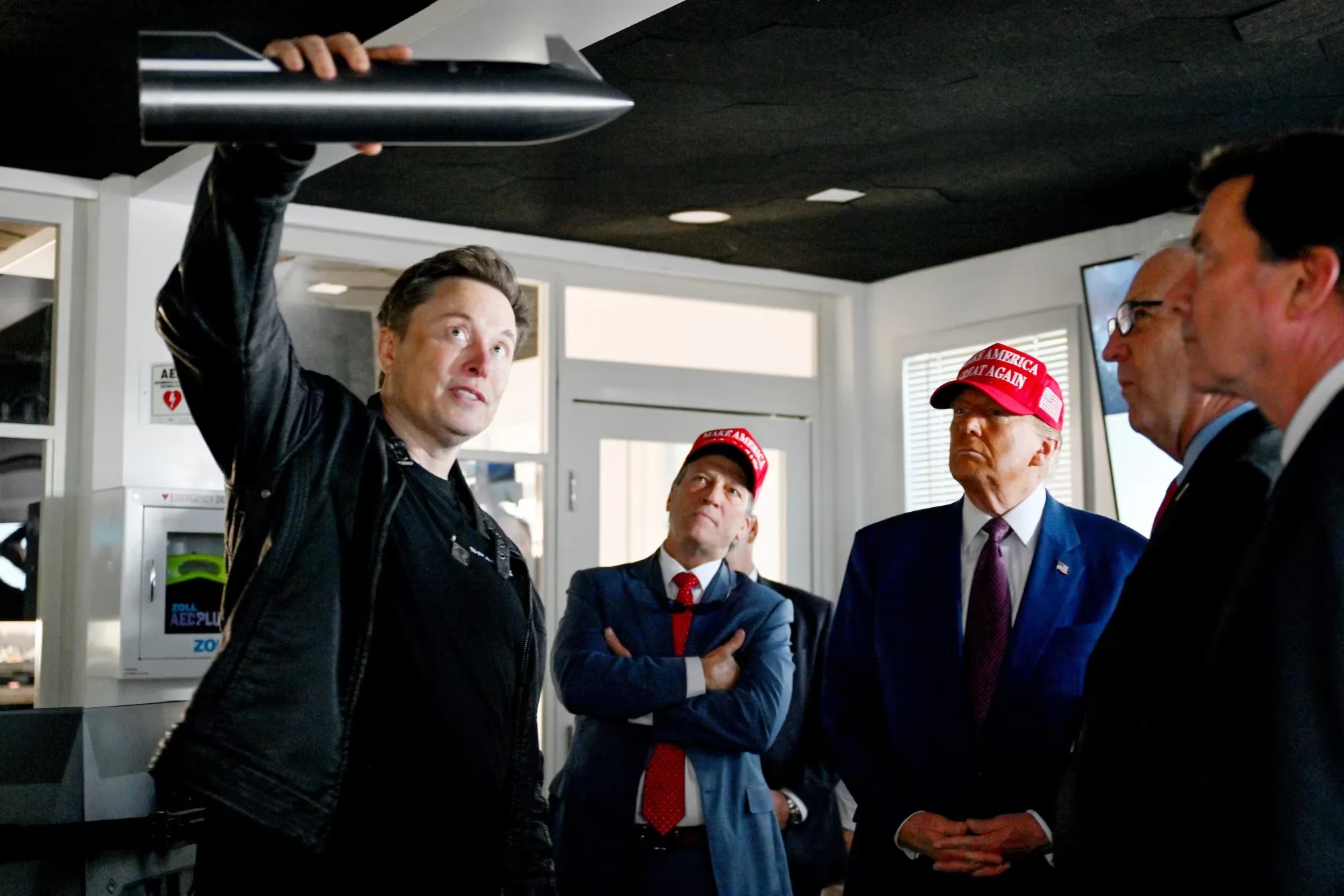
Each launch has become a major media event—Donald Trump attended one of the earlier test flights. But this one carries particular weight because the IPO could take place within weeks.
Starship is the centerpiece of Musk’s entire strategy. The future of the satellite network, AI infrastructure, lunar missions, and the Mars program all depend on its capabilities. If the vehicle fails to achieve its promised payload capacity, the company will need more launches, more time, and more money.
SpaceX has already demonstrated an ability to improve rocket performance incrementally. Falcon 9 initially offered far lower capabilities than it does today—through a longer airframe and upgraded engines, the company roughly doubled the rocket’s payload capacity. The new Starship will also be larger than earlier versions, and SpaceX says it includes numerous engineering upgrades.
But Starship is vastly more complex. The rocket uses 33 Raptor engines, compared with nine Merlin engines on Falcon 9, and is intended to be fully reusable—returning every part of the system to Earth. No orbital rocket in history has achieved that: Space Shuttle, Falcon 9, and New Glenn recover only portions of their vehicles.
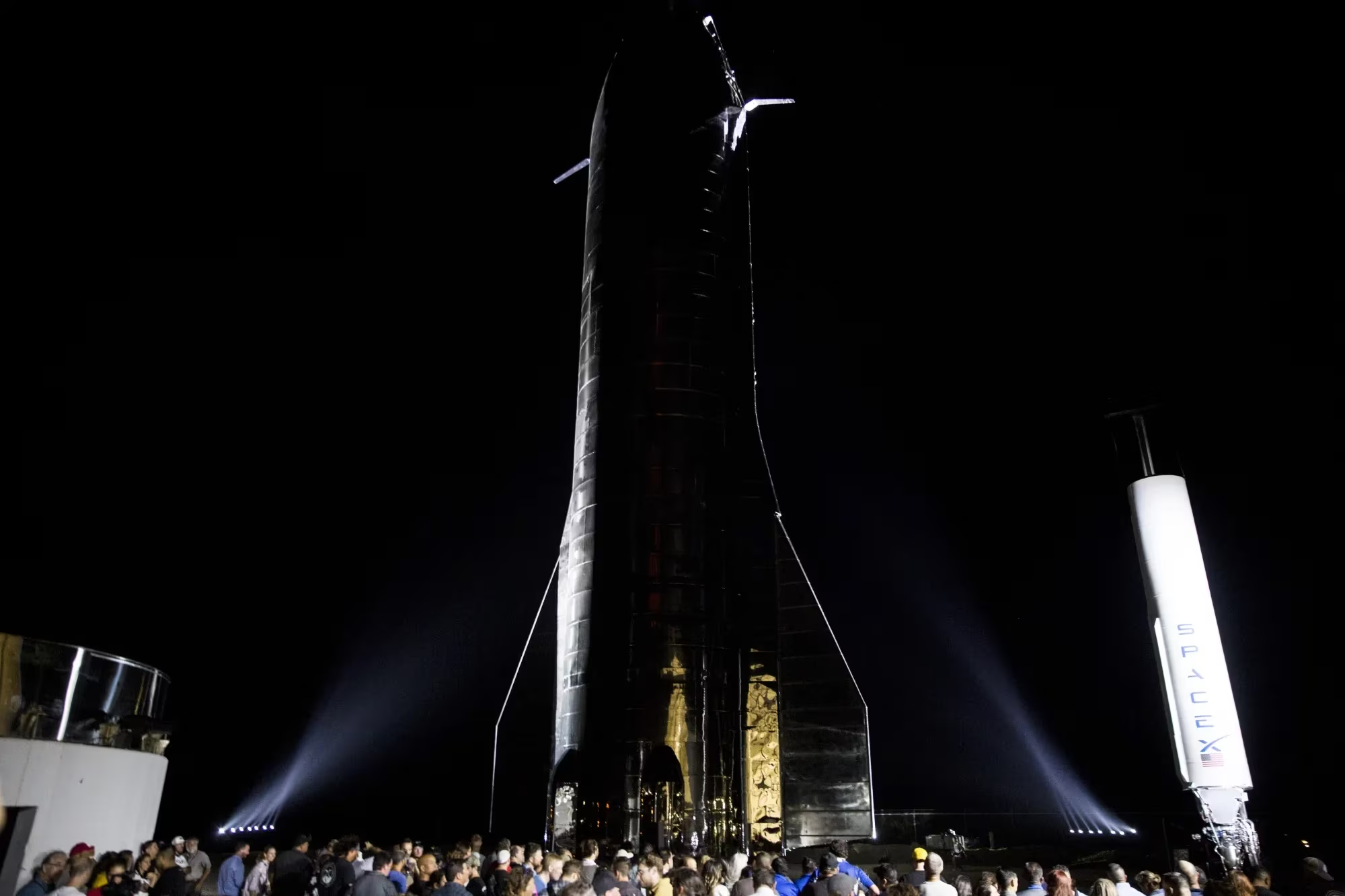
A Starship launch vehicle prototype during a SpaceX event in Cameron County, Texas. 2019.
To achieve full reusability, both Starship and its booster must retain fuel after launch in order to slow down and perform vertical landings. That reduces the amount of propellant available for carrying payloads into orbit. Additional mass also comes from heat shields and aerodynamic systems required for atmospheric reentry.
Another challenge involves future missions to the Moon and Mars, which will require Starship to refuel in orbit. If the vehicle carries less propellant than planned, the number of tanker launches rises accordingly. SpaceX previously estimated that a single lunar mission would require around ten refueling launches, while NASA officials referred to figures “in the high tens.” The company has never demonstrated docking two Starships in orbit or transferring fuel between them.
“If substantially more launches are required, that could make SpaceX’s architecture less efficient compared with competitors,” said former NASA chief economist Alex MacDonald.
According to experts, reaching a 100-ton payload on the very first V3 flight would be extremely difficult, and some doubt such performance is achievable at all. Former NASA flight director Paul Shawn Hill noted that the Space Shuttle’s capabilities improved substantially over time, but were never tripled. “The new Raptor engine is radically different from the previous version. Can they achieve the stated parameters? I don’t know,” he said.
Some analysts remain optimistic. BryceTech chief executive Carissa Christensen said she does not expect SpaceX to stop at the rocket’s current capabilities. “The company has a strong history of dramatic technological improvements,” she said.