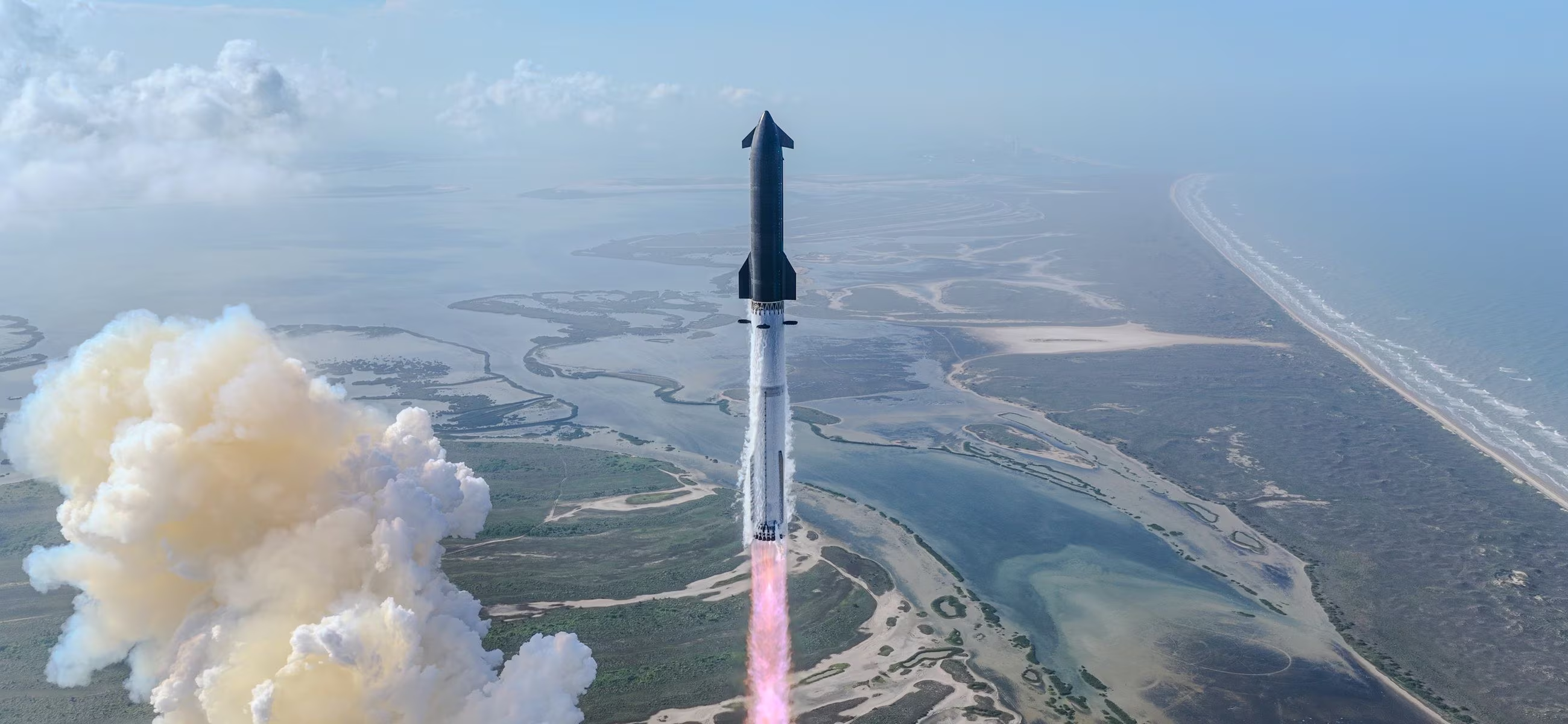
American company SpaceX successfully carried out a test launch of the Starship super-heavy launch system with the Super Heavy V3 booster, which is being developed for future crewed missions to the Moon and Mars.
Starship V3 takes flight for the first time → https://t.co/2gZQUxS6mm pic.twitter.com/Jv71tvm18w
— SpaceX (@SpaceX) May 23, 2026
The launch took place on May 22 at 5:30 PM local time from the Boca Chica site in Texas. The mission had originally been scheduled for the previous day but was postponed because of a technical malfunction.
Roughly seven minutes after liftoff, the booster separated from the spacecraft and splashed down in the Gulf of Mexico.
Liftoff of Starship! pic.twitter.com/LQLdjK5V6K
— SpaceX (@SpaceX) May 22, 2026
Starship itself completed a partial orbit around Earth. During the flight, the spacecraft deployed 20 simulator satellites into orbit, along with two modified Starlink satellites.
Splashdown confirmed! Congratulations to the entire SpaceX team on the twelfth flight test of Starship! pic.twitter.com/XXBAtryPpL
— SpaceX (@SpaceX) May 22, 2026
After completing the orbital phase, Starship re-entered Earth’s atmosphere and splashed down in a designated area of the Indian Ocean. The total flight time was approximately 65 minutes.
The launch marked Starship’s twelfth test flight and the first for the system’s third-generation configuration—the V3 version equipped with upgraded Raptor engines.
Of the program’s previous 11 launches, SpaceX classified six as successful.