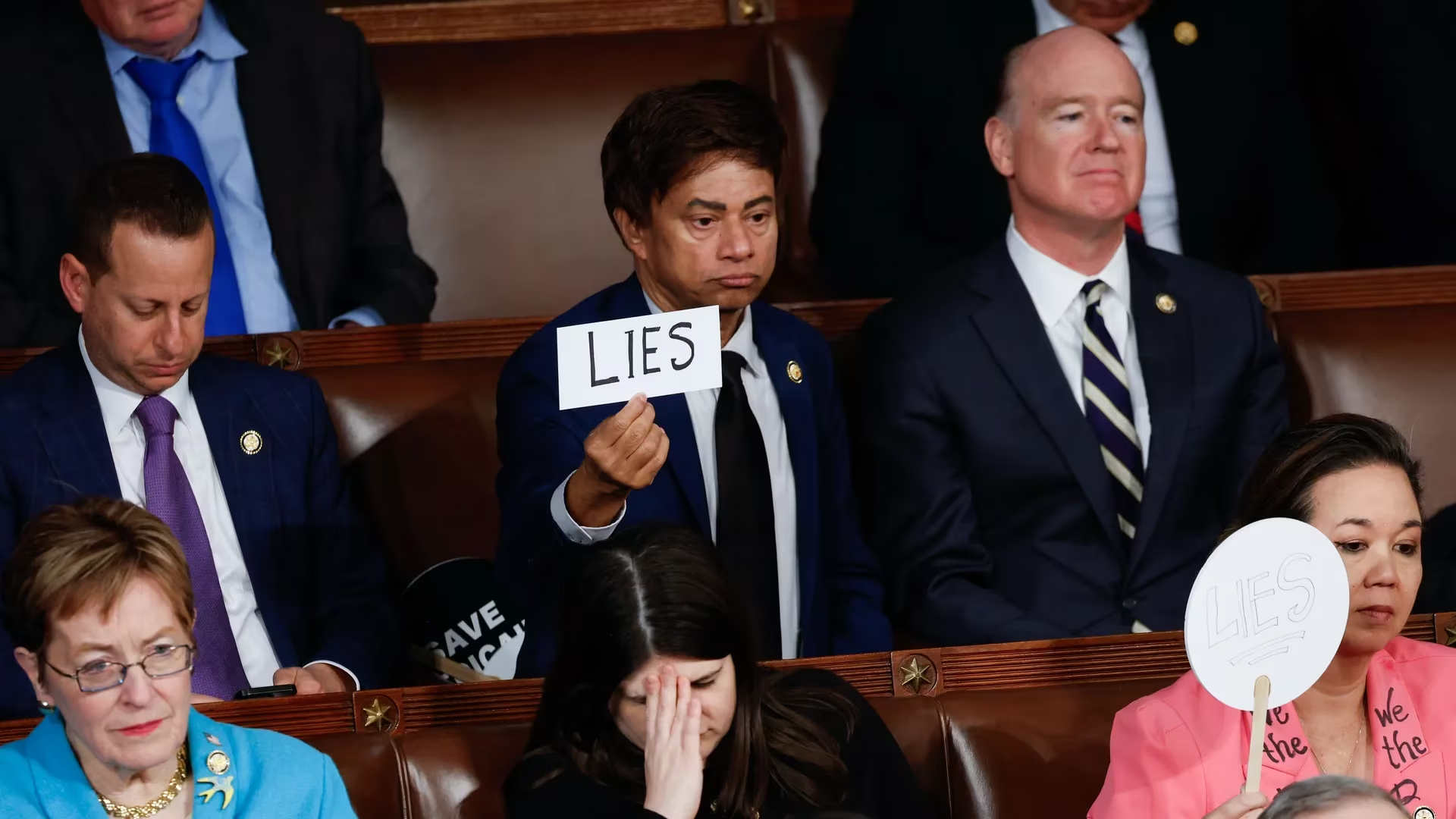
Some Democrats in the House of Representatives say they intend to ignore instructions from the Democratic minority leader, Hakeem Jeffries, not to stage protests during Donald Trump’s State of the Union address on February 24.
Even among progressive lawmakers and participants in last year’s demonstrations, there is an acknowledgment that the experience fell short. “Last year, it didn’t work the way it was intended,” said Representative Greg Casar, the chair of the Progressive Caucus. Another senior progressive Democrat, speaking on condition of anonymity, conceded: “There’s a sense that last time it wasn’t particularly effective.”
At a closed-door meeting on Wednesday morning, Jeffries urged colleagues either to attend the address while signaling “silent dissent” or to stay away altogether. According to several lawmakers and aides, he was irritated by last year’s disruptions and, in private, sharply rebuked the most outspoken protesters. Many moderate Democrats shared that view, having openly criticized their colleagues’ conduct at the time. One centrist called the actions “utterly counterproductive” and said they “looked childish,” adding: “We need to behave like adults, because Republicans do not.”
Still, some Democrats are looking for ways to register their dissent. Representative Shri Thanedar said he plans to attend the address and wants to “show resistance to what is happening.” “I’ve done that by introducing articles of impeachment and by trying to protest through my work on committees,” he said, adding: “I want to find a way to resist, because he needs to understand—this is not normal.” The chair of the Democratic Women’s Caucus, Teresa Leger Fernandez, said members would “make sure their position on Trump is clear” and that the group “will be active around the State of the Union message.”
Some lawmakers are not ruling out a demonstrative walkout during the speech. Representative Jared Huffman remarked: “For me, it’s just a question of which of his offensive lines will make me stand up and leave, because at some point I will.”
At the same time, not all participants in last year’s most conspicuous protests are ready to disclose their plans. Al Green, who was escorted out of the chamber last year and later censured for repeatedly interrupting the speech, said he has “not yet decided” whether he will attend or repeat his previous actions. Rashida Tlaib also said she is “not yet sure” whether she will go, adding that she plans to bring a guest and “doesn’t want to leave them alone.”
At the same time, Democrats themselves stress that large-scale actions like last year’s—featuring placards, shouted interruptions, and mass walkouts—are unlikely. “This is a serious moment for our country, and I don’t expect anyone to do anything that would detract from its significance,” said Ilhan Omar, a deputy chair of the Progressive Caucus. Another senior progressive Democrat, also speaking on condition of anonymity, noted: “I don’t think there will be any kind of coordinated protest.” Huffman echoed that view: “As far as I know, there’s no organized choreography.”
For many Democrats, the question comes down to whether to attend at all. Asked whether she planned to go, the former Speaker of the House, Nancy Pelosi, first asked for the date of the address. When told it was scheduled for February 24, she replied with a wry smile: “I’ll have to check my calendar.”