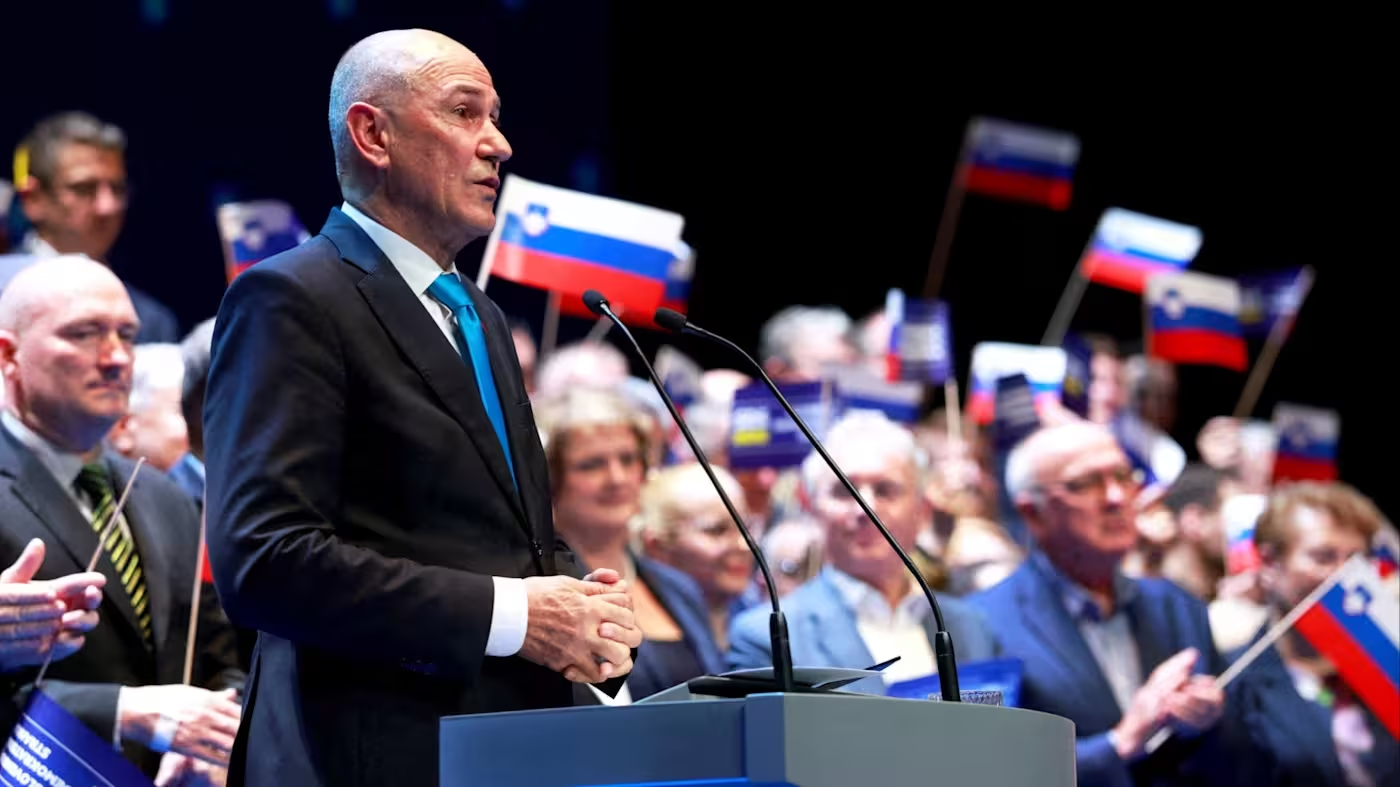
Slovenia—the most developed of the former Yugoslav republics—goes to the polls on Sunday, with liberal prime minister Robert Golob seeking to retain power in a contest against former premier Janez Janša, a supporter of Donald Trump and an ally of Hungary’s leader Viktor Orbán.
The tense campaign is likely to draw a line under a relatively calm period in the country’s political life, shaped by Golob’s centrist government, which decisively defeated Janša in the 2022 election.
Polls suggest the two main rivals are running almost neck and neck, each commanding roughly 25–30 percent of the vote. Analysts expect a fragmented parliament and significant difficulty in assembling a stable coalition to govern the country of about 2 million people.
“It resembles hedgehogs mating—everyone is proceeding with extreme caution,” said Aljaž Pengov Bitenc, an independent analyst in Ljubljana. “Whoever edges ahead, their rival will command a faction of comparable size in parliament. Forming a coalition will take a very long time.”
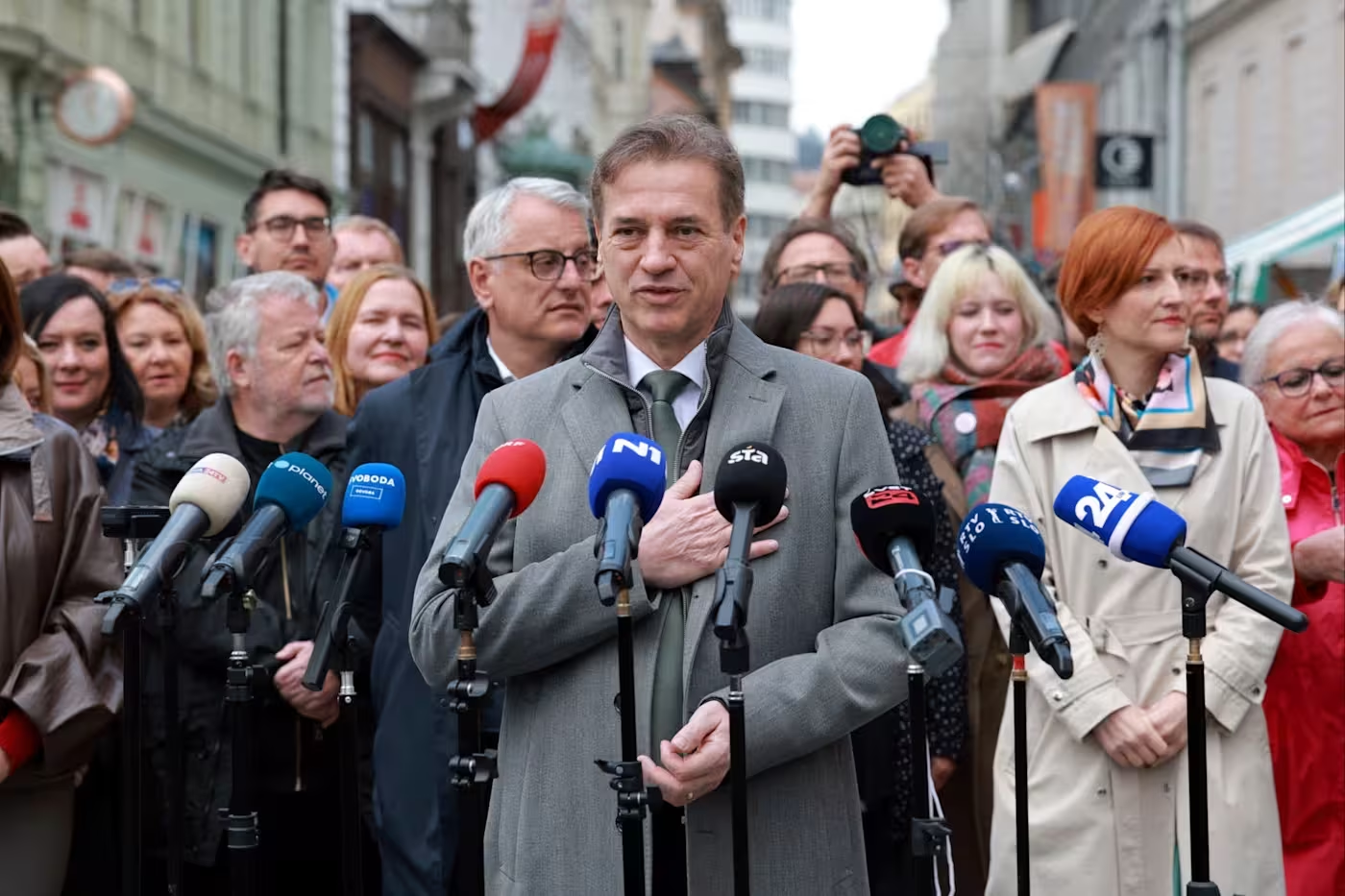
Support for Prime Minister Robert Golob has declined in recent years.
The campaign has been marked by claims from Golob and his government that individuals linked to Israel may have interfered in the process, allegedly seeking to discredit the prime minister through a corruption scandal and thereby bolster Janša’s position.
National security chief Vojko Volk told journalists on Wednesday that he had evidence of “direct foreign interference in the elections in Slovenia”. Such actions, he said, were likely carried out “on orders [from within] Slovenia”, though he did not name any suspects.
Volk said the Israeli private intelligence company Black Cube had visited Ljubljana four times over the past six months. He listed several Israelis involved in those trips, including the company’s chief executive, Dan Zorella.
French President Emmanuel Macron said on Thursday that he was aware of “clear and documented interference, disinformation and meddling by third countries” ahead of Slovenia’s election, Reuters reported. “Europeans must fully mobilise to protect our democracies from such interference,” he said.
A staff member who answered the phone at Black Cube’s UK office declined to connect the call to a company representative. No one answered calls at its Israel office, and the company did not immediately respond to a request for comment sent by email.
Janša rejected the allegations and has not been found to have broken the law.
Golob’s government was among the first in Europe to recognise Palestine amid Israel’s military operation in Gaza.
Support for Golob has declined in recent years, as he has not fully delivered on promised reforms to the healthcare and pension systems. This has allowed Janša, who has served three times as prime minister, to reassert himself as a prominent figure in the political contest.
Janša maintains close ties with right-wing forces internationally and has pledged to cut business taxes while reducing funding for the social sector and civil society. His position is reinforced by favourable coverage in a media network partly built by companies linked to Orbán.
Slovenia’s president, Nataša Pirc Musar, has indicated that she will entrust the formation of a government to the party that can demonstrate a parliamentary majority, rather than simply the one that wins the largest number of seats. In practice, this points to complex coalition negotiations involving multiple smaller political forces.
“I think Golob has slightly better chances of forming a coalition—possibly by offering more attractive terms to potential partners,” said Pengov Bitenc.
Over the past four years, Golob has governed in coalition with centrist and left-leaning parties. According to the analyst, he may seek to bring Anže Logar—a former foreign minister under Janša who has since established his own political force—into an alliance.
Recent scandals have “intensified political polarisation and made the electoral environment more toxic than ever,” said Mario Bikarski, a senior analyst at Verisk Maplecroft, adding that Slovenia is not, however, in an exceptional political crisis.
In his assessment, the new coalition will likely face internal frictions, though the country does not appear more unstable than its neighbours or the EU as a whole.
“A potential return of Janša to the post of prime minister would cause some concern in European capitals,” he added. “However, his government would most likely act pragmatically and maintain working relations with EU partners.”