The scandal surrounding the German payments company Wirecard began long before the recent verdicts handed down in Singapore. Once one of Europe’s fastest-growing fintech firms and a constituent of the DAX index, Wirecard collapsed in 2020 after auditors were unable to verify the existence of €1.9bn supposedly held in its accounts. The subsequent investigation uncovered years of falsified reporting and fictitious transactions, including through structures in Asia that created the appearance of a viable business. Singapore, where Wirecard operated a key regional unit, became one of the central venues for criminal proceedings against those involved in the scheme—and it was here that courts were the first to issue real prison sentences.
On Tuesday, January 6, a Singapore court delivered the toughest sentences to date linked to the collapse of Wirecard—one of Europe’s largest accounting frauds. Two businessmen received lengthy prison terms for their role in falsifying documents that allowed auditors to be misled.
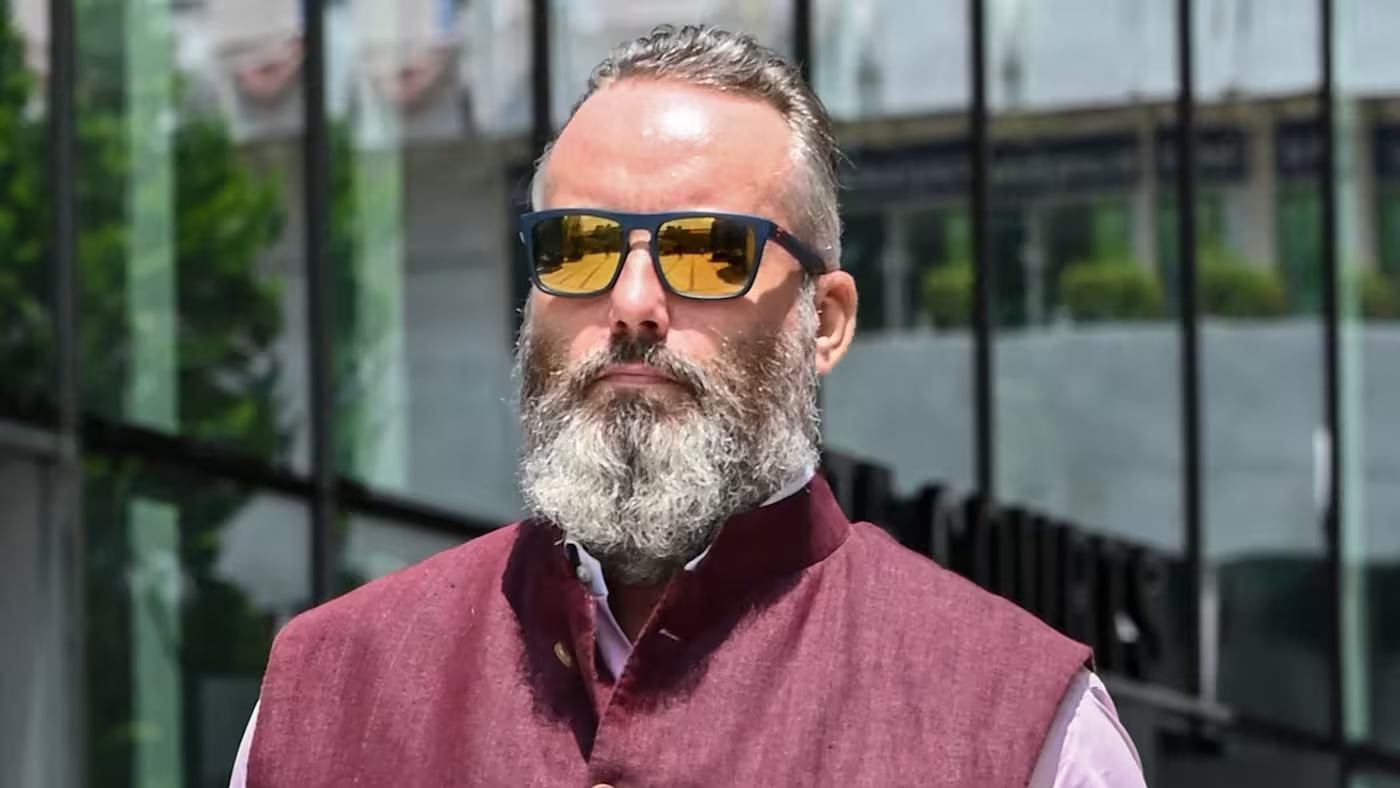
James Henry O’Sullivan, a 51-year-old British national, and Shan Rajaratnam, a 59-year-old Singaporean, were found guilty in September of forging documents that gave auditor EY the impression that the German fintech start-up held hundreds of millions of euros in its accounts. O’Sullivan was sentenced to six and a half years in prison, while Rajaratnam received a ten-year term. Lawyers for both men said they intended to appeal.
The two-year trial was the most prominent of several criminal cases in Singapore connected to Wirecard, which maintained an operation in the city-state. In June 2020, the company admitted that the €1.9bn it claimed to hold in its accounts did not, in fact, exist. The business subsequently collapsed.
O’Sullivan was regarded as a close confidant of Wirecard’s former chief operating officer, Jan Marsalek—one of Europe’s most wanted financial criminals—and managed a number of Asia-based companies linked to Wirecard. Prosecutors said it was he who instructed Rajaratnam, the director of corporate secretarial firm Citadelle Corporate Services, to forge documents.
The charges concerned correspondence and reports sent by Rajaratnam between March 2016 and March 2018 that purported to confirm the existence of €150m in cash under Citadelle’s management on behalf of Wirecard, held in bank accounts in Singapore.
In 2024, Rajaratnam’s brother, Thilagaratnam Rajaratnam, received a four-week prison sentence and a five-year ban from serving as a company director for breaches of fiduciary duty. He was paid $500 a month for the nominal role of sole director and shareholder of a business owned by O’Sullivan, and admitted that he had signed seven letters to Wirecard’s auditors stating account balances without checking whether the funds were actually there.
Over the past three years, several mid-level Wirecard managers in Singapore have been convicted and sentenced to prison—among the first individuals to receive criminal judgments in the sprawling scandal.
James Wardhana, an Indonesian national and former international finance process manager at Wirecard Asia, was sentenced to 21 months in prison in June 2023. Chai Ai Lim, a Singaporean and former head of finance at Wirecard Asia, received a 10-month jail term. Both were found guilty of conspiring to misappropriate funds.
At a later stage, another Wirecard executive based in Singapore, See Lee Wee, was sentenced to 10 weeks in prison.
The Monetary Authority of Singapore has also imposed fines on several financial institutions for breaches of anti-money-laundering requirements linked to Wirecard’s activities.
Meanwhile, criminal proceedings are continuing in Germany against Wirecard’s former chief executive, Markus Braun, and two other senior managers, while Jan Marsalek has fled to Russia to evade prosecution.