Singapore expects economic growth to slow in the second half of the year as inflation picks up and electricity costs rise because of the conflict in the Middle East.
“As a small and highly open economy, Singapore will not be able to insulate itself fully from this crisis,” Deputy Prime Minister Gan Kim Yong told parliament on Tuesday. “Growth in the coming quarters is likely to come under pressure because of the continuing conflict.”
Gan, who also serves as minister for trade and industry, said preliminary data point to resilient economic activity in the first quarter. His ministry will release an advance estimate of GDP on April 14 and update its macroeconomic outlook in May.
The country’s economy, which depends heavily on imported natural gas for power generation, is especially vulnerable to swings in global energy markets—recent disruptions have only added to cost pressures. Prime Minister Lawrence Wong said the government is stepping up contingency planning, including the creation of an interagency crisis committee to assess risks and safeguard energy security.
In February, the authorities revised their forecast, raising expected GDP growth to 2–4% from an initial 1–3%.
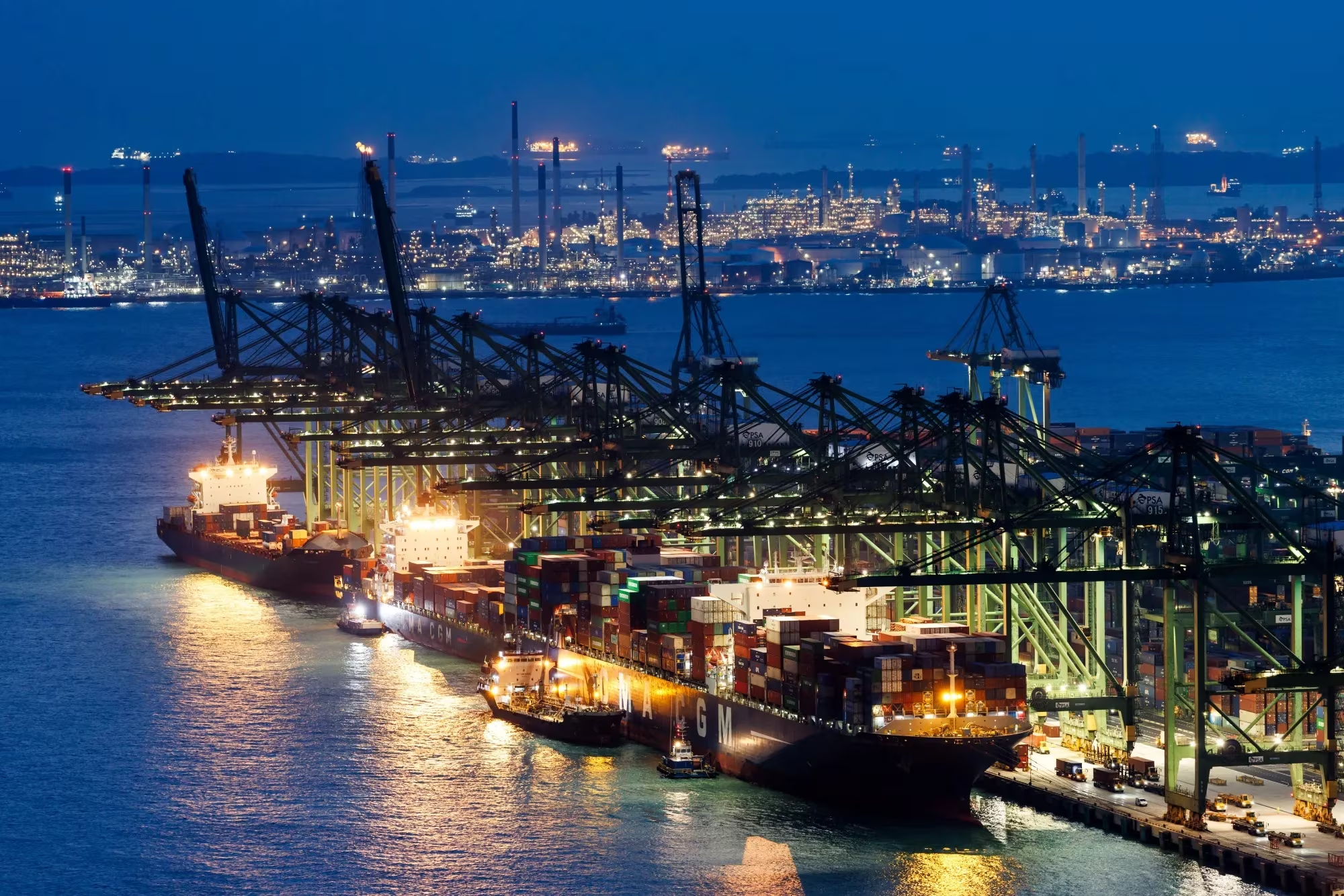
Gan said the effects would be uneven across sectors. The heaviest blow to manufacturing will fall on businesses that use natural gas, crude oil and refined petroleum products as feedstocks.
Oil refineries have already cut capacity utilization and rerouted supplies, increasing purchases from outside the Middle East. Pressure will also intensify on downstream chemical companies, he said.