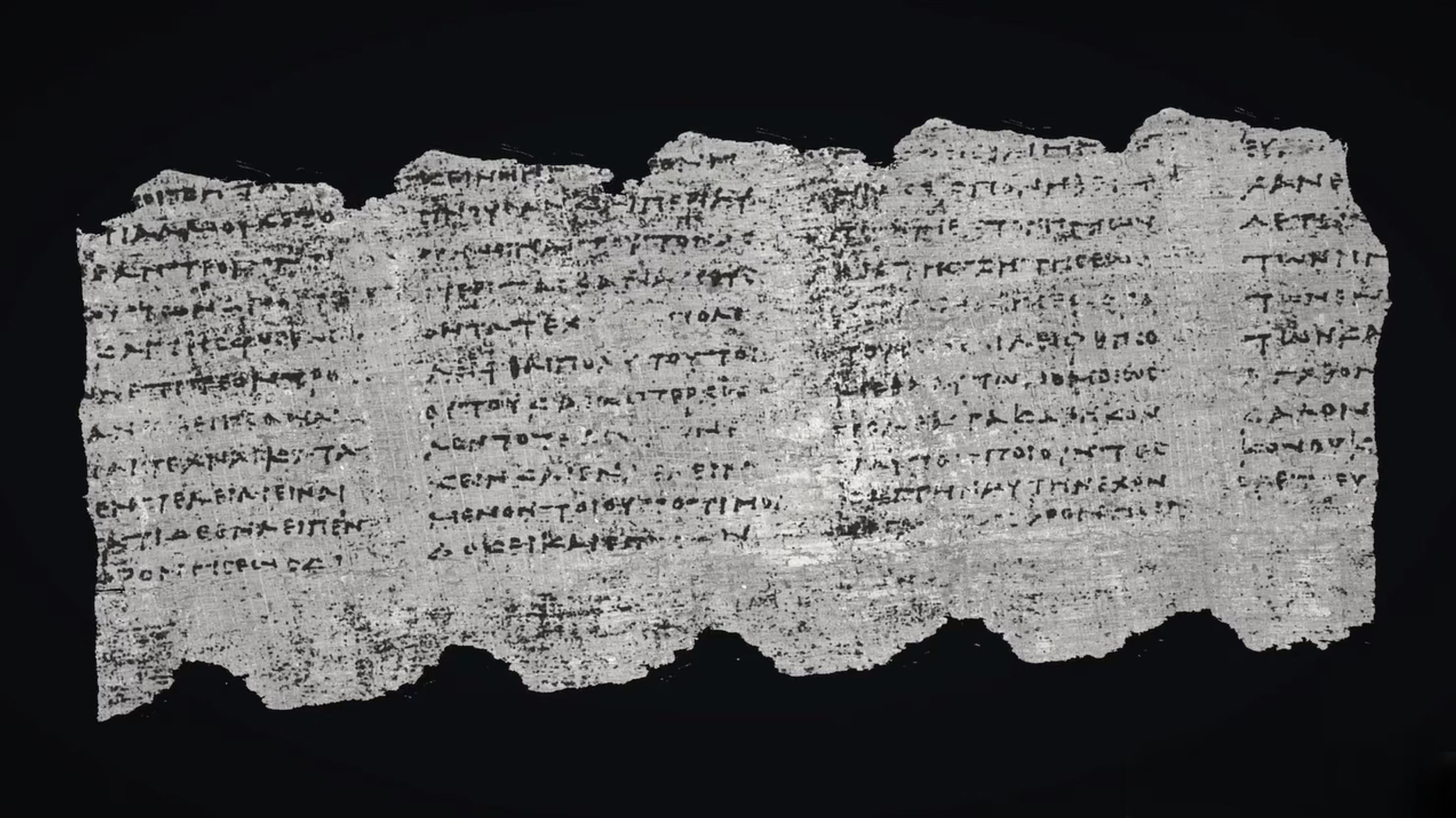
Scientists at the University of Kentucky, using machine-learning methods, have been able to read a preserved section of one of the scrolls damaged in the eruption of Vesuvius in 79 CE, The Washington Post reports.
Researchers say they managed to fully “unroll” and read about 20 columns of text on a scroll found at a villa in ancient Herculaneum in southern Italy. The house is believed to have belonged to the father-in-law of Gaius Julius Caesar—the Roman consul and censor Lucius Calpurnius Piso Caesoninus.
More than 400 papyri were discovered on the grounds of the villa. For centuries, they lay beneath stones, ash and lava. The scrolls became fragile and charred, crumbling at the slightest touch. Earlier attempts to unroll them, undertaken from the mid-18th century onward, destroyed some of the papyri and left others unreadable.
The new results were made possible by algorithms developed by researchers at the University of Kentucky as part of the Vesuvius Challenge. With their help, scientists were able to reveal sections of scrolls totaling about five feet—nearly one and a half meters—in length.
At first, in 2023, researchers managed to read a single word, then several phrases. Now the work concerns about 230 columns of text across several scrolls.
“I consider this a landmark moment, because from now on we will talk more about the texts than about the technology,” said University of Kentucky scientist Brent Seales, who in the early 2000s developed the first methods for digitally “unrolling” scrolls without physically touching them.
Among the finds disclosed on June 25 are new chapters of the treatise On the Gods by the philosopher Philodemus of Gadara. He is believed to have been a court scholar at the villa of Caesar’s father-in-law.
It had previously been assumed that the work consisted of a single chapter, but one of the scrolls says it has eight chapters.
Scientists believe the villa’s library was much larger than the portion already found. According to them, the scrolls survived precisely because they were charred but did not burn completely, as happened in nearby Pompeii.
So far, because of the high cost of the work, only about one tenth of the discovered scrolls have been scanned.