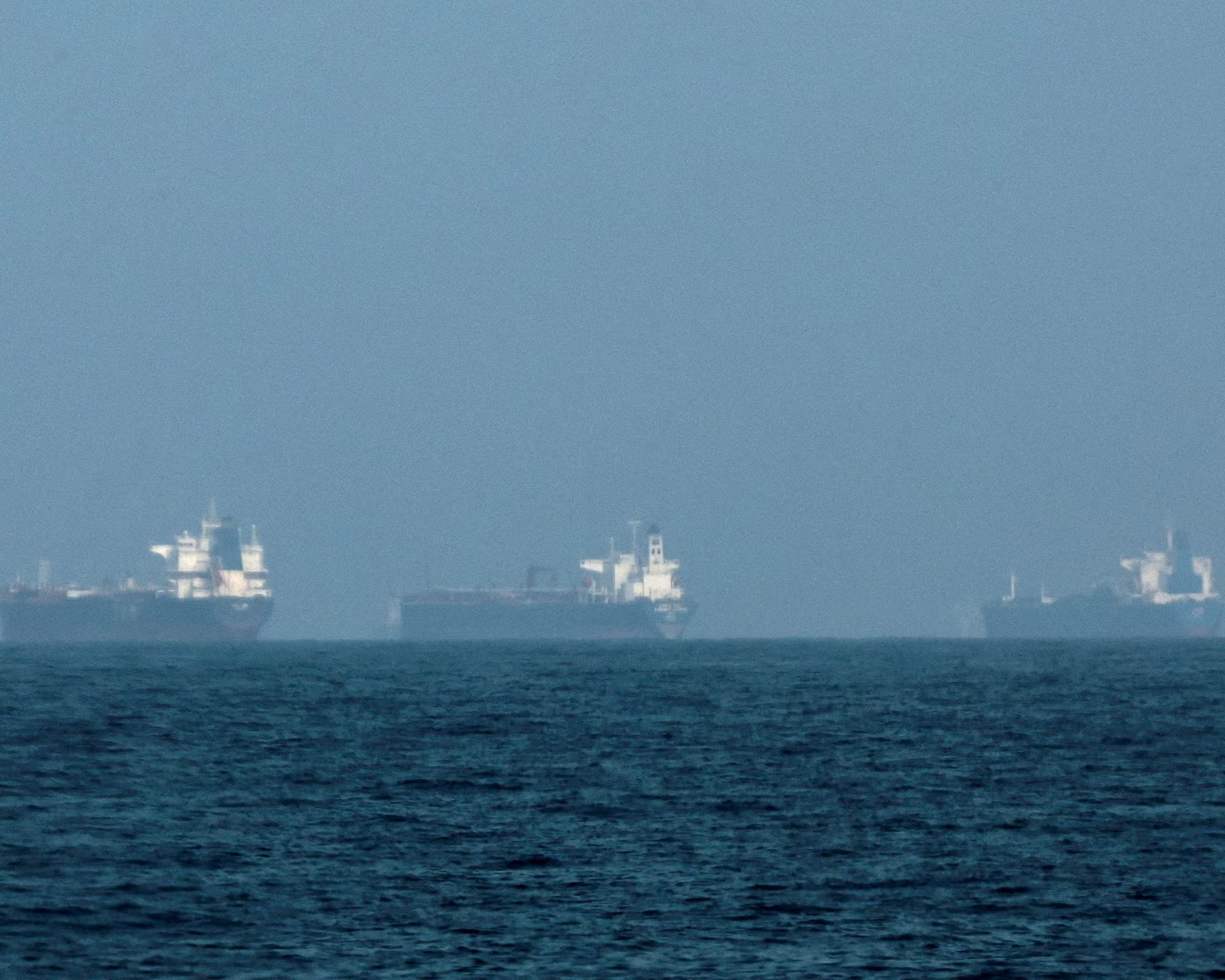
Saudi Arabia’s state oil company has warned of “catastrophic consequences” for global oil markets if the war waged by the United States and Israel against Iran continues to block shipping through the Strait of Hormuz.
The world’s largest oil company expects to preserve the ability to export roughly 70% of its normal crude output despite the effective blockade of a key trade artery. However, its chief executive stressed that a prolonged disruption would lead to “dramatic” consequences for the global economy.
Oil shipments from the Middle East through the narrow strait have been effectively blocked following U.S. strikes on Iran 11 days ago, removing roughly 20 million barrels of oil per day from the global market.
Aramco chief executive Amin Nasser said: “While we have faced disruptions in the past, this crisis is undoubtedly the largest the region’s oil and gas industry has ever encountered.”
Because of the disruption, Aramco can no longer dispatch oil tankers from the Persian Gulf. The company expects to meet its obligations to buyers by redirecting part of its supplies through the East–West pipeline to the port of Yanbu on the Red Sea, from where the crude can be shipped to global markets.
The company said it plans in the coming days to raise throughput in the pipeline to its full capacity—7 million barrels per day. Around 2 million barrels a day will be directed to refineries in western Saudi Arabia, while the remaining 5 million barrels will be shipped to the global market. That amounts to roughly 70% of the kingdom’s normal export volumes.
Normally, about 100 tankers a day pass through the narrow strait south of Iran. But their number has fallen to only a handful of voyages after Iran’s Islamic Revolutionary Guard Corps threatened to “burn” any vessel using the route. Roughly one-fifth of global trade in oil and liquefied natural gas passes through this corridor.
Aramco said it is currently meeting part of its commitments to customers using oil inventories stored outside the Persian Gulf region. Nasser noted that these reserves cannot be used “for an extended period, but for the moment we are making use of this option.”
The disruption has already driven a sharp rise in oil prices. This week they climbed as high as $119 a barrel—the highest level since 2022, when Russia launched its full-scale invasion of Ukraine, intensifying concerns about the state of the global economy. On Tuesday, Brent crude was trading at roughly $91 a barrel.
Nasser warned: “For global oil markets, this will have catastrophic consequences—and the longer this disruption persists, the more dramatic the consequences for the global economy will be.”
Finance ministers from the G7 countries on Monday discussed the possibility of releasing strategic oil reserves held by governments in an effort to contain rising prices. However, no agreement was reached to activate such a mechanism. In the history of the market, such measures have been used only five times.