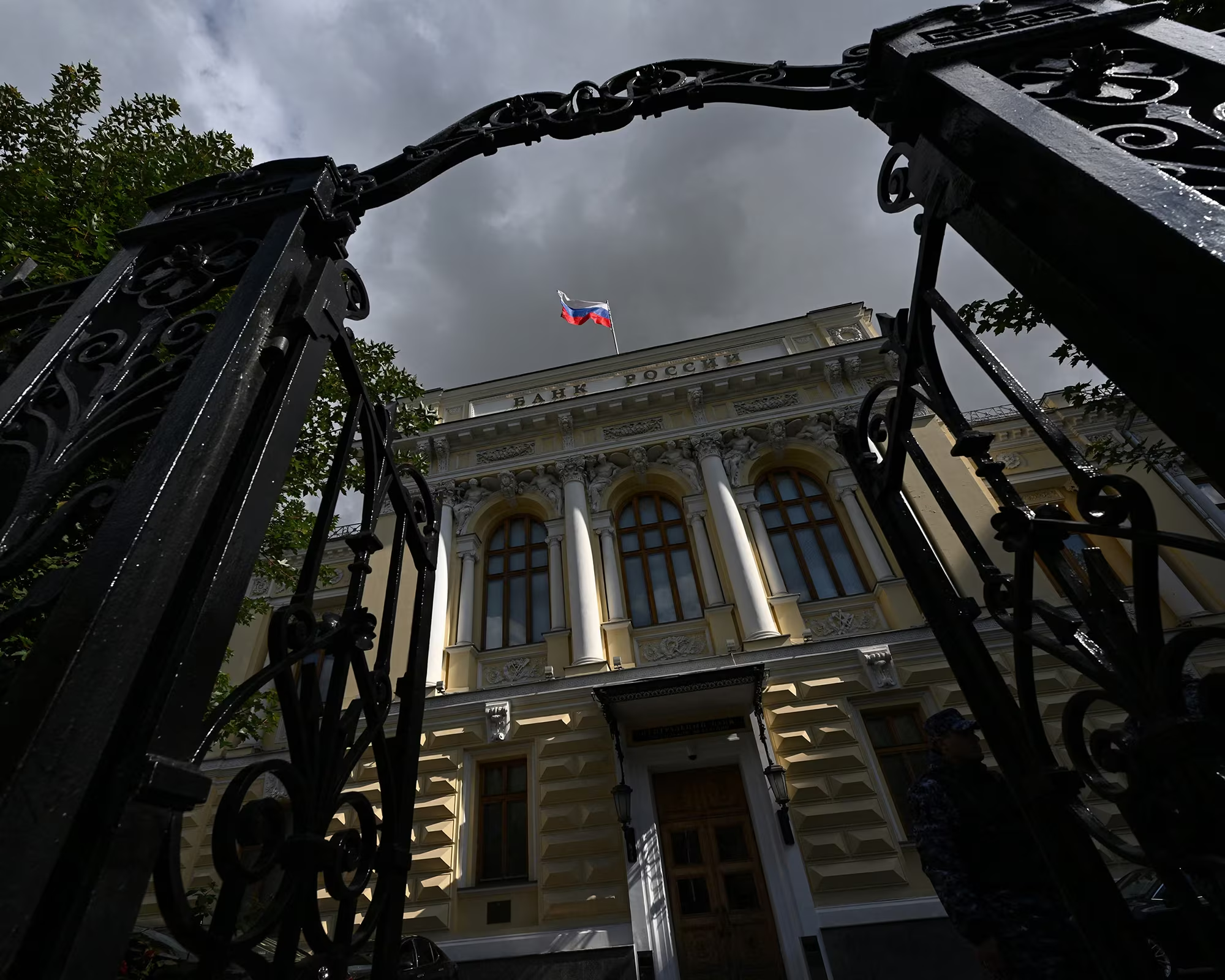
Russia may resort to the confiscation of Western assets worth up to $127 billion in response to the potential use of frozen Russian reserves to support Ukraine, reports the Financial Times. According to the paper’s sources, this scenario has triggered serious concern among several EU member states, including Belgium, Italy, and Austria, and is already being discussed at the pan-European level.
Estimates by the Kyiv School of Economics indicate that the Kremlin has already frozen or seized the assets of at least 32 Western companies in earlier disputes, resulting in cumulative losses of no less than $57 billion. Additional risks stem from a decree signed by Vladimir Putin in September, which introduces an accelerated nationalization mechanism and allows for the expropriation of local subsidiaries of European corporations. The authorities justify this instrument as a means of responding swiftly to “hostile actions,” including the confiscation of EU assets.
Belgian officials believe that Euroclear could be among the first targets of any retaliatory measures. Assets belonging to clients totaling around €17 billion remain blocked within this infrastructure and are, in their assessment, under direct threat.
At the same time, as the Financial Times notes, 2,315 Western companies continue to operate in Russia. They include units of banks such as Austria’s Raiffeisen and Italy’s UniCredit, which have earned substantial profits during the war but have been unable to repatriate them due to a ban on dividend payments. According to the Kyiv School of Economics, foreign companies generated $19.5 billion in Russia last year.
The risk of confiscation also extends to Western investors who held shares in Russian companies before the invasion, as well as to corporations with stakes in Russian entities or ongoing operations in the country. Since the start of the war, Moscow has barred foreigners from selling Russian securities and from withdrawing proceeds. Dividends and coupon payments are accumulated in so-called Type C accounts, which are controlled by the Russian authorities and are potentially subject to seizure.
Thus, dividends owed to BP from its 19.75% stake in Rosneft could amount to around 340 billion rubles, according to estimates by Alexandra Prokopenko, a former official at Russia’s central bank. A 2024 court ruling, in turn, showed that JPMorgan held 243 billion rubles in Russian assets, “mostly” in Type C accounts.
“This is one of Moscow’s trump cards. If Europe takes any action regarding Russia’s reserves, Russia can simply transfer funds from Type C accounts into the budget,” Prokopenko said. In her words, “this gives them a source of direct revenue at a time when they are running deficits and overspending on defense.” Such a move, she added, would demonstrate the Kremlin’s readiness “to respond in kind.” “Unlike Europe, the Kremlin can do this quickly, without getting bogged down in court proceedings.”
Such scenarios are deepening doubts in European capitals about the idea of extending a reparations loan to Ukraine backed by frozen Russian assets. Last week, Italy’s government supported the EU decision to freeze these funds indefinitely, while at the same time pointing to the risks associated with using them to finance Kyiv.
Europe Must Decide How to Finance Ukraine in 2026–2027
A Brussels Summit Debates EU Borrowing and the Fate of Frozen Russian Assets
The EU Seeks a Way to Fund Ukraine Using Frozen Russian Assets
A New Mechanism Could Bypass the Veto Right and Become a Legal Turning Point for the Union
Claudio Borghi, an Italian lawmaker from the League party, which is part of the governing coalition, warned of the potential consequences of implementing the plan. “How can anyone think that the effective theft of another country’s money will not lead to further catastrophe?” Borghi told the Financial Times. “The first consequence will be that Russia will feel entitled to confiscate all foreign assets.”
In Austria, there are also concerns that Moscow could move to nationalize the local subsidiary of Raiffeisen—the country’s largest bank—whose revenue in Russia reached $2.9 billion last year. “This is uncharted legal territory, and frankly there is growing bewilderment as to why the Commission is simply not engaging in more consultations with member states and, at the very least, not making them feel that their concerns are being taken seriously,” an Austrian official said.