Russia is intensifying strikes on Ukraine’s energy infrastructure amid a prolonged cold snap, leaving millions without reliable electricity and heat. With temperatures falling to minus 20°C, the power system is operating at the limit, while emergency outages in Kyiv and other regions are stretching on for days. At the same time, Ukrainian authorities warn of a critical shortage of air-defense systems and the risk of new, even more precise attacks on key facilities.
Russia is striking Ukrainian nuclear substations, seeking to deprive the country of heat and electricity at the height of the coldest winter since Moscow’s first invasion in 2014.
With temperatures dropping to minus 20°C, Kyiv’s energy system—weakened by months of Russian air attacks—is operating at full stretch. A winter surge in demand, sustained bombardment, and a growing shortage of air-defense capabilities are intensifying the strain on infrastructure.
“The combination of extreme cold and wave after wave of Russian attacks is pushing Ukraine’s energy system to the brink,” said Maksym Timchenko, chief executive of DTEK, the country’s largest private energy company. “We are facing an unprecedented threat and fighting for every megawatt.”
Ukrainian officials say Moscow’s aim is to turn winter into a weapon, undermine civilian resilience, and force Kyiv into concessions at the negotiating table, where the Trump administration is pressing for an end to the war.
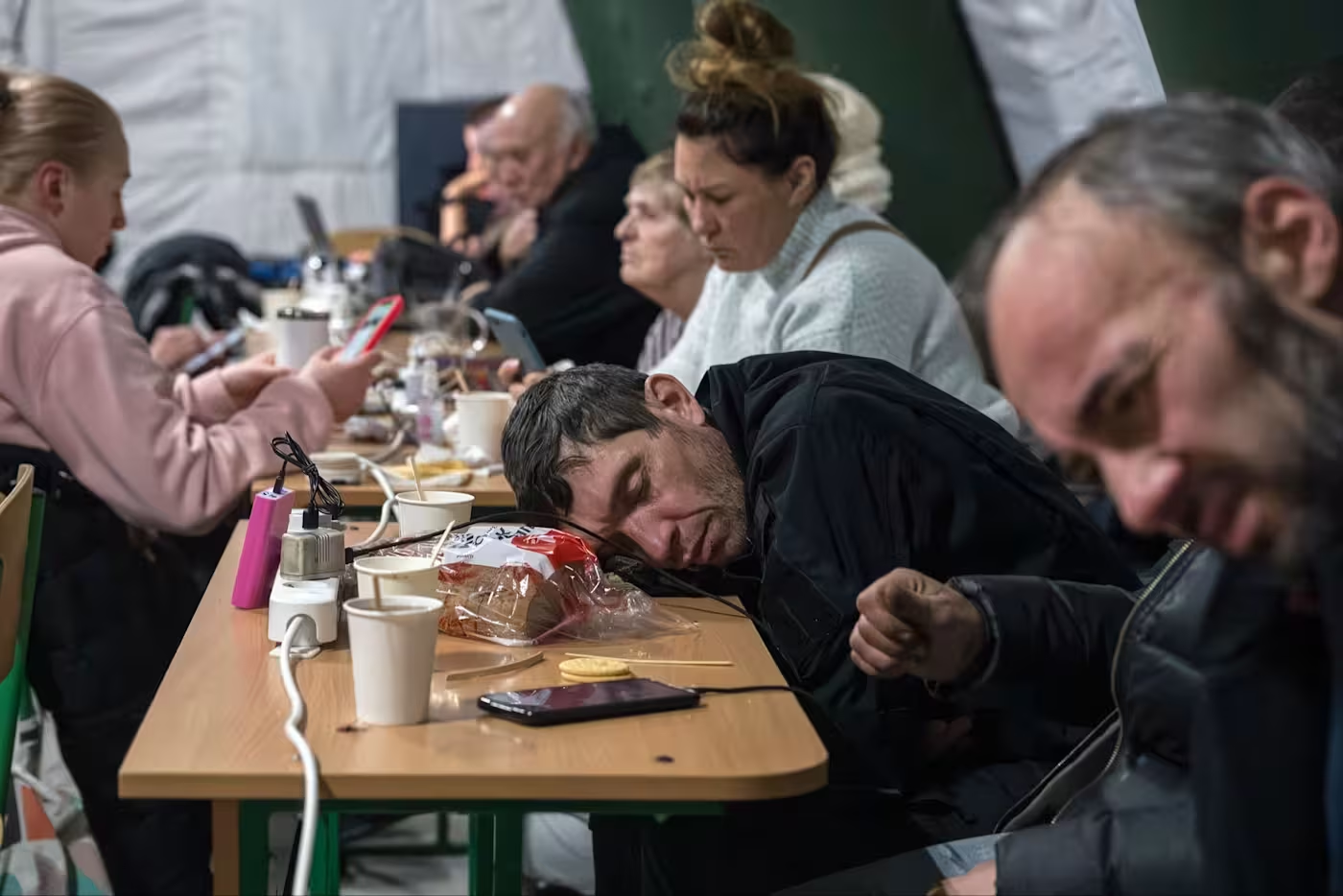
People at a heating point in Kyiv.
Over the weekend, a Ukrainian delegation arrived in Miami to continue talks with US officials.
Ukraine’s ambassador to the US, Olha Stefanishyna, said Kyiv and Washington expect to sign a key document on the country’s economic development next week in Davos. A separate agreement on security guarantees is proving more difficult, but two senior Ukrainian officials said they hope to agree on an overall “term sheet,” which is expected to be signed in Washington shortly after Davos.
Russia has been striking the Ukrainian capital with particular intensity, launching waves of missiles and drones against electricity and heating facilities. Forecasters predict at least another ten days of subzero temperatures. Kyiv is locked under a thick layer of ice and snow, and the powerful Dnipro River that cuts through the city has frozen over.
In some districts of the capital, power outages have lasted for several days. According to DTEK, more than 6,000 residential buildings were still without heating a week ago. Dozens of apartment blocks remain unheated, the company and local authorities confirm.
Maksym Timchenko, chief executive of DTEK, said the company had deployed “hundreds of mobile crews doing everything possible to keep power flowing.” “This is not only about heat and electricity, but about vital services—water supply and sanitation,” he stressed.
Kyiv mayor Vitali Klitschko announced on Friday that all schools in the capital would remain closed until February 1 to ensure the “safety of children … under difficult conditions.” He also urged residents to wait out the cold spell elsewhere and, if possible, to leave the city.
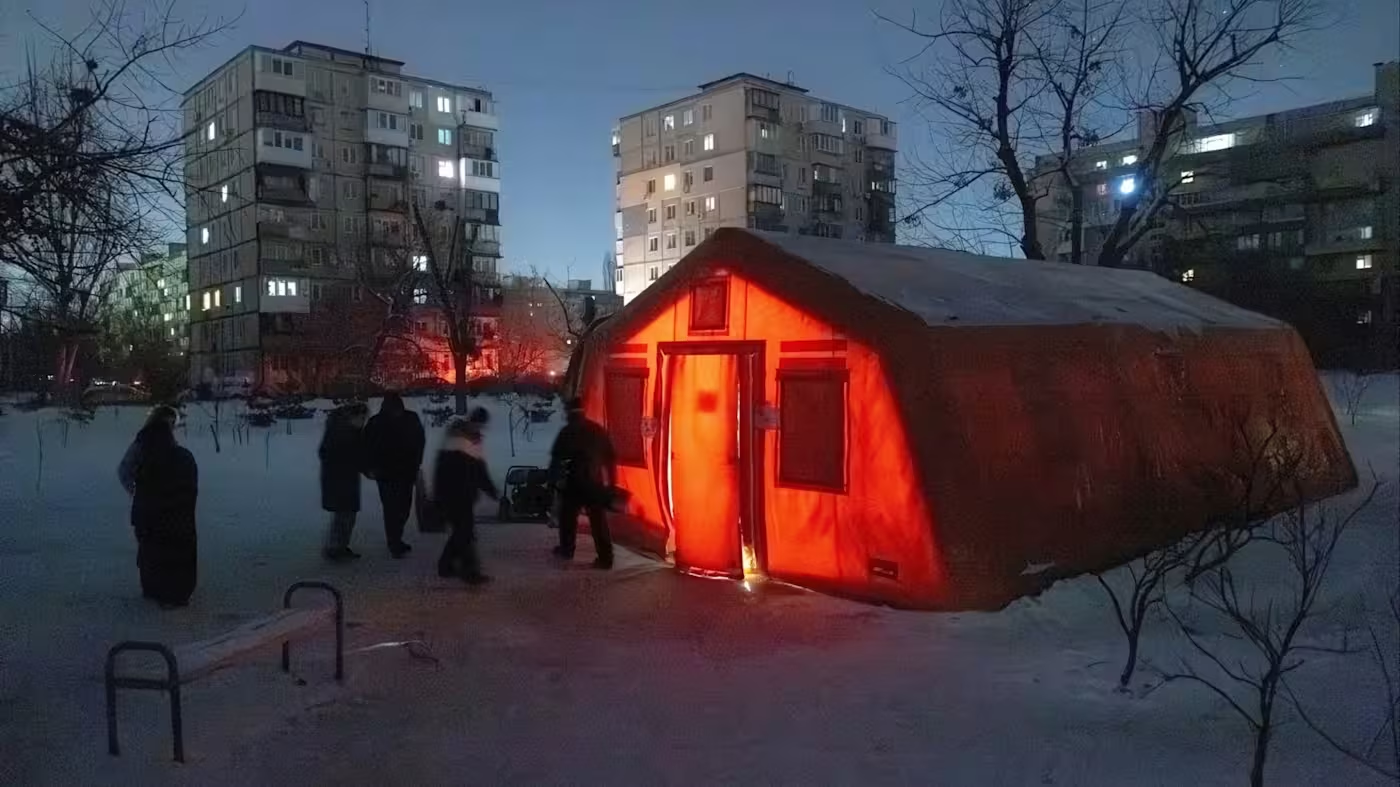
For most, however, that is not an option. Local authorities have set up tents and so-called “points of invincibility” in public buildings, where people can warm up, charge electronic devices, and receive hot food. Ukraine’s state railway company, with support from several international NGOs, has outfitted 100 rail cars, turning them into mobile heating and charging stations.
In that single week alone, Zelenskyy said on Sunday, Russia launched more than 1,300 attack drones, around 1,050 guided aerial bombs, and 29 missiles of various types at Ukraine’s critical infrastructure. In one night, more than 200 drone strikes also hit the Sumy, Kharkiv, Dnipropetrovsk, Zaporizhzhia, Khmelnytskyi, and Odesa regions, killing at least two people.
According to Zelenskyy, each strike “undermines” the efforts of the US and other countries to end the war. “Ukraine is acting as constructively as possible in diplomacy, while Russia is focused solely on strikes and on tormenting people,” he said.
He also warned that ammunition stocks for air-defense systems are at dangerously low levels, noting on Friday that by that morning some systems had been left entirely without missiles.
Ukraine’s military intelligence chief, Oleh Ivashchenko, warned Volodymyr Zelenskyy on Saturday that Russia is preparing even more targeted strikes on substations supplying power to Ukraine’s nuclear power plants.
In Kyiv, some residents are enduring the cold in dark, unheated apartments, layering themselves in warm clothing, wrapping up in blankets, and gathering around candles.