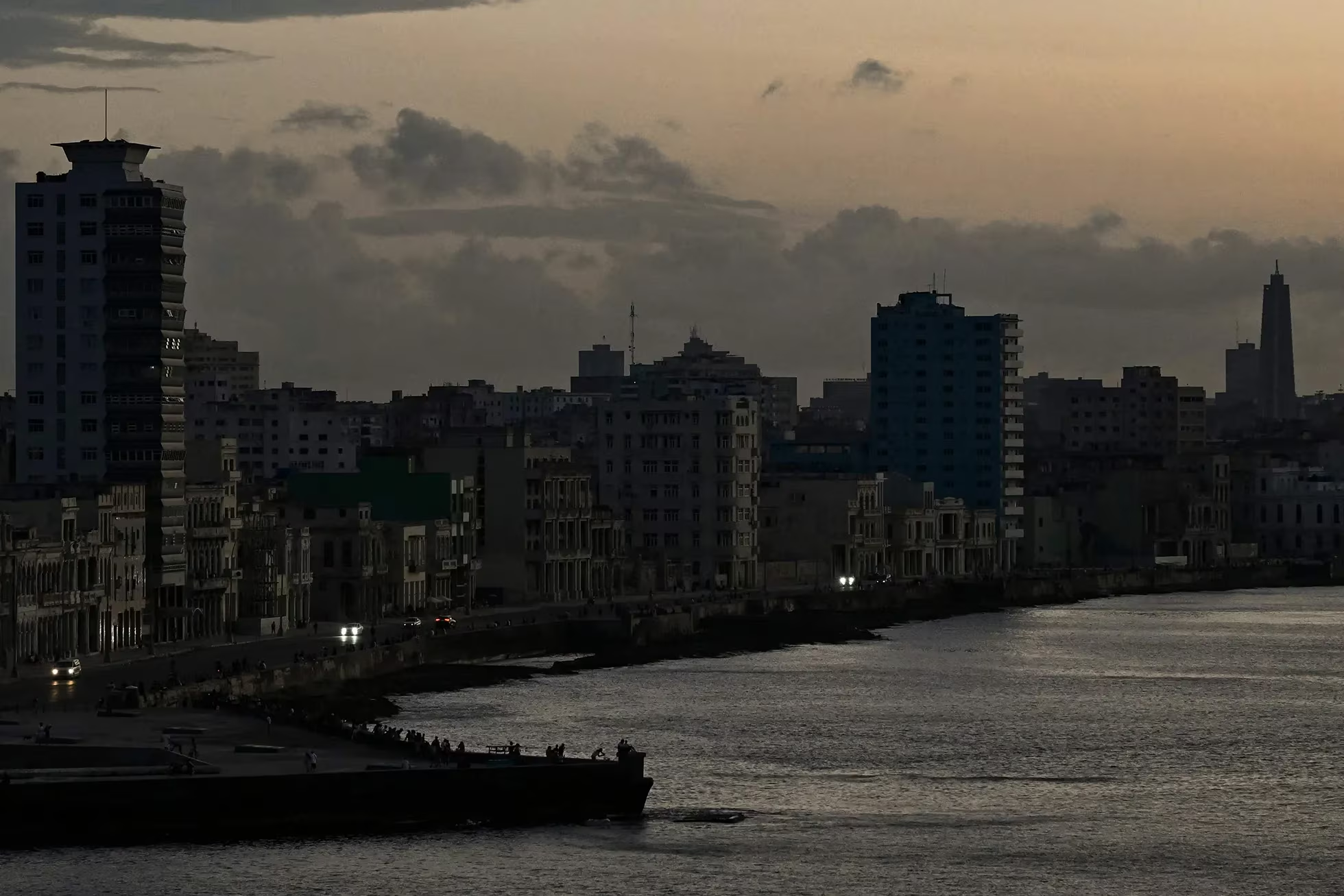
A tanker carrying Russian oil appears to be heading toward Cuba, where authorities are struggling to ease an acute fuel shortage three months after Donald Trump’s administration effectively cut off fuel supplies to the island.
According to Kpler Ltd., a firm that tracks maritime shipments, a vessel carrying more than 700,000 barrels of Russian oil is expected to arrive in Cuba by the end of the month.
The shipment may test the effectiveness of the US embargo—though it remains unclear whether tankers will be able to unload at all. Since December, a US naval blockade in the Caribbean has deterred vessels from entering Cuban ports, while the threat of tariffs on countries supplying oil to the island forced Mexico to halt exports in early February. Mexico had previously emerged as a key supplier to Havana after US forces captured Venezuelan leader Nicolás Maduro and cut off fuel deliveries from Cuba’s principal ally.
According to Kpler, the tanker Anatoly Kolodkin was en route as of Tuesday from the Russian port of Primorsk to the Cuban port of Matanzas, carrying 730,000 barrels of Urals crude. Another tanker, Sea Horse, which also appeared to be transporting Russian oil to Cuba last month, briefly turned back toward the island after altering its route.
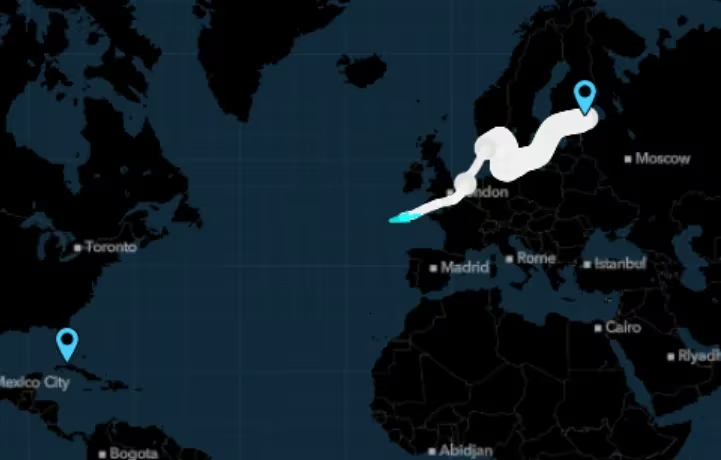
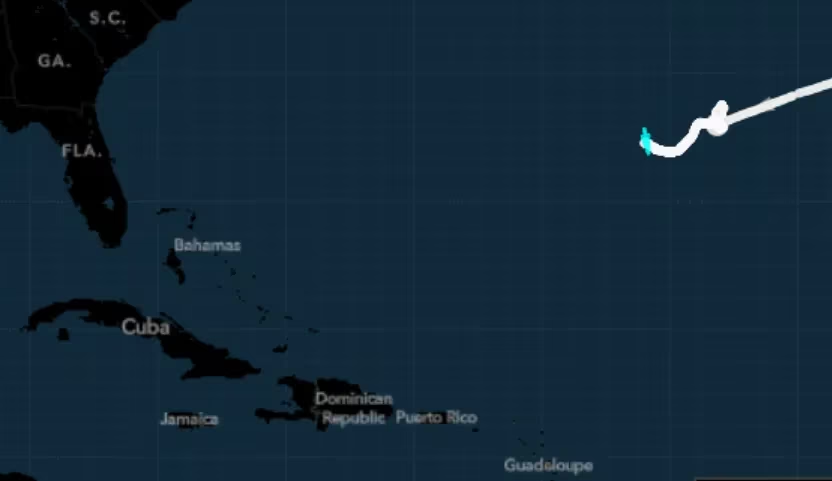
The tanker “Anatoly Kolodkin,” carrying Russian oil, is heading toward Cuba, according to Kpler.
The arrival of even one of these vessels could mark the first major fuel delivery after a prolonged interruption. Cuban President Miguel Díaz-Canel said last week that the country had gone three months without supplies. According to Kpler analyst Matt Smith, this is the longest period without fuel imports in at least 12 years.
Even if delivered, the oil will not provide an immediate solution—it must be refined, a process that takes 20 to 30 days, notes Jorge Piñón, a researcher at the Energy Institute at the University of Texas at Austin. “That is why we say—do not send crude oil to Cuba,” he said. “What is needed are refined petroleum products.”
Still, a volume of 700,000 barrels could prove critical. Cuba requires roughly 100,000 barrels of oil per day, Piñón estimates, while domestic production covers only about two-fifths of that demand. Each day without deliveries brings the country closer to what he describes as a “day of complete depletion”—the point at which fuel reserves run out.
Since the imposition of the blockade, Cuba has been forced to rely on previously accumulated reserves and limited domestic production of heavy crude, which is used for emergency power generation.
The island is already facing регулярные power outages and an acute fuel shortage amid the US embargo. On Monday, the country’s power grid collapsed entirely, leaving around 10 million people without electricity. Disruptions affecting hospitals, коммунальные services, and food storage systems are deepening the humanitarian crisis.
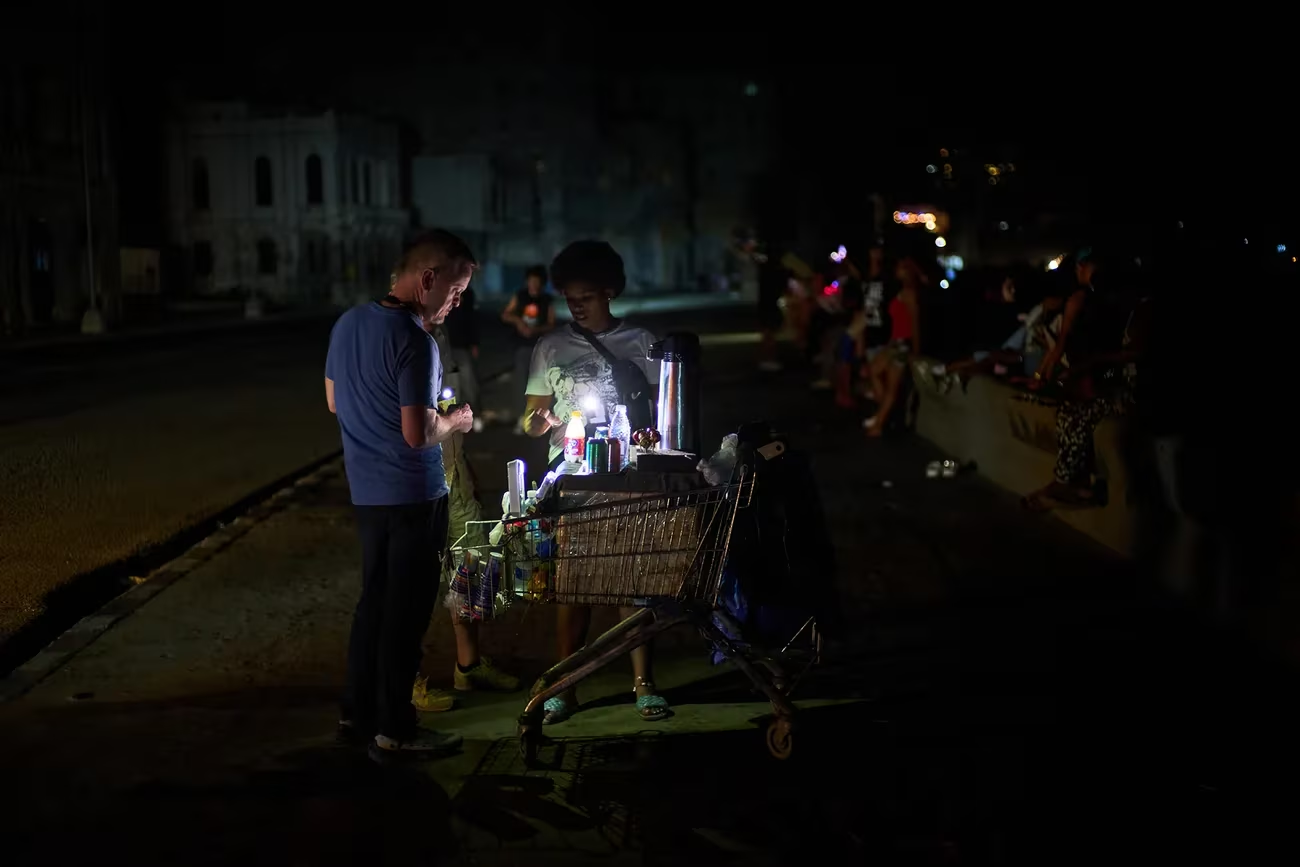
Havana. March 16, 2026.
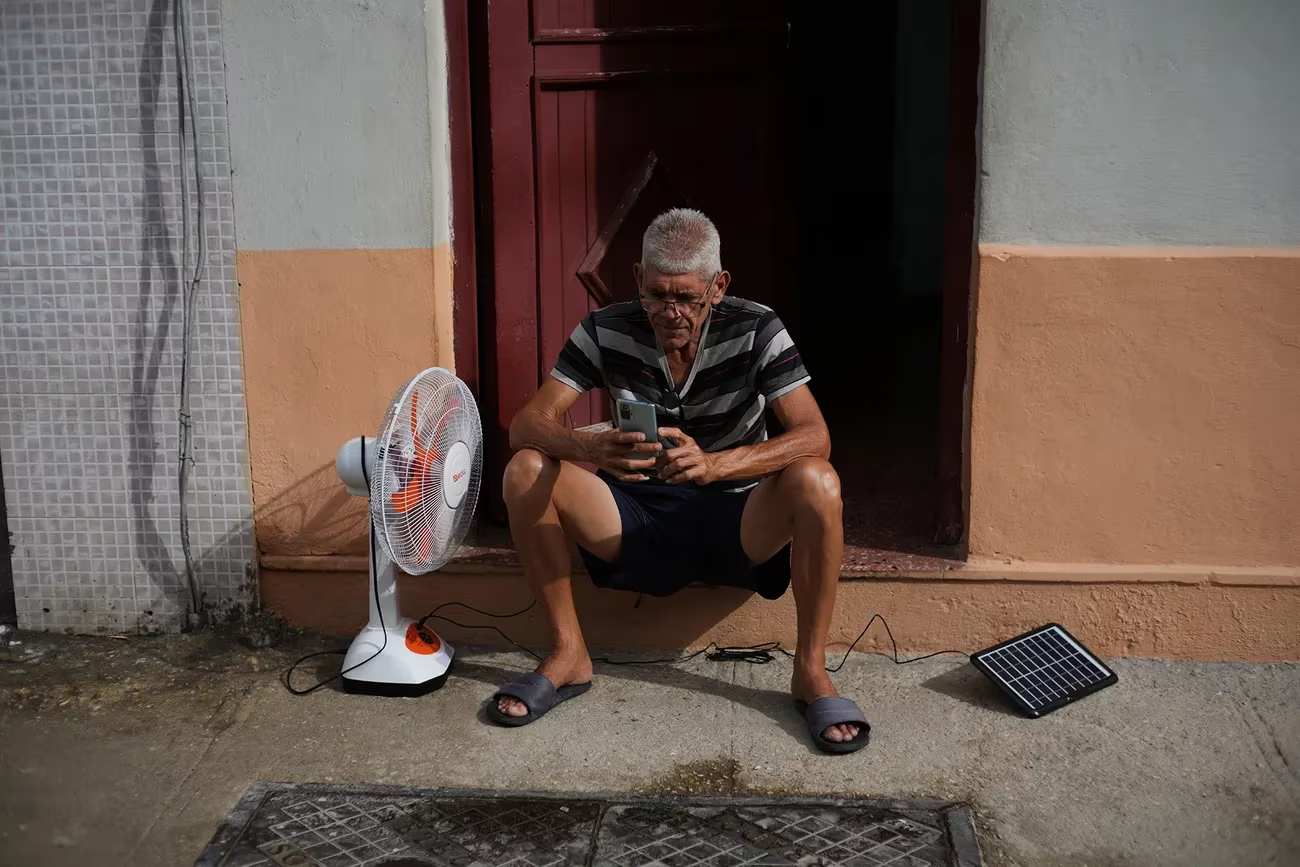
A man charges his phone using a solar panel. Havana, March 17, 2026.
Against this backdrop, Donald Trump issued a new warning toward Cuba. Speaking to reporters on Monday, he said he hoped to “have the honor of taking Cuba,” adding that he could “liberate it, take it—I can do anything I want with it.” In response, Cuban authorities signaled plans to open the economy to the Cuban diaspora—a long-standing demand of the exile community in Miami.