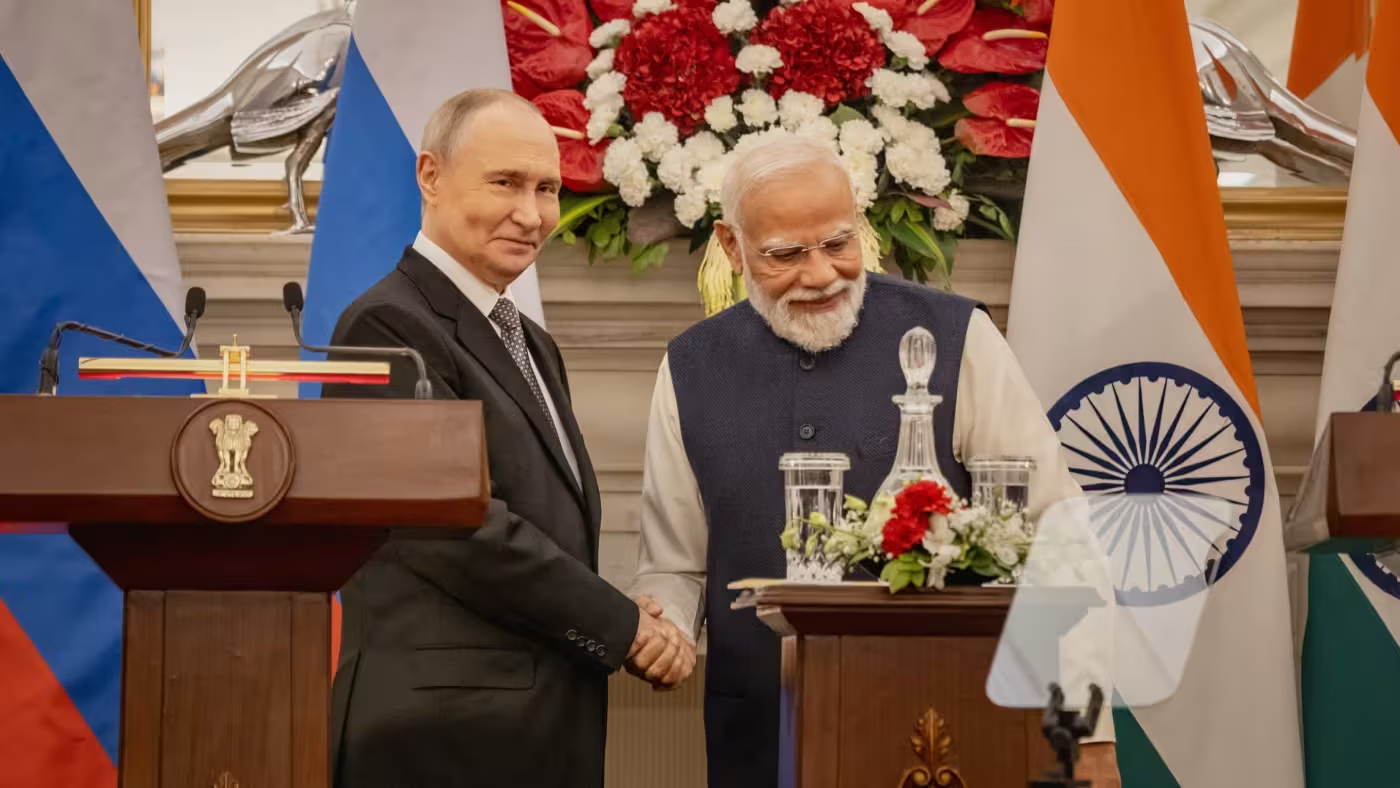
On Friday, December 5, Vladimir Putin met Narendra Modi in New Delhi—his first visit to the Indian capital in four years. The talks concluded with a declaration of intent to broaden co-operation in trade, defence, critical minerals and civil nuclear energy. Under pressure from the United States and facing tariffs imposed by Donald Trump, India is seeking to preserve its long-standing strategic partnership with Moscow while remaining a key buyer of Russian oil and simultaneously taking part in trade negotiations with Washington and the European Union.
Vladimir Putin and Narendra Modi reaffirmed their intention to deepen co-operation in trade, defence, and areas such as critical minerals, nuclear energy and high-tech manufacturing.
During Friday’s meeting in New Delhi—Putin’s first trip to the Indian capital in four years—the two leaders again underscored their “strategic partnership”, which has drawn criticism from U.S. president Donald Trump.
Putin and Modi agreed to raise bilateral trade to $100bn by 2030, up from a record $69bn in the financial year that ended in March 2025. Crude oil and petroleum products accounted for $64bn of India’s imports from Russia last year, which Trump has described as a source of funding for Moscow’s military campaign against Ukraine.
Speaking after the talks, Putin said Russia remains “a reliable supplier of oil” to India and “is ready to ensure uninterrupted fuel deliveries”.
Modi, who personally welcomed the Russian president at the airport on Thursday, called energy security “a strong and vital pillar of the India–Russia partnership”.
The Indian prime minister, however, avoided dwelling on oil purchases, instead stressing the importance of long-standing co-operation in civil nuclear energy. “We will continue this mutually beneficial engagement,” he said.
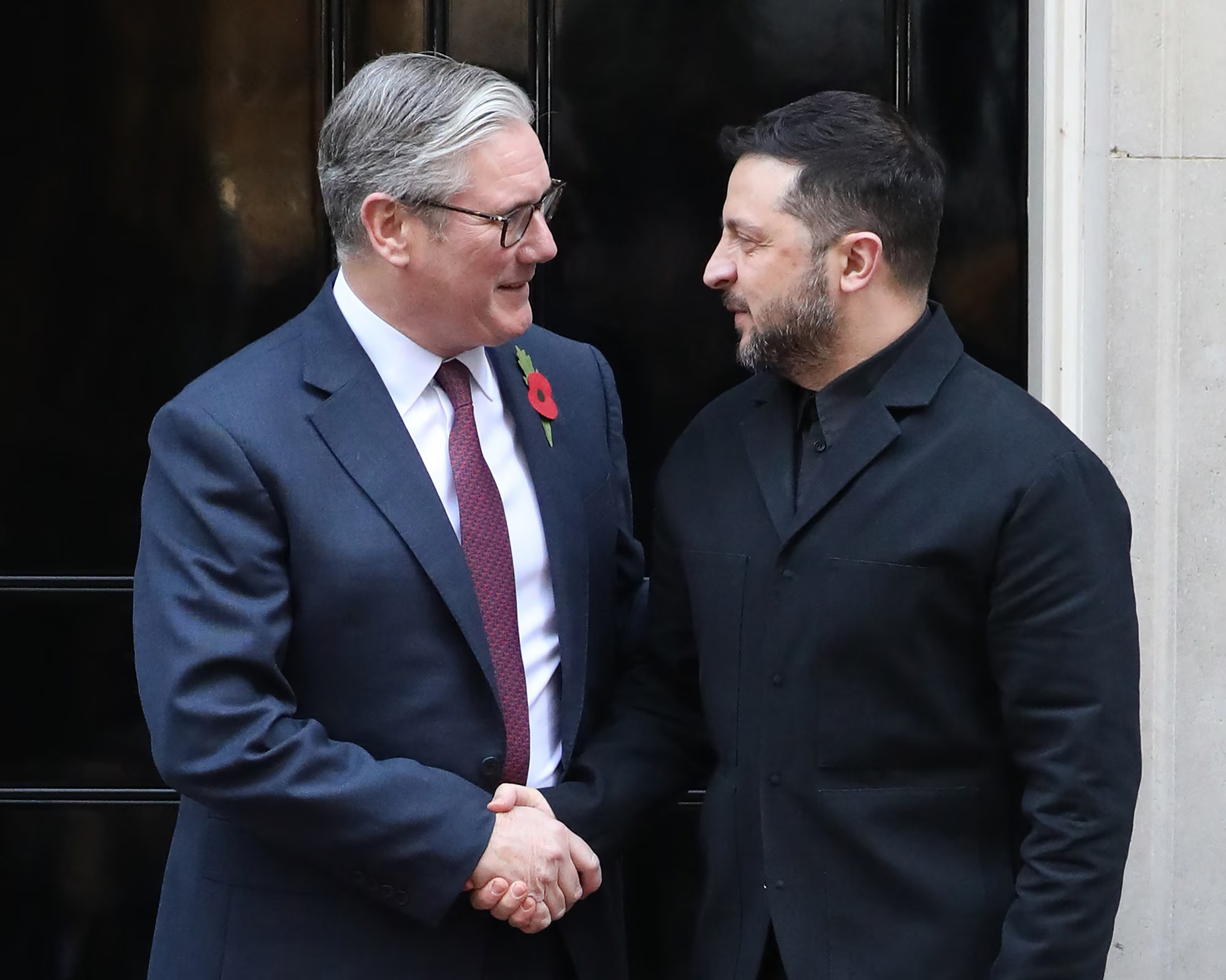
Starmer Vows to Eliminate Russian Oil and Gas from Global Markets
Leaders of the U.S., U.K., and Ukraine Step Up Pressure on Putin After Sanctions on Rosneft and Lukoil
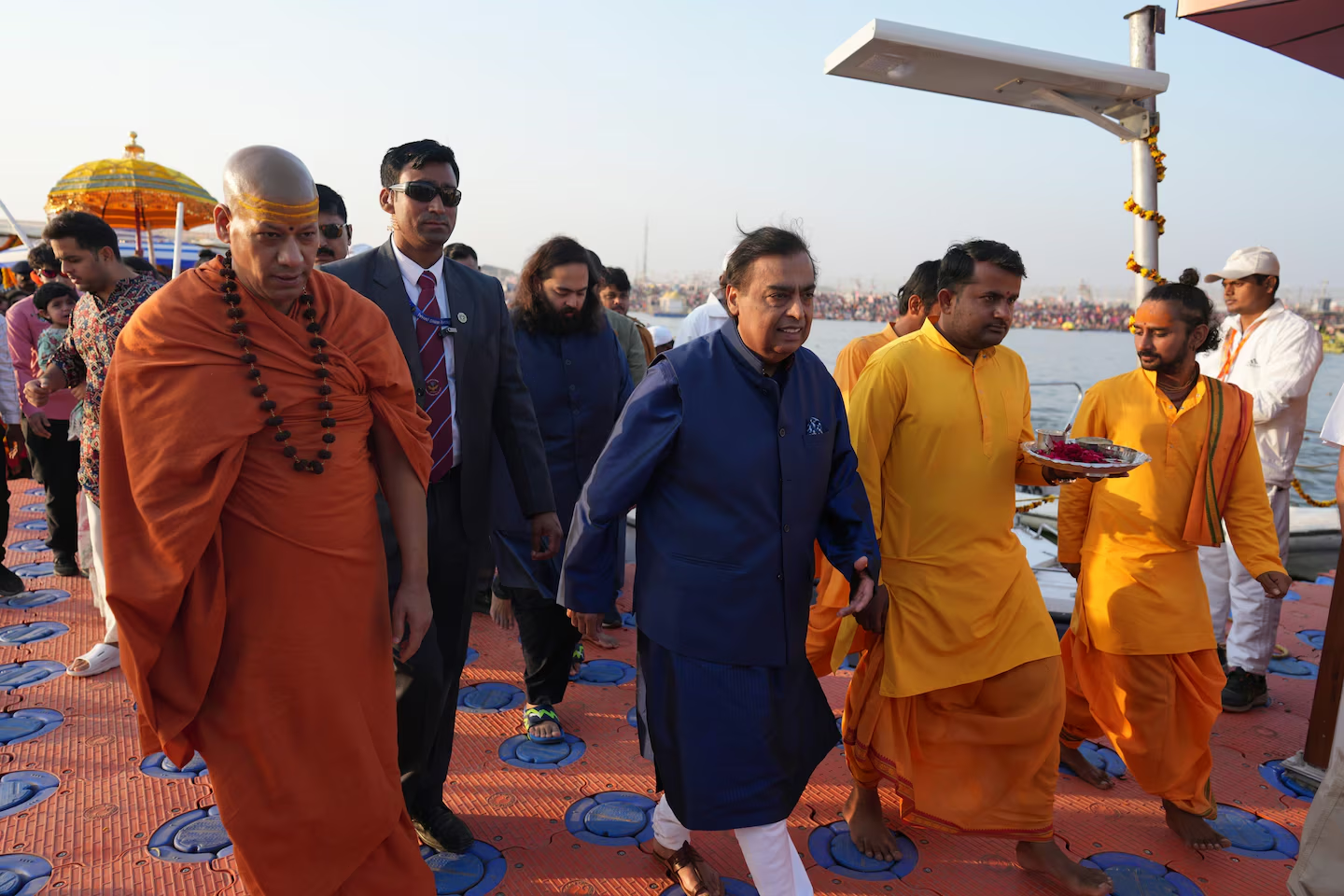
A Ten-Year Reliance Deal With Rosneft Strengthens Mo
These Shipments Fuel the Kremlin’s War Economy and Push India’s Relations With the U.S. Into Crisis
The joint statement following the summit noted existing and potential co-operation between Indian and Russian companies in “the fields of oil and petroleum products”, but offered no specifics.
In August, Trump imposed an additional 25-percent tariff on Indian goods in response to New Delhi’s purchases of Russian oil, bringing total U.S. duties to 50 percent.
After Russia’s full-scale invasion of Ukraine in 2022, India became the largest buyer of Russian seaborne crude. But under pressure from Washington, Indian refiners have markedly reduced purchases in recent months.
Modi stressed that New Delhi’s ties with Moscow “have stood the test of time”.
“Today we discussed how to strengthen this foundation across all areas of co-operation. Our shared priority is to elevate economic engagement to new levels,” he said, highlighting above all collaboration on critical minerals, global supplies of which are largely dominated by China.
“Our collaboration in critical minerals is essential to ensuring secure and diversified supply chains. It will provide strong support for our partnership in clean energy, high-tech manufacturing and new-age industries,” Modi said.
In their joint statement, the two sides confirmed an agreement to reshape their long-standing and close defence ties. “Responding to India’s quest for self-reliance, the partnership is reorienting toward joint research and development, co-development and co-production of advanced defence technologies and systems,” the document said.
Russia agreed to transfer technology to expand joint manufacturing in India of parts and components for defence equipment. The two countries will also promote the creation of joint ventures intended to meet the needs of the Indian armed forces and support subsequent exports.
Putin’s visit comes as India negotiates trade agreements with the United States and the European Union.
“India’s strategic interests require strong relations with both the U.S. and Russia,” said Brahma Chellaney, an international security expert at the Centre for Policy Research in New Delhi.
According to him, “India’s long-standing partnership with Russia remains a model of consistency and mutual benefit—a sharp contrast to the more volatile and at times punitive character of U.S. policy toward New Delhi.”
In an interview with India Today on the eve of his trip, Putin described recent talks with U.S. representatives on ending the war in Ukraine as “useful” but “difficult”, reiterating his intention to seize additional Ukrainian territory and making clear he is not prepared for a swift peace agreement.
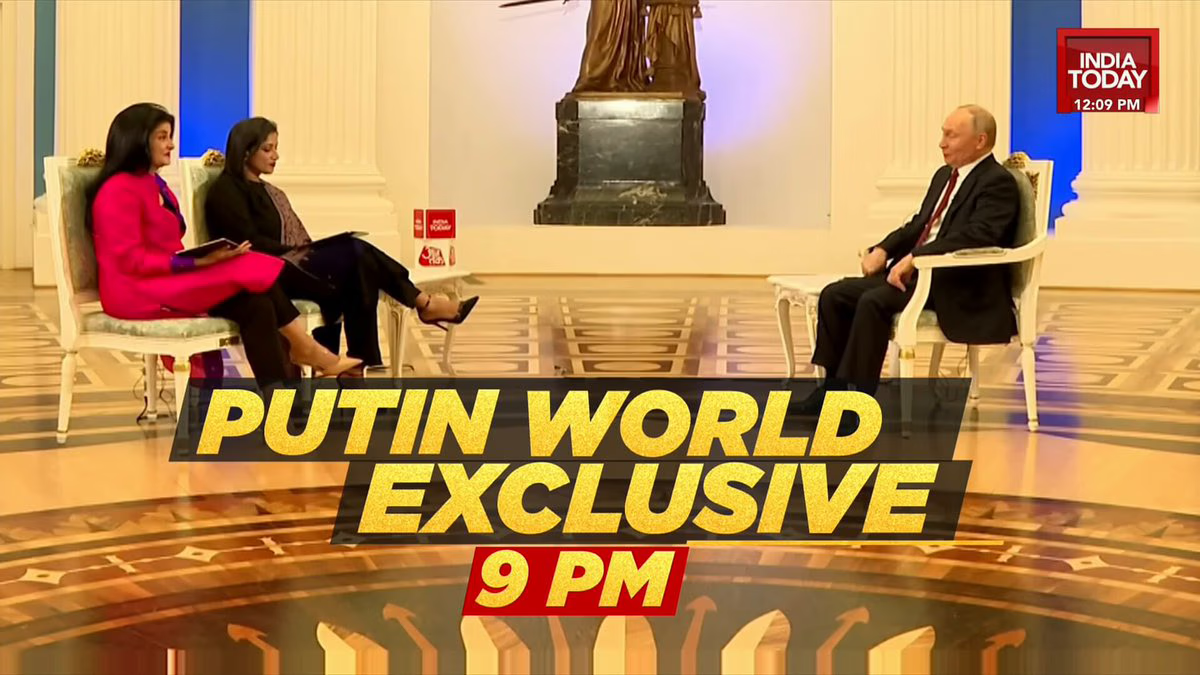
Putin Says the Territories of the ‘DPR’ and ‘LPR’ “Will Be Liberated in Any Case”
He Repeats That Russia [in 2022] Offered Ukraine to Withdraw Troops From Donbas
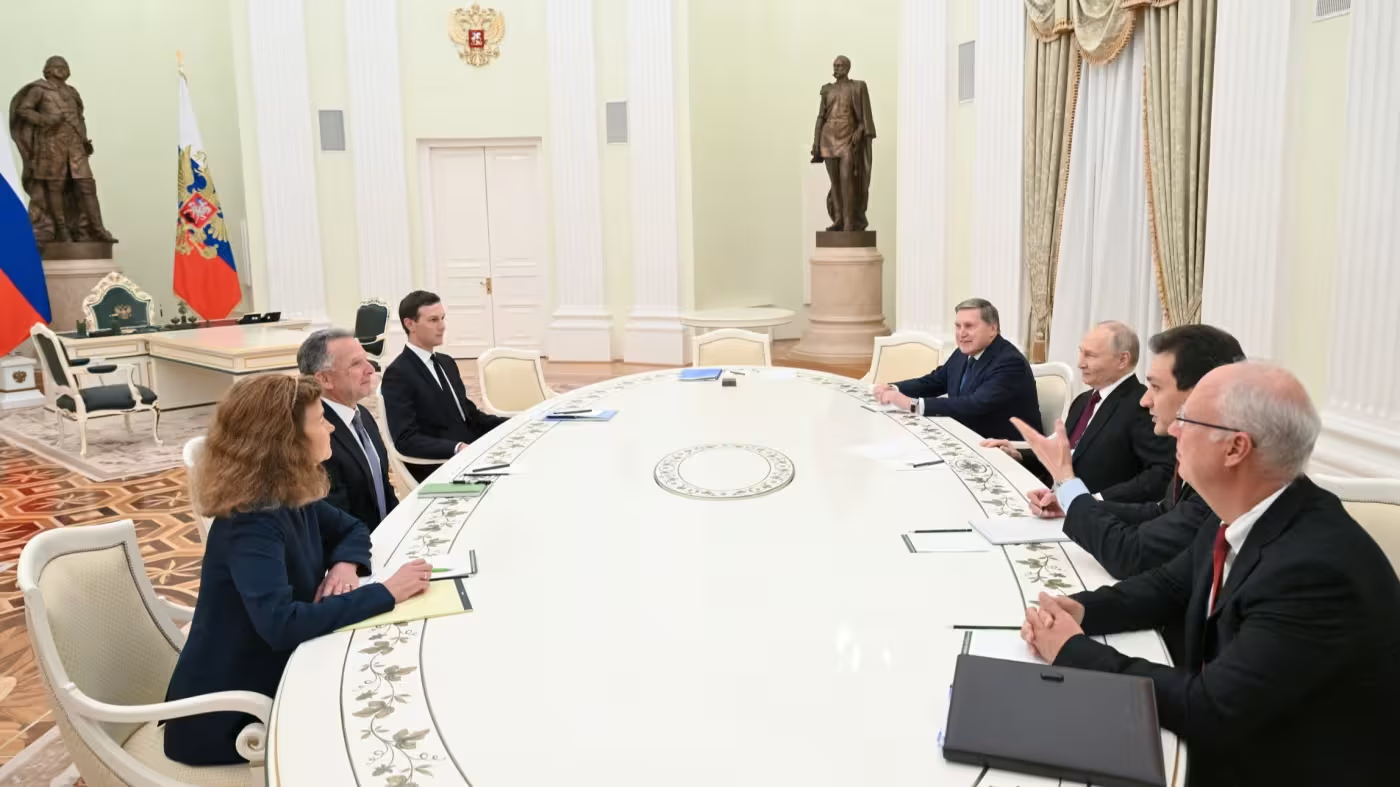
‘No Compromise Was Reached’
Steve Witkoff’s Talks With Vladimir Putin Ended Without Result
On Friday, Russian presidential aide Yuri Ushakov said the talks “are making progress”, according to state news agencies. “This is encouraging, and we are ready to continue working with this American team,” media quoted him as saying. He added that Moscow now expects a U.S. response to the latest contacts.
In his remarks, Modi welcomed “all efforts aimed at finding a peaceful and sustainable solution” to the war.