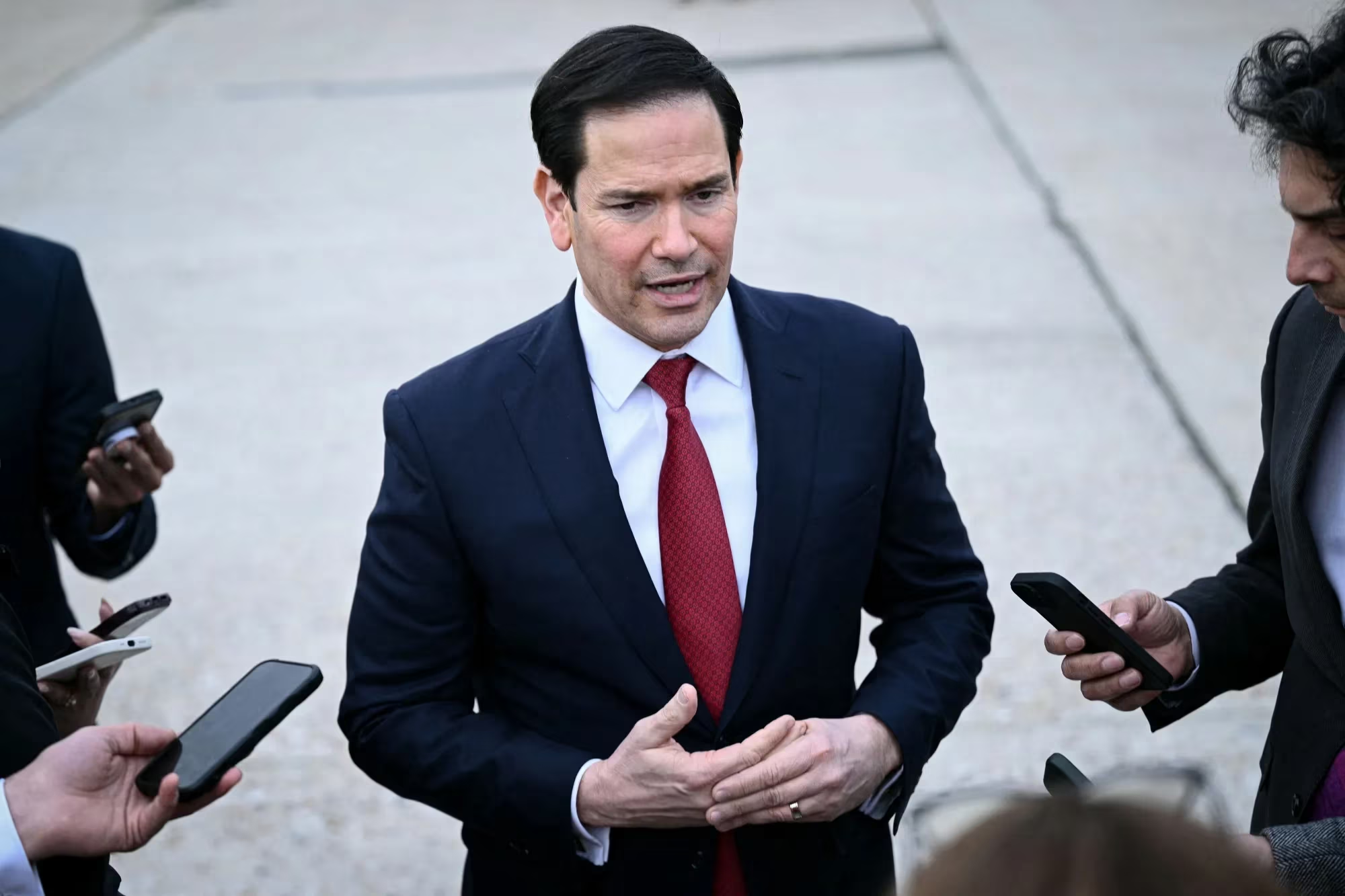
Secretary of State Marco Rubio said that once the war with Iran is over, the United States may have to reconsider its relationship with NATO, calling the alliance’s conduct during the Middle East conflict “deeply disappointing.”
Rubio lashed out at NATO allies for refusing to grant access to military bases, extending a line of attack from President Donald Trump, who had earlier called the alliance’s partners “cowards” and described NATO as “a paper tiger.”
“The president and our country will have to review all of this once the operation is over,” Rubio said in an interview with Al Jazeera. “If NATO comes down to us defending Europe in the event of an attack, while we are denied access to bases when we need them, that does not look like a sustainable arrangement. Under those terms, it is hard to justify continued participation.”
Most NATO countries have, in effect, rejected Trump’s calls to help restore shipping through the strategically vital Strait of Hormuz, which Iran has effectively shut down through threats of retaliation following strikes by the United States and Israel. This crucial artery for global energy supplies has remained paralyzed since late February, already driving a sharp rise in oil and gas prices.
“When this operation is over, the strait will be open—one way or another,” Rubio said. “It will be open either because Iran agrees to abide by international law and stop obstructing commercial shipping, or because a coalition of countries from around the world—including states in the region—with U.S. participation will ensure that it is reopened.”
Spain’s stance has caused particular irritation in Washington after it closed its airspace to American aircraft involved in the operation against Iran, expanding earlier steps to distance itself from the conflict, including a ban on the use of U.S. bases on its territory.
British Prime Minister Keir Starmer also came under fierce criticism from Trump after initially denying access to British military bases for strikes on Iran. London later allowed the use of the bases, but only for “limited defensive actions.”
Earlier this month, Trump mocked Starmer, saying he was “not Winston Churchill,” and also threatened to cut off trade relations with Spain.
The effectiveness of American power projection in the Middle East depends in large part on access to allied infrastructure—logistical hubs in Germany, air bases in Britain, naval facilities in Spain, and overflight permissions that allow aircraft to move without disruption.
Trump has spent years attacking NATO, questioning its relevance and insisting that allies raise defense spending to 5% of GDP.
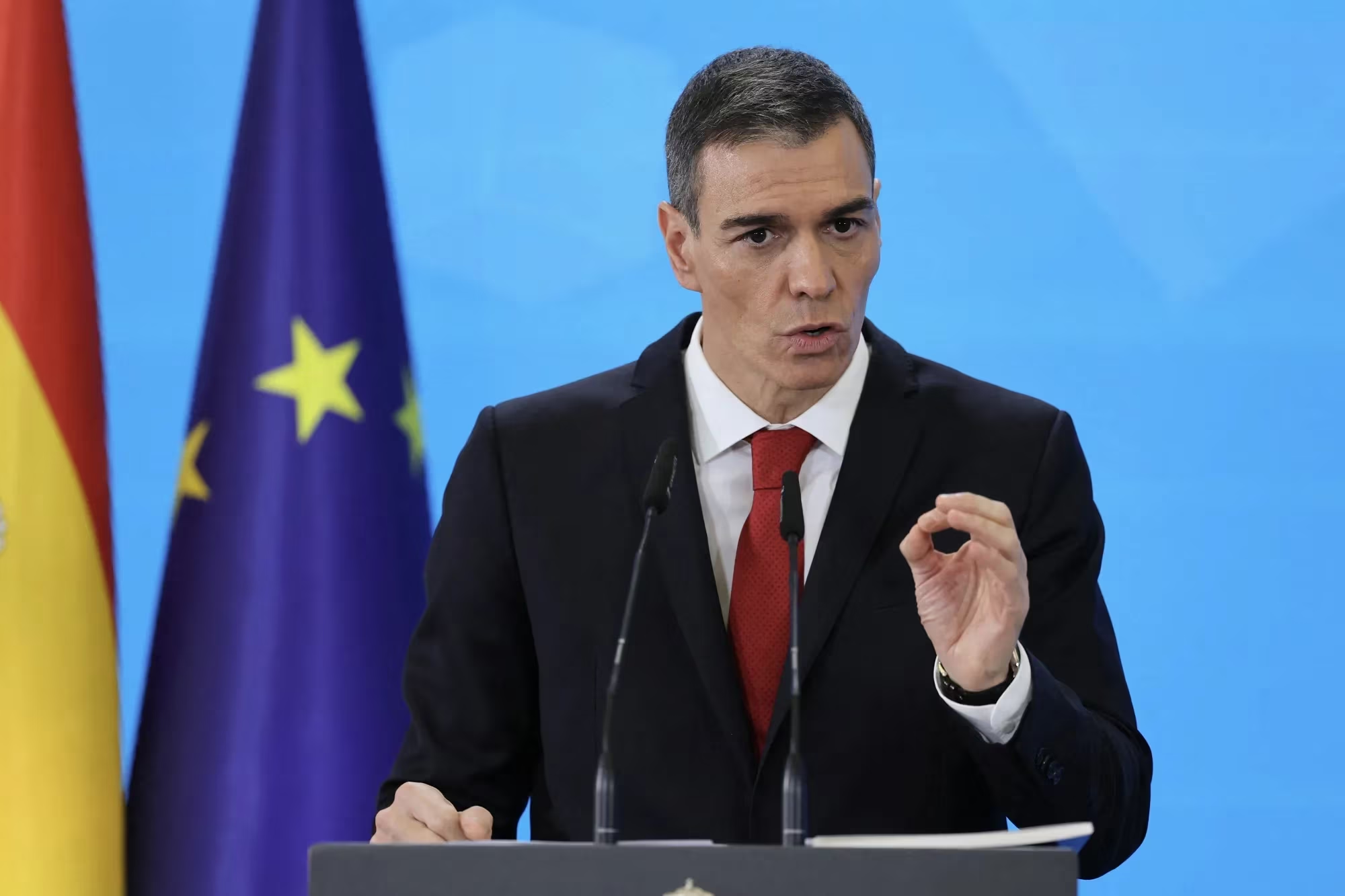
Spanish Prime Minister Pedro Sanchez has emerged as one of Donald Trump’s sharpest critics in Europe, accusing the president of launching an “illegal” war. A series of disputes has piled up between Madrid and Washington—including Spain’s refusal to back NATO’s 5%-of-GDP defense spending target, which every other member of the alliance endorsed.
“Without the United States, NATO does not exist,” Rubio said, despite having been a consistent supporter of the alliance during his years in the Senate. “The alliance must be mutually beneficial. It cannot function on a one-sided basis. I hope we can fix that.”
“We will have time to deal with that,” he added, referring to the period after the war with Iran is over.