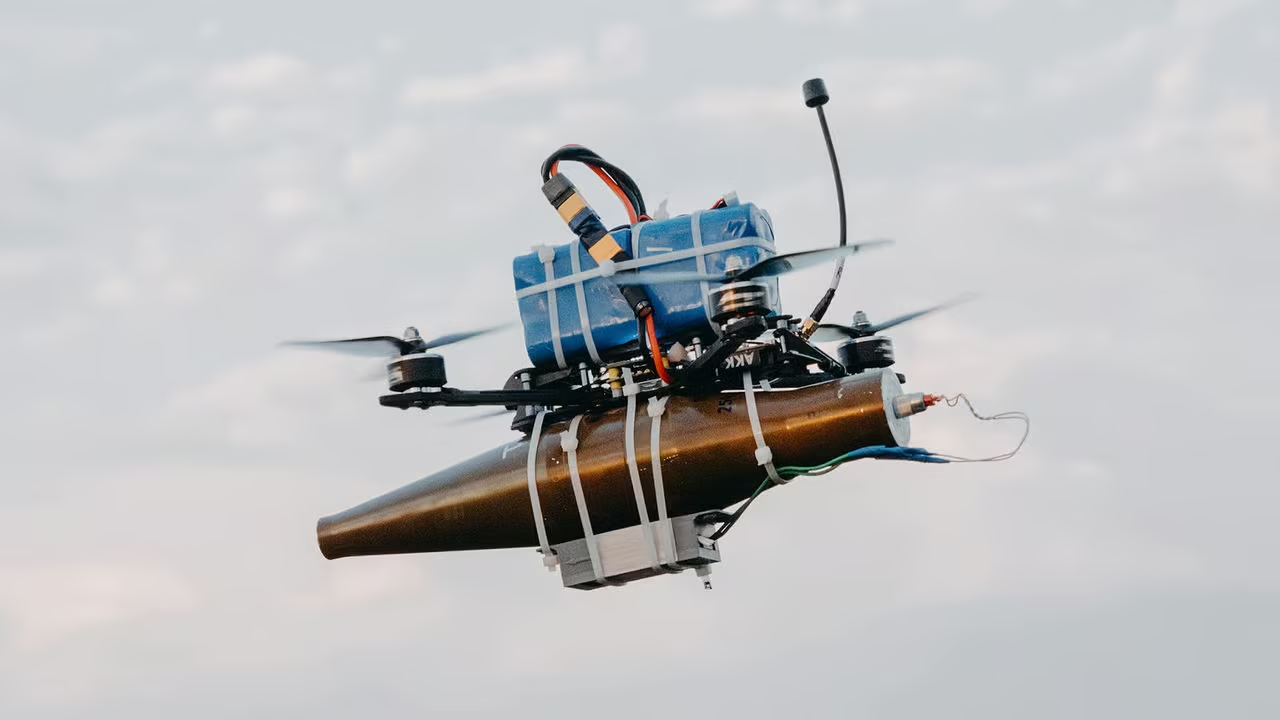
Rheinmetall chief executive Armin Papperger described Ukrainian drones as rudimentary designs, likening them to “Lego” and casting doubt on their value to Western countries.
This is reported by The Atlantic journalist Simon Shuster, recounting his conversation with the head of the German manufacturer of tanks and armored vehicles. According to him, Papperger spoke of the Ukrainian developments with open disdain.
“When I brought up the drones that Ukraine had used so effectively against Russian tanks, the company’s chairman and chief executive, Armin Papperger, responded with contempt. ‘This is how people play with Lego,’ he told me,” Shuster writes.
Papperger does not believe Ukrainian technology is capable of exerting any meaningful influence on the industry.
“What is Ukraine’s innovation?” Papperger asked. “They do not have any technological breakthrough. It is just playing with Lego. These are Ukrainian housewives. They have 3D printers in their kitchens, and they make parts for drones. They produce their little drones and say, ‘Wow!’ And that is great. Fine. But this is not Lockheed Martin, General Dynamics, or Rheinmetall technology.”
A similar assessment had earlier been voiced by the head of one of Ukraine’s drone manufacturers—according to him, local designs are unlikely to be of much interest to Western partners, since a significant share of such systems is assembled in “kit” fashion from Chinese components.
Haluk Bayraktar, the head of Baykar—the world’s largest exporter of drones—offered his assessment of the development of Ukraine’s drone industry. In his view, under the conditions of full-scale war, Ukraine has demonstrated an exceptional capacity for technological innovation—from FPV drones with fiber-optic control and artificial intelligence elements that allow them to evade electronic warfare systems, to the development of interceptor systems, the execution of deep strikes, and the scaling up of production to millions of units a year.