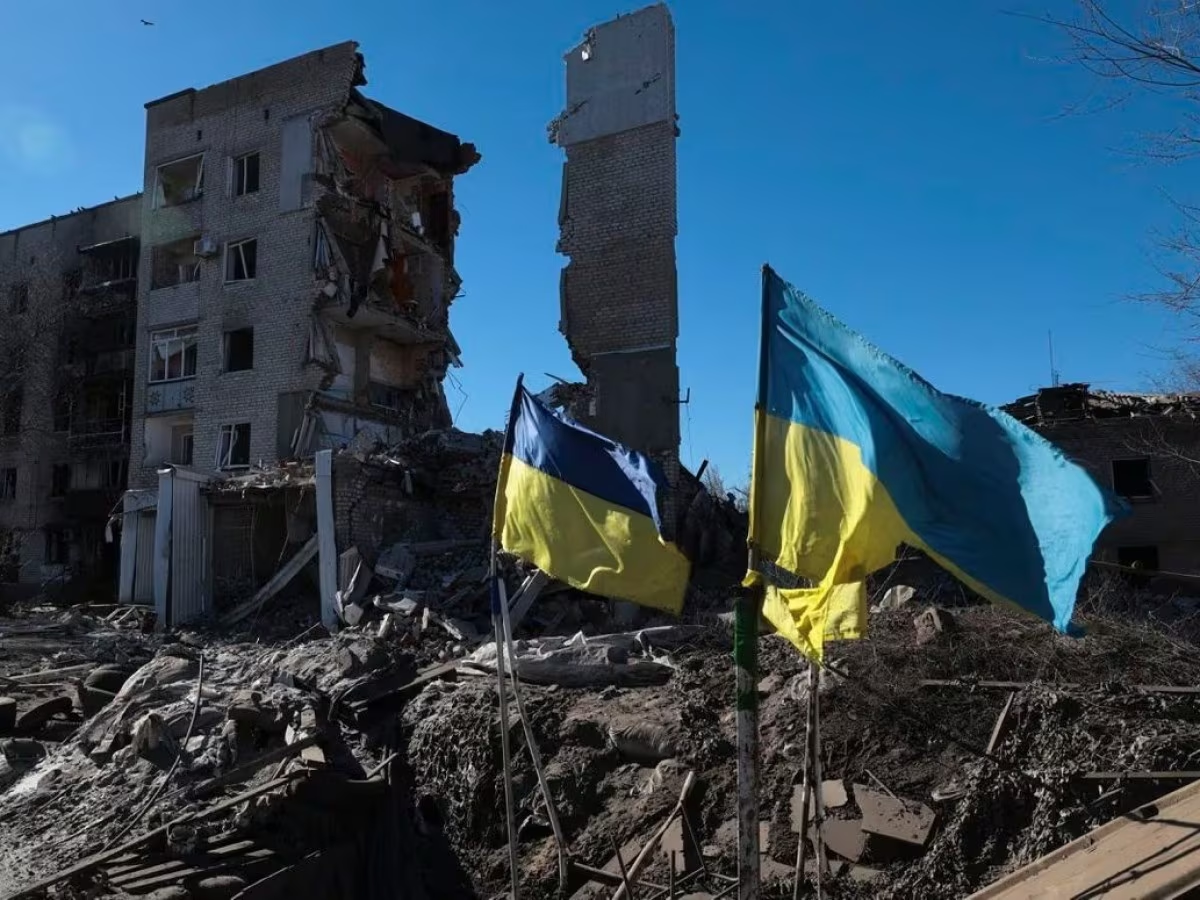
Ukraine’s reconstruction will require more than $800 billion, but attracting that volume of funding will be extremely difficult because of persistent military and economic risks, according to an analysis by the international consulting firm McKinsey.
The report says investors are being held back by several factors at once: the risk that assets will be destroyed and projects disrupted by the war, political instability, currency volatility, economic weakness, and regulatory uncertainty. Even after the fighting ends, those risks are expected to persist, keeping borrowing costs high.
The first five-year period will be critical to the recovery. During that time, Ukraine will need about $360 billion from domestic and external sources to keep the economy afloat and avoid prolonged stagnation.
The main constraint is the shortage of domestic resources. The scope for state-budget spending will be limited, while domestic business and the financial market will be unable to provide the necessary volume of investment. That leaves Ukraine dependent on external financing.
In the first five years alone, the country will need to raise $120 billion-$140 billion in foreign debt. But banks and investors are expected to remain cautious, and borrowing is likely to stay expensive because of the country’s low credit rating and overall level of risk.
At the same time, the existing mechanisms for financing Ukraine fall short of the scale of the challenge. They are aimed mainly at small and medium-sized businesses, while large infrastructure projects remain without adequate support. Complex procedures and strict requirements are an additional obstacle, slowing the launch of investment.
Even under an optimistic scenario, private investment in Ukraine at the initial stage is estimated at only about $2 billion. That means reconstruction will depend to a significant extent on international institutions capable of mobilizing far larger sums.