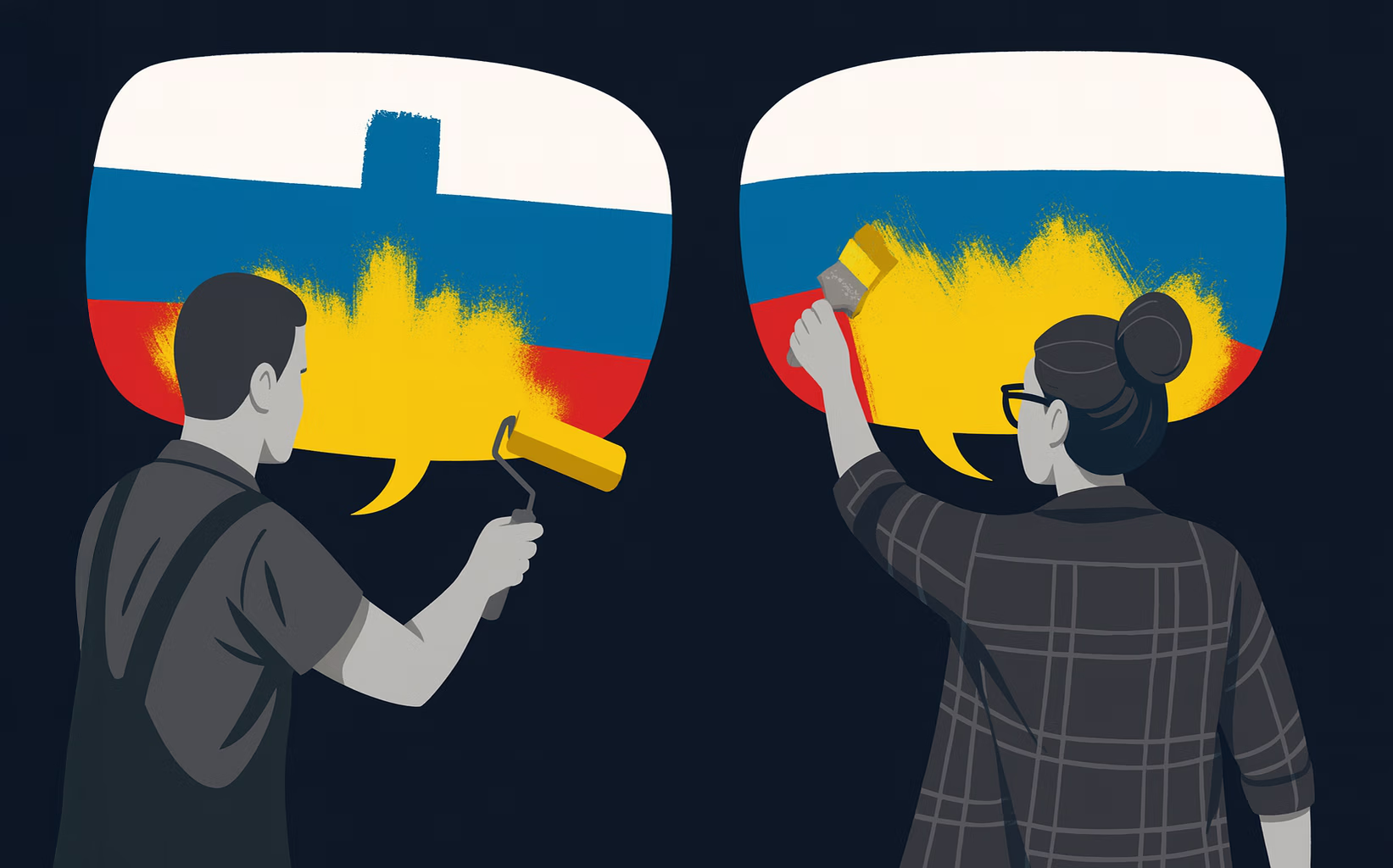
The Verkhovna Rada has backed a bill revising the Ukrainian translation of the European Charter and removing Russian and Moldovan from its list of protected languages, while adding Urum, Rumeic, Romani, Czech, Krymchak, Karaim and Yiddish. The document was adopted in its entirety and formally strips Russian of the protection envisaged by the Charter.
What Does the European Charter Actually Regulate?
The European Charter for Regional or Minority Languages is designed to safeguard languages that are in the minority within specific territories. Several Ukrainian experts note that Ukraine has long relied on an inaccurate translation of the Charter’s title, creating the impression that it concerns the protection of “national minorities.” In fact, the Charter is aimed at preserving languages at risk of extinction as part of Europe’s cultural heritage.
Why Is the Rada’s Decision Largely Symbolic?
Analysts argue that the Rada’s decision is symbolic and will not produce practical effects. The Ukrainian state does not provide systematic support to any of the listed languages, and the removal of Russian may be seen as a gesture ill-suited to Russian-speaking citizens and potentially advantageous to Kremlin propaganda. The widespread claim that the Russian language is supposedly losing legal protection is, experts say, absurd—it is guaranteed by Article 10 of Ukraine’s Constitution, where it is mentioned alongside other minority languages. Various estimates suggest that at least 40% of Ukraine’s population considers Russian their native language, though precise data are unavailable or not publicised.