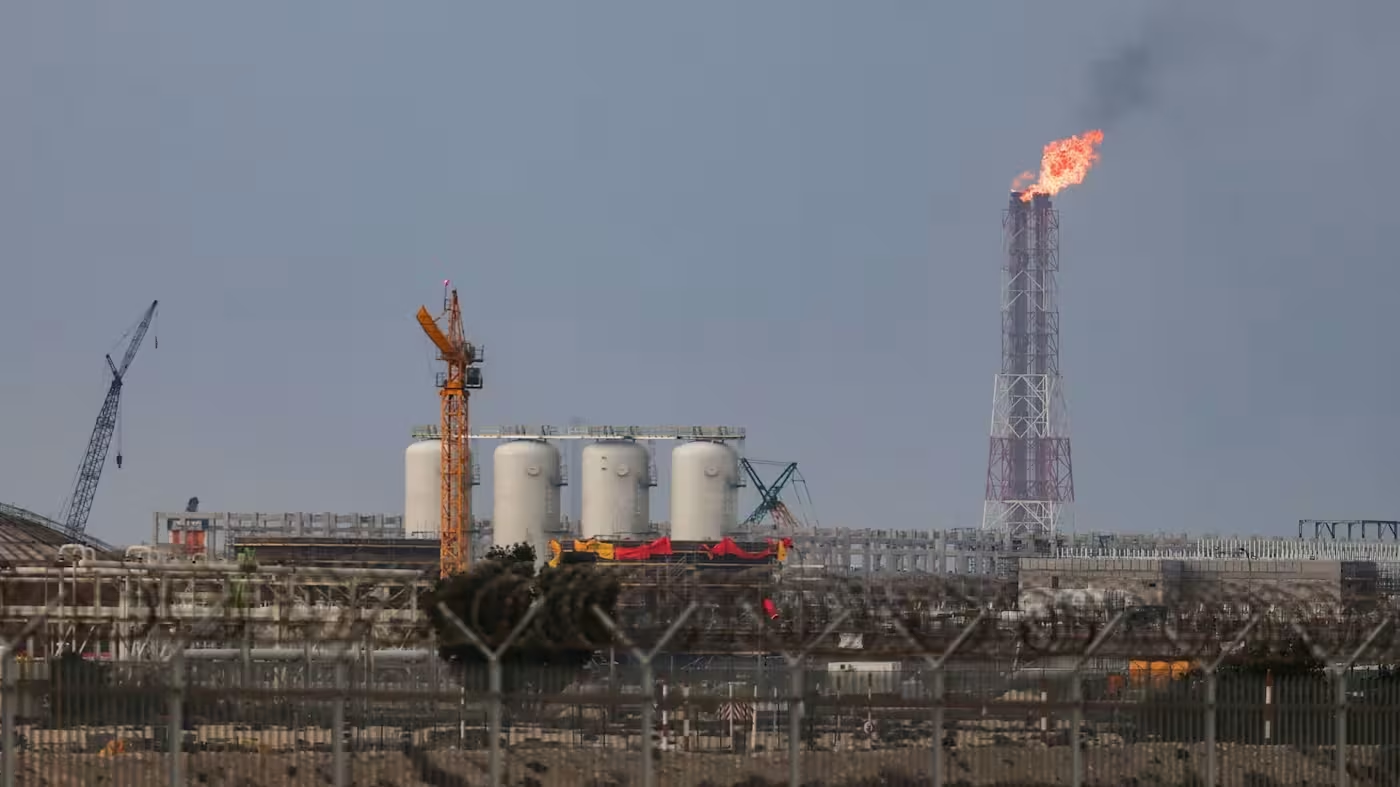
Qatar’s energy minister has warned that the continuing war in the Middle East could “collapse the global economy.” He said that if the conflict drags on, all energy-exporting countries of the Persian Gulf would be forced to halt production within days—a development that could push oil prices to $150 a barrel.
Saad al-Kaabi said that even if hostilities were to stop immediately, Qatar would need “from several weeks to several months” to return to its normal supply schedule after an Iranian drone struck the country’s largest liquefied natural gas plant.
Qatar—the world’s second-largest LNG producer—was forced to announce a suspension of operations this week after an attack on the Ras Laffan complex.
Although the share of Qatari gas supplied to Europe is relatively small, the minister noted that the continent would still face serious consequences. Asian buyers, he said, would begin to outbid European counterparts for the remaining volumes of fuel on the market, while other Persian Gulf countries could find themselves unable to meet their contractual obligations.
“We expect that everyone who has not yet declared force majeure will do so in the coming days if the situation continues. All exporters in the Persian Gulf region will be forced to declare force majeure,” Kaabi said. “If they do not, sooner or later they will have to answer legally for breaching their obligations—and that will be their choice.”
His remarks reflect growing concern in Persian Gulf countries over the economic consequences of the war by the United States and Israel against Iran, which has already dealt a serious blow to the oil-rich region.
After these statements were published, Brent crude rose 5.5% on Friday—to $90.13 a barrel, the highest level since the conflict began. European gas prices also climbed by 5%, though they remained below the peak reached earlier this week.
“This will collapse the global economy,” Kaabi said. “If the war lasts several weeks, it will affect GDP growth rates across the world. Energy prices will rise for everyone. Shortages of certain goods will emerge, and a chain reaction will begin—companies will be unable to maintain supplies.”
He added that Qatar’s maritime infrastructure had not been damaged, although the consequences of the strike on land are still being assessed.
“We still do not know the full scale of the damage, as the assessment is ongoing. It is also not yet clear how long the recovery will take,” he said.
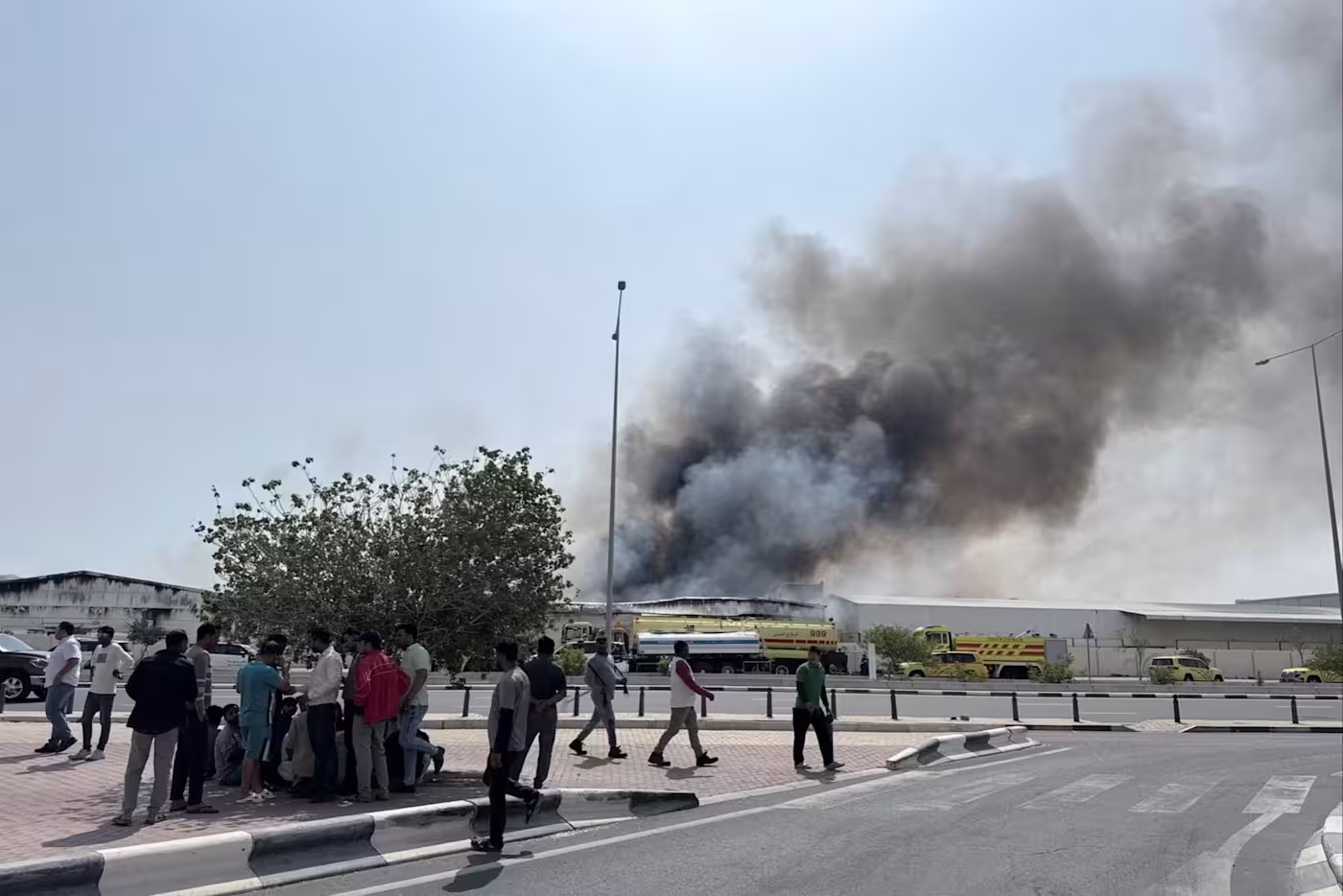
An industrial area in Qatar after a missile strike. March 1, 2026.
He also noted that Qatar’s $30bn project to expand production at the giant North Field gasfield could be jeopardized. The plan envisaged increasing production capacity from 77mn to 126mn tonnes a year by 2027, with the first phase originally expected to come online in the third quarter of this year.
“This will certainly delay all our expansion plans,” Kaabi said. “If we are able to return to work in a week, the consequences will be minimal; if it takes a month or two—that is an entirely different situation.”
Saudi Arabia and the United Arab Emirates have pipelines that allow part of their oil exports to be redirected to ports outside the strait, but substantial volumes of production would still remain effectively blocked.
In his assessment, oil prices could climb to $150 a barrel within two to three weeks if tankers and other merchant vessels are unable to pass through the Strait of Hormuz—a critical maritime route through which one-fifth of the world’s oil and gas supplies flows.
Gas prices, he predicted, could rise to $40 per million British thermal units (€117 per MWh)—almost four times higher than the level observed before the war began.
He stressed that disruptions to maritime trade through the strait would reverberate far beyond energy markets, affecting a wide range of industries, as the region produces a significant share of the world’s petrochemicals and raw materials used in fertilizers.
Shipping through the strait has nearly come to a halt after the United States and Israel began strikes on Iran on Saturday. At least ten vessels have already come under attack, insurance premiums have surged, and shipowners are unwilling to risk their vessels and crews.
U.S. President Donald Trump and Israeli officials have warned that the war could last for several weeks, as their objective is the destruction of the Islamic regime. This week Trump said the U.S. Navy would escort vessels through the strait and proposed offering additional insurance coverage to shipping companies.
However, Kaabi noted that even under such conditions passage through the strait remains too dangerous. At its narrowest point it is only 24 miles wide and runs along Iran’s coastline.
“If you look at the nature of the attacks, sending ships into the strait… it is too dangerous. It is too close to the shore for vessels to pass through. It will be difficult to persuade shipowners to go there,” he said. “Most shipowners will believe they are becoming an even bigger target because they [Iran] are aiming at warships.”
According to him, the halt of trade through the strait would affect far more than the energy sector.
“Beyond energy, all other trade between [the Persian Gulf] and the rest of the world will also be halted, which will have a significant impact on the economies of the region’s countries and all their trading partners,” Kaabi said.
Qatar, which hosts the largest U.S. military base in the region, has traditionally maintained good relations with Iran. However, the Islamic Republic has launched several missile and drone strikes against the country and other Gulf states, seeking to raise the stakes for the United States by targeting energy facilities, airports, American bases, and diplomatic missions.
Kaabi, who also heads QatarEnergy, said the company had no choice but to declare force majeure after an Iranian drone struck the Ras Laffan complex on Monday. He cited security concerns and noted that the company’s offshore facilities had also been under threat of attack, although no damage was reported there.
“Our military effectively warned us of an imminent threat to offshore facilities. So we safely halted operations—as safely as possible—and evacuated about 9,000 people within 24 hours,” he said. “When our people are in danger, when we are being struck in a war zone and can no longer operate, we cannot put them at risk—in such circumstances we are obliged to declare force majeure.”
Production in Qatar will not resume until hostilities have completely ceased, he stressed.
“The signal will be the moment when our military tells us that hostilities have fully stopped and we are no longer under attack,” Kaabi said. “We will not put our people in danger.”
Even after operations resume, he said, the industry will face serious logistical difficulties, in addition to restoring equipment that cools and compresses gas into a liquid state for maritime transport.
“Our vessels are now scattered across the world,” he said, adding that of Qatar’s fleet of 128 tankers, only six or seven are currently nearby. “Each vessel takes a day or two to load, and six or seven can be loaded at the same time,” he explained, outlining why it will take time to return to normal operations.
He rejected the suggestion that Qatar’s decision to declare force majeure and miss deliveries could undermine the country’s reputation as the world’s most reliable LNG supplier.
“We do not believe anyone would dare to tell us we are unreliable because we were struck and were unable to deliver,” he said.
He added that even if Qatar wanted to, it would be unable to buy additional volumes of gas on the market to compensate its customers for the shortfall.
“Suppose you want to purchase 77 million tonnes and supply them to your customers—but there simply are no spare 77 million tonnes available on the market to buy.”