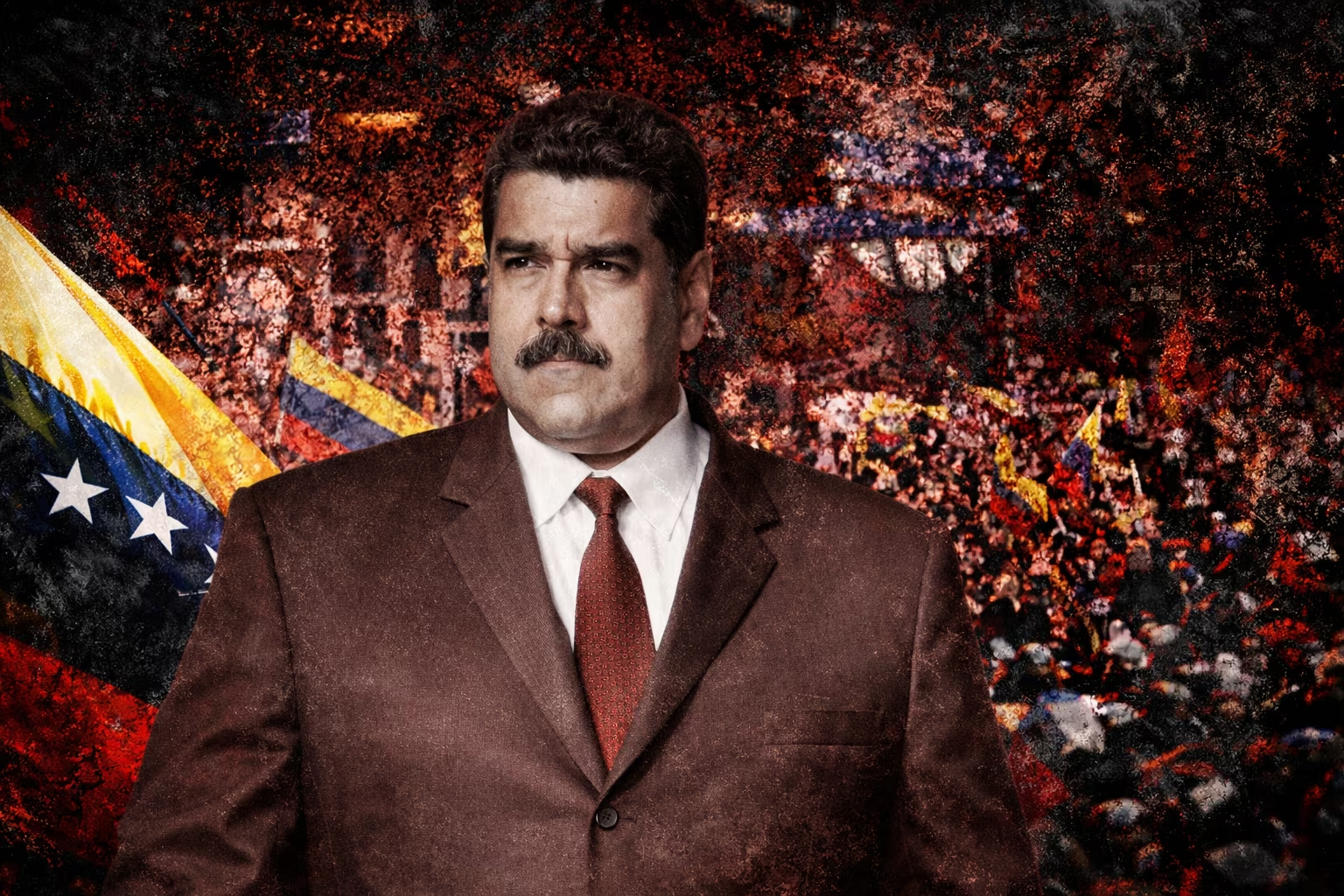
For the White House, Nicolás Maduro was a problem that extended far beyond Venezuela itself. Inside the administration, he was seen as a figure propping up other authoritarian regimes and destabilizing forces across the region. Venezuela, alongside Cuba and Nicaragua, was viewed as part of an “axis of socialism,” with Colombia also coming under close scrutiny. Last month, Donald Trump publicly warned Colombian President Gustavo Petro that he should “watch himself” amid the flow of cocaine into the United States. In Washington, the confrontation with Maduro’s regime was barely concealed, and officials stressed that it was driven not only by drug trafficking, but by ideology as well.
The Cocaine Trade
The United States accuses Venezuela of state-backed drug trafficking and ties to criminal organizations, including Tren de Aragua and the Sinaloa cartel. Trump has also claimed that Maduro deliberately sent members of these groups into the United States. At the same time, a classified analytical memo produced by U.S. intelligence last year concluded that Maduro in fact does not control Tren de Aragua—a finding that irritated parts of the administration. Even so, the indictment against the Venezuelan leader lays out in detail his alleged connections to the drug trade. It was the fight against narcotics that formally served as the justification for a series of U.S. strikes on suspected drug vessels in recent months, and the bounty announced for Maduro was directly tied to narcotics-related charges.
Oil
Trump has repeatedly argued that Venezuela, which holds the world’s largest proven oil reserves, “stole” American oil, citing the seizure of equipment following the nationalization of the oil sector. On Saturday, he said the United States would rebuild the country’s oil infrastructure and compensate U.S. companies for losses incurred as a result of the expropriations.
Migration
Economic collapse and repression under Maduro’s rule have driven a mass exodus of the population. Over the past decade, around 8 million Venezuelans have left the country—“the largest wave of mass migration in the modern history of this hemisphere,” according to the Atlantic Council. This has turned Venezuela’s crisis into an immediate problem for the United States, particularly after Donald Trump’s return to the White House in 2025, when restricting immigration became one of his core priorities.
Gold
According to the United States, Venezuela’s substantial gold reserves have for years helped Caracas withstand American pressure. Gold—which can be used to purchase weapons, fuel, or generate cash—has allegedly become a key instrument for circumventing sanctions.
Maduro’s Foreign Allies
Venezuela has built partnerships with a number of U.S. adversaries, and supporters of Trump’s actions viewed the operation as a signal to external powers not to interfere in the region’s affairs. China is the largest buyer of Venezuelan oil and has sharply condemned American interventions. Iran and its Lebanese ally Hezbollah have cooperated with Caracas as part of an “axis of unity” rooted in opposition to U.S. foreign policy. Russia and Venezuela also maintain a long-standing partnership.