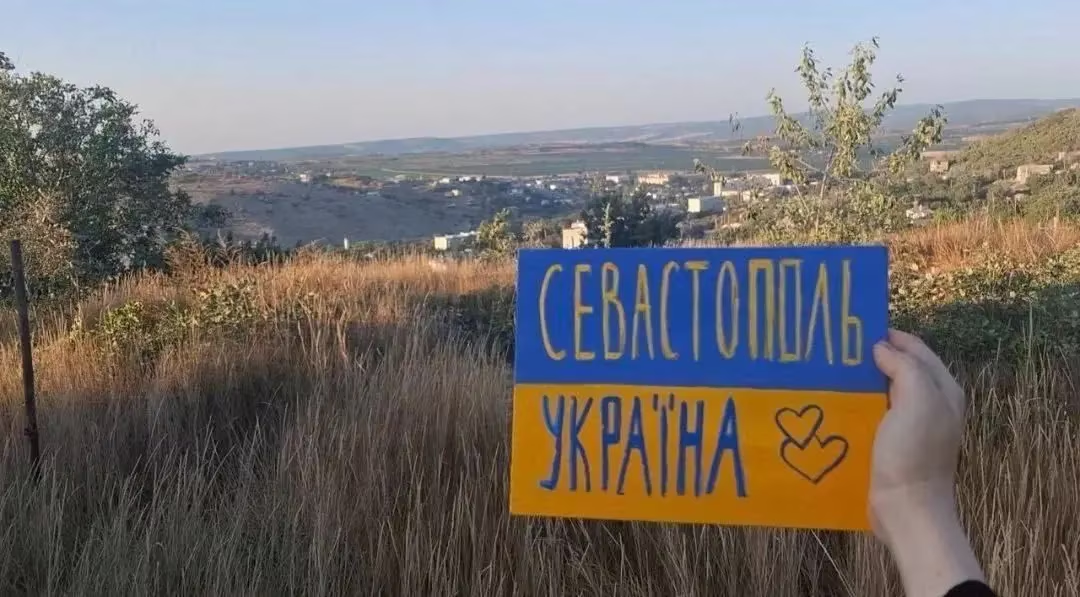
British company IN2, which financed Ukrainian “resistance movements” in territories under Russian control, neglected the safety of activists in order to preserve its funding, the Kyiv Independent reports, citing its own investigation.
The projects in question are Yellow Ribbon and Zla Mavka, which promote forms of so-called “non-violent resistance”—including public actions such as burning Russian passports and flags, performing Ukrainian songs, or documenting pro-Ukrainian symbols.
According to the publication, insufficient attention to security led to arrests and deaths among participants. In 2024, for example, Crimean resident Ksenia Svetlishina was sentenced to 13 years in prison for her involvement in Yellow Ribbon. The report also says that a 24-year-old woman from Melitopol linked to Zla Mavka was killed.
A representative of Ukraine’s Main Intelligence Directorate told the Kyiv Independent that both movements had acted irresponsibly toward their participants, prioritizing the continuation of funding by staging new actions.
According to the investigation, IN2 received nearly 2,327,000 Canadian dollars from Canada, as well as several hundred thousand pounds sterling from the United Kingdom. A significant share of the money went to pay the organizers. One of IN2’s founders, British journalist David Patrikarakos, received about 800 pounds a day.
“According to the documents, IN2’s staff connected to the Yellow Ribbon and Zla Mavka projects numbered 17 people, while operating expenses over a four-month period totaled 259,830 pounds sterling ($350,219), which is equivalent to nearly 780,000 pounds sterling ($1,050,000) a year,” the Kyiv Independent notes.
Complaints about activists’ security conditions prompted internal reviews by the UK Foreign Office and Ukraine’s Special Operations Forces, which coordinate initiatives of this kind. As a result, funding for the projects was suspended.