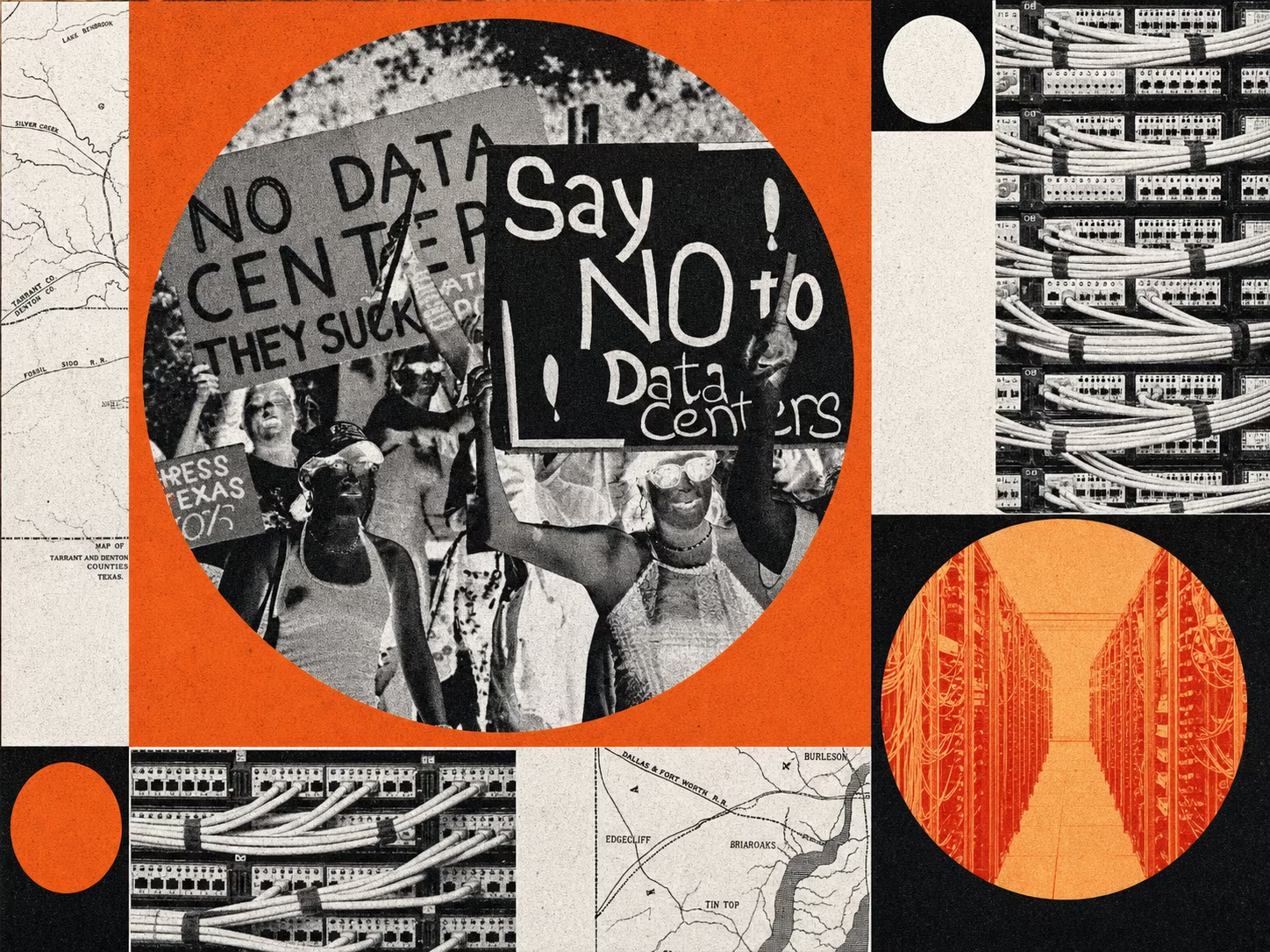
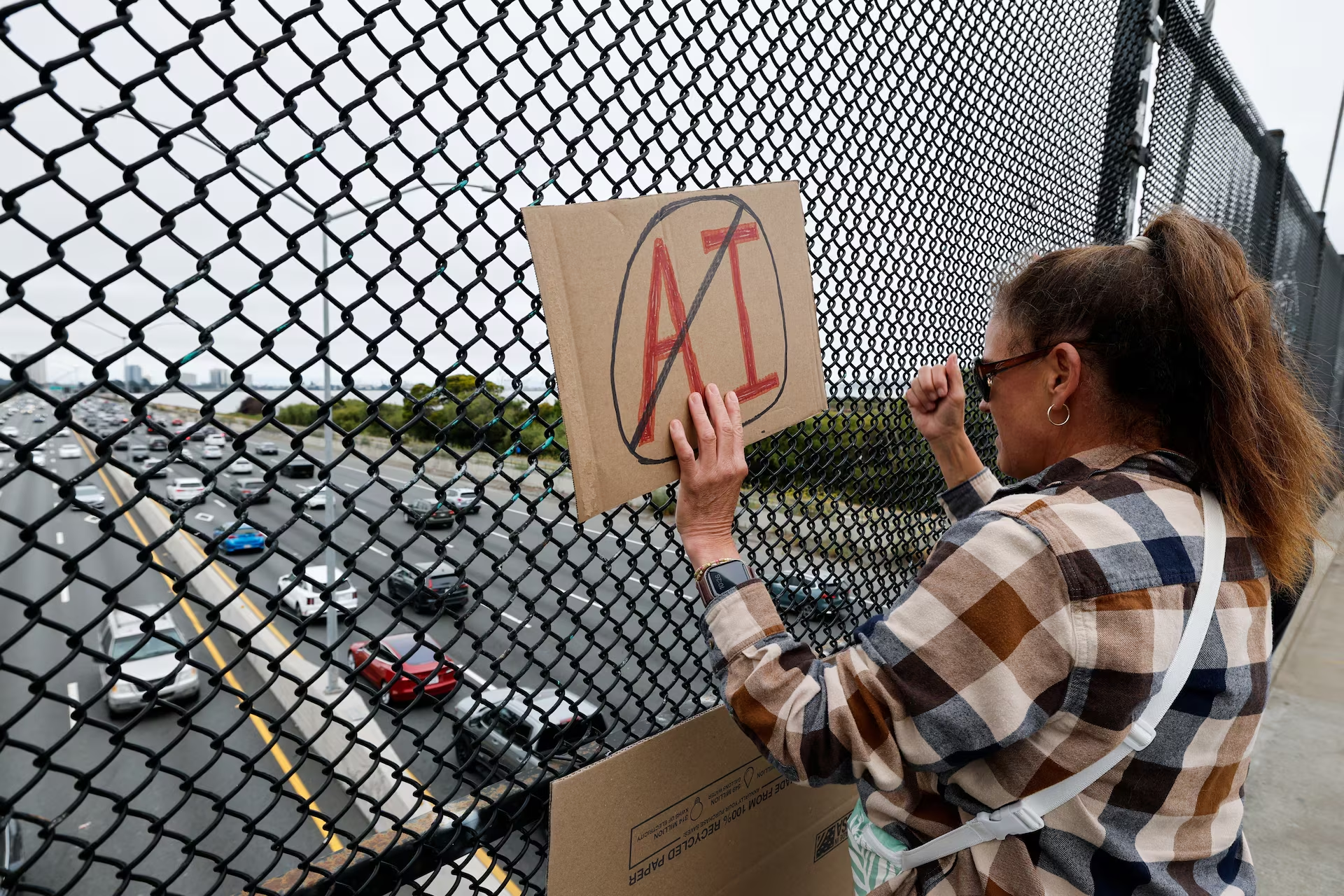
On Saturday, July 18, 142 protests were held across 42 US states—the first coordinated nationwide campaign against the rapid construction of data centers serving artificial-intelligence projects. Reuters reports.
The campaign was coordinated by the grassroots group HumansFirst. Its co-founder, Amy Kremer—a former Tea Party leader—compares the current wave of discontent with the right-wing populist protests of 2009, though she insists that anger over data centers transcends party lines. “People simply woke up one day and learned that this monster was coming to their community,” she told Reuters. Kremer predicts that the issue will become a defining one in the November midterm elections and the 2028 presidential campaign.
The campaign was coordinated by the grassroots group HumansFirst. Its co-founder, Amy Kremer—a former Tea Party leader—compares the current wave of discontent with the right-wing populist protests of 2009, though she insists that anger over data centers transcends party lines. “People simply woke up one day and learned that this monster was coming to their community,” she told Reuters. Kremer predicts that the issue will become a defining one in the November midterm elections and the 2028 presidential campaign.
Texas Leads
The geography of the demonstrations underscores the movement’s bipartisan character. Republican-led Texas, one of the principal centers of construction, held the most protests at 18. Georgia held 11, Democratic-led California eight, and Pennsylvania, Florida and Indiana seven each.
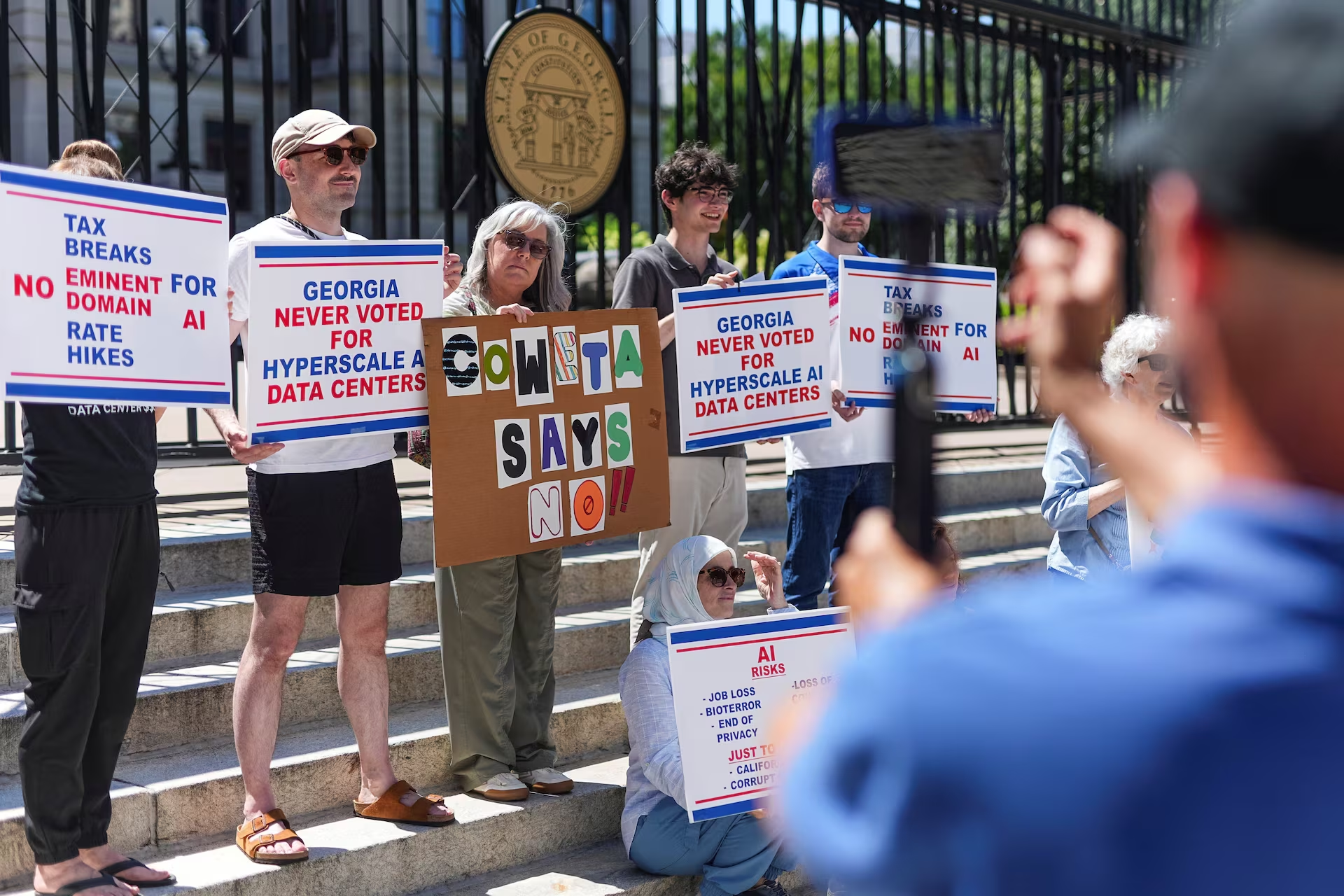
The demonstrations themselves remained small, and organizers acknowledged to Reuters that turnout in both rural areas and major cities was lower than expected. About a dozen people gathered in Atlanta after traveling from small Georgia towns where the state’s largest facilities are being built; they carried signs reading, “Georgia did not vote for hyperscale data centers.” In Tyler, Texas, 31-year-old Eva Cardona organized a protest for the first time in her life. Describing herself as a “political nomad,” she said she had become alarmed by the pace of unregulated AI development and wanted to do something more tangible than write a Facebook post.
The most revealing demonstration took place in California’s Imperial County, on the edge of the desert. A proposed data center there could draw as much as 260 million gallons—roughly 1 million cubic meters—of water from the Colorado River each year. Despite temperatures above 38°C, about 50 people joined the protest. Its organizer, 54-year-old Ivan DelSol, called the very idea of using so much fresh water for artificial intelligence dystopian.
Why America Took to the Streets
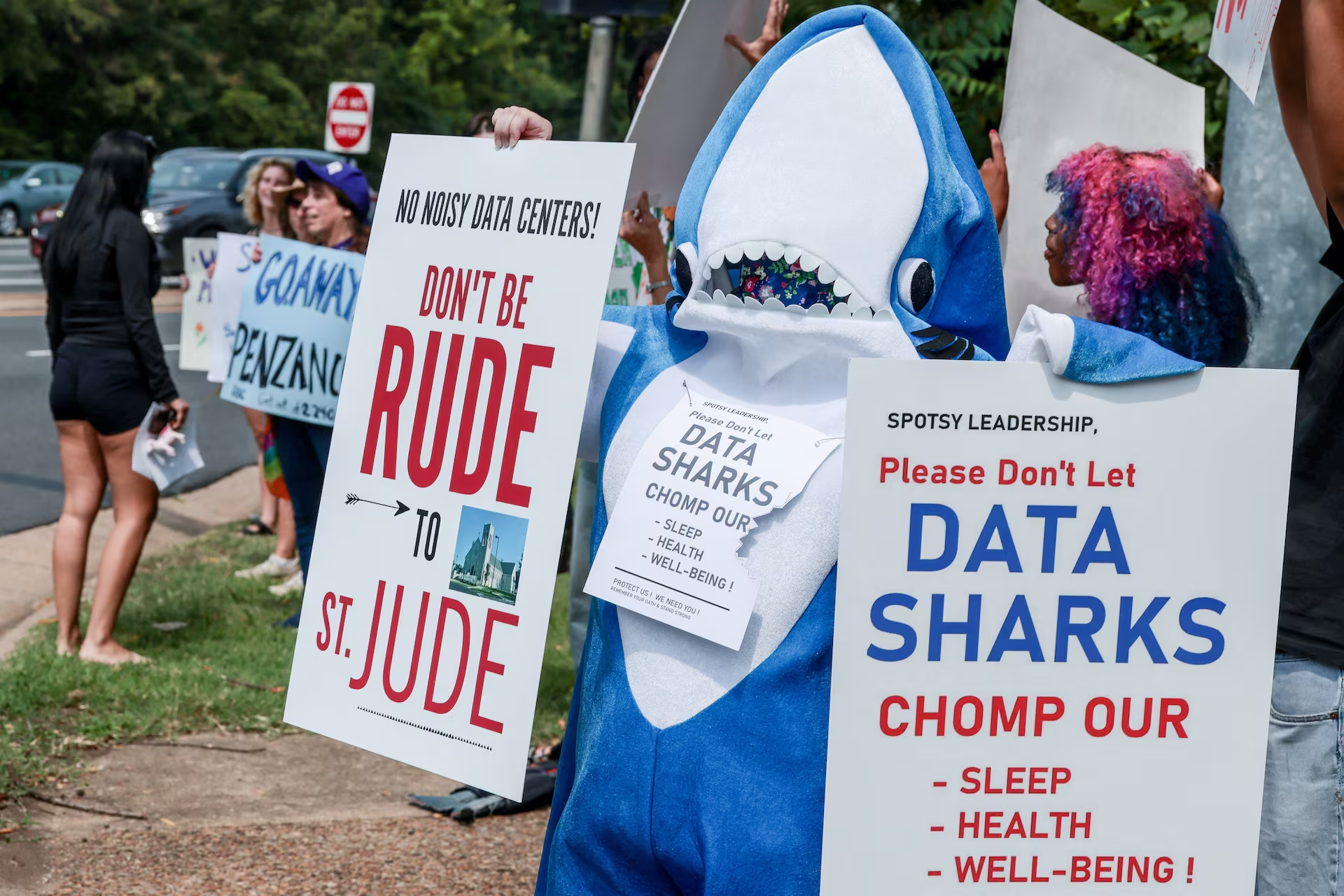
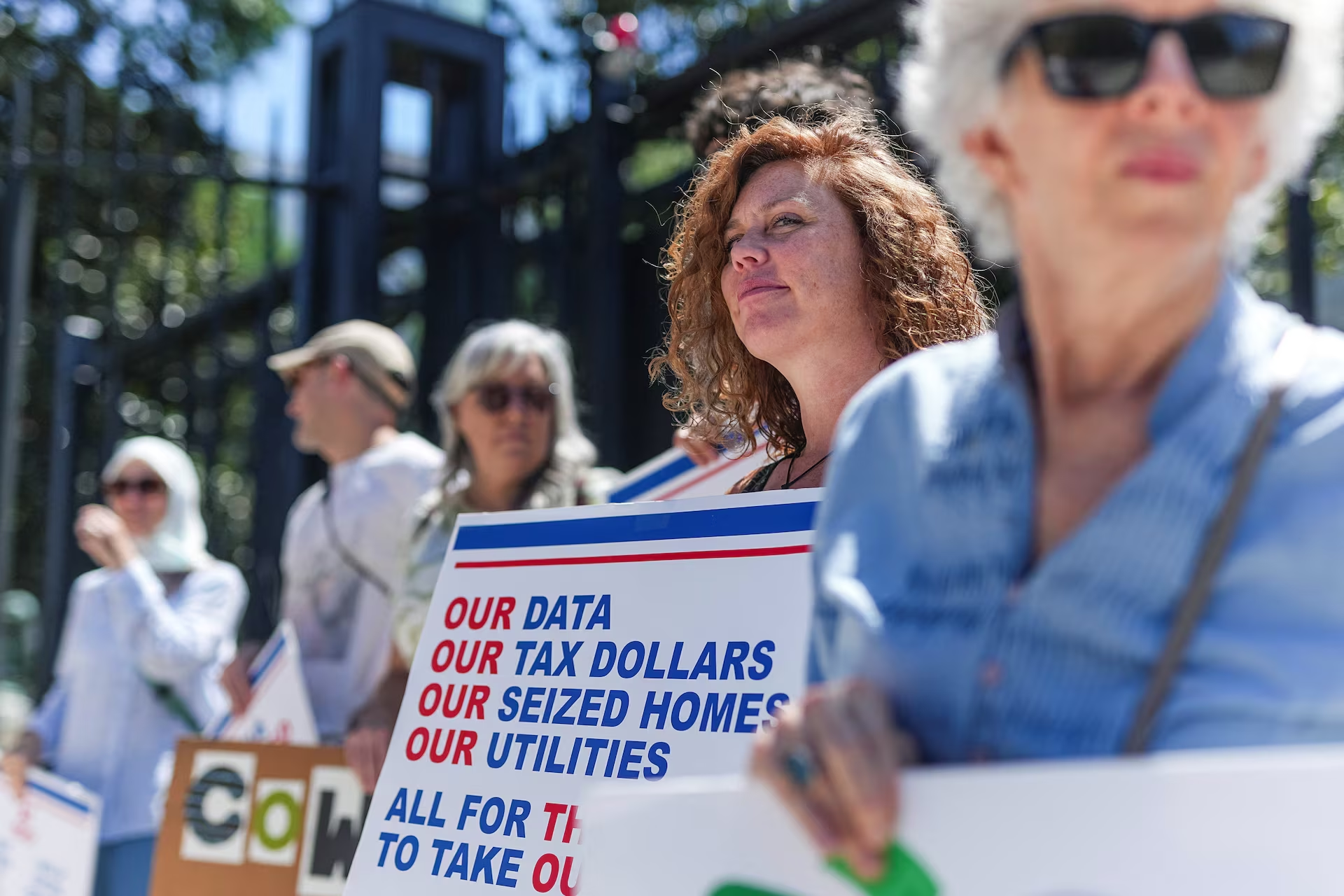
In the space of a year, data centers have gone from abstract infrastructure to an issue dividing municipal-council meetings. Residents’ grievances recur from state to state: rising electricity bills, pressure on water resources, noise from cooling systems, tax incentives for developers and secrecy surrounding approvals. Reuters notes that in some cases projects were approved after local officials signed nondisclosure agreements with developers—despite residents’ objections.
The organizers of Saturday’s protests have articulated specific demands: transparency at every stage of the approval process, protection of water and the environment, the creation of well-paid union jobs and mechanisms to hold developers accountable for broken promises. Kremer and some other organizers nevertheless emphasize that they do not support outright construction moratoriums such as the one imposed by New York state.
Polling helps explain why the movement is growing. According to a June Reuters/Ipsos survey, only a third of Americans approve of the pace of data-center construction, and just 14% would be willing to have such a facility in their own community—whether built by Meta, Alphabet, Amazon, Microsoft or Elon Musk’s xAI. A Gallup poll paints an even starker picture: 71% of voters do not want a data center near their homes, including 75% of Democrats and 63% of Republicans. Few other issues in America command such bipartisan agreement.
Politicians Catch Up With Voters
The protests are already translating into policy. According to research firm Data Center Watch, whose findings were cited by The Guardian and Fortune, at least 75 US data-center projects worth roughly $130 billion were blocked or delayed in the first quarter of 2026 alone—as many as in all of 2025.
text
New York has taken the most radical step. On July 14, Governor Kathy Hochul signed an executive order imposing the nation’s first statewide moratorium: permits for new hyperscale data centers have been suspended for up to a year while regulators develop standards governing energy consumption, water use and environmental effects. Hochul said data-center construction threatened to raise utility bills and deplete natural resources. The state legislature had previously passed separate legislation imposing a one-year moratorium on facilities with a capacity of 20 megawatts or more—its fate depends on the governor’s signature.
New York is part of a broader wave. According to CNBC, bills restricting data-center construction have been introduced in the legislatures of 14 states. Arizona and Illinois suspended tax incentives for the industry in 2026. Maine’s legislature passed a moratorium, but Governor Janet Mills vetoed it. In Ohio, organizers of a referendum to ban large data centers failed to collect enough signatures and have promised to try again in 2027. There are counterexamples as well: West Virginia stripped local authorities of the power to block self-contained campuses operating outside the public power grid.
The Industry Responds
The Data Center Coalition, an industry association, told Reuters that the sector would continue working with authorities and residents to ensure that data centers strengthen rather than deplete the regions where they operate. Companies insist that concerns about water and electricity are overstated: Microsoft and OpenAI have pledged to reduce water consumption, while chipmakers are designing more energy-efficient processors. Lobbyists also point to the jobs created by the construction boom.
Convincing voters will not be easy. Kremer, who criticizes fellow Republicans for giving Big Tech “carte blanche,” is certain that candidates across the country will face the same question in November—whether they are for data centers or against them.
BlackRock CEO Larry Fink Proposed Using Americans’ Pension Savings to Build Data Centers and AI Infrastructure
Meta Secured 6 GW of Nuclear Power Supplies to Support AI Growth
Ideology at the Top, Infrastructure at the Bottom
AI’s Carbon Conundrum