Mediators from Pakistan, Egypt, and Turkey intend in the coming days to continue contacts with the United States and Iran as they try to narrow differences and secure an agreement to end the war, a regional source and an American official said.
The sides still regard an agreement as achievable. The mediators hope that bringing positions closer together will make it possible to hold another round of talks before the ceasefire expires on April 21.
Against that backdrop, Donald Trump is considering resuming strikes if the naval blockade fails to force Iran to change course, the sources said. Potential targets could include infrastructure he had earlier threatened to strike before announcing the truce. According to the American official, the blockade itself—as well as Washington’s decision to walk out of the talks in Pakistan—is part of a negotiating tactic. He stressed that Trump wants to prevent Iran from using the Strait of Hormuz as an instrument of pressure.
“We are not at a complete impasse. The door is not shut yet. Both sides are bargaining. It is a bazaar,” the regional source said. The U.S. representative agreed with that assessment, adding that a deal is possible if Tehran shows greater flexibility and acknowledges that the proposal worked out in Islamabad is the best option available.
Iran’s ambassador to Pakistan, Reza Amiri Moghaddam, who took part in the talks, wrote on X that the meetings in Islamabad had not ended in failure but had instead laid the groundwork for a diplomatic process. “If trust and political will are strengthened, [we] can create a durable framework that takes into account the interests of all sides,” he said.
The main disagreements during the 21-hour talks between the United States and Iran in Pakistan concerned the nuclear program, American officials and regional sources said. Washington is insisting on a freeze in uranium enrichment and the relinquishing of stockpiles of highly enriched fuel. Another contentious issue is the amount of frozen funds that Iran wants unfrozen in exchange for nuclear concessions.
Iranian Foreign Minister Abbas Araghchi said the sides had been “a few steps away” from an agreement before the United States “moved the goalposts,” but American officials and regional sources did not confirm that account, though they acknowledged that progress had been made.
On Sunday, April 12, the foreign ministers of Turkey and Egypt held separate phone calls with their Pakistani counterpart, then contacted White House special envoy Steve Witkoff and Araghchi, the sources said.
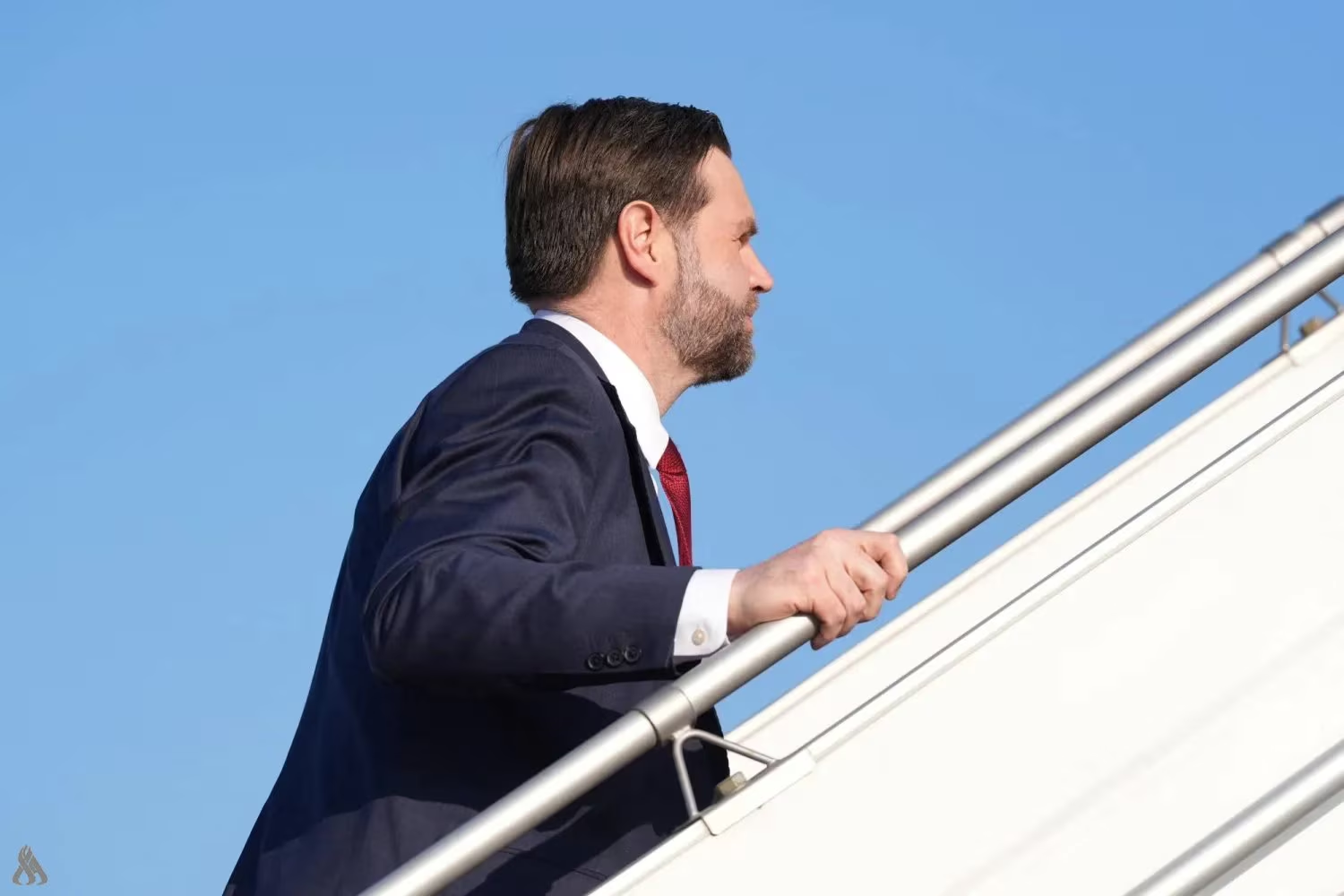
Vice President JD Vance, who led the American delegation, met the Iranian side in Islamabad for the first time. According to the American official, the talks were “difficult,” but over time evolved into a “friendly and productive exchange of proposals.” Despite the restrained outcome, Vance left open the possibility of continuing the dialogue and hopes Iran will return to the talks. “In the coming days, the vice president hopes they will reflect on the proposal they received and recognize that an agreement serves the interests of both sides,” he said.
U.S. Central Command (CENTCOM) said that the naval blockade of Iran announced by Trump will begin on Monday, April 13, at 10:00 AM Eastern Time and “will be enforced impartially against all vessels bound for or departing from Iranian ports.” At the same time, it stressed that Washington “will not impede freedom of navigation for vessels transiting the Strait of Hormuz to and from non-Iranian ports.”