Early on Friday morning, February 27, Pakistan carried out air strikes on Afghanistan amid a sharp escalation in relations between the neighboring countries that threatens to spill into open armed confrontation.
The bombardment included large-scale air and artillery strikes on major cities, including Kabul and Kandahar, where the Taliban’s supreme leader, Hibatullah Akhundzada, is based.
According to officials in Islamabad, the attack was a response to an overnight strike by Afghan Taliban fighters on Pakistani border posts. It followed air strikes carried out by Pakistan over the weekend on what it described as militant positions in eastern Afghanistan.
This week’s fighting has been the most intense in several months, pointing to the effective collapse of a fragile ceasefire. Relations between Pakistan and the Taliban have been deteriorating for more than a year, as Islamabad battles two increasingly active insurgencies in border regions and claims they receive support from Kabul.
Pakistan’s defence minister, Khawaja Asif, a civilian official with limited influence due to the military’s dominant role in policymaking, wrote on X that there is “now open war” between Pakistan and Afghanistan. He also accused the Taliban of acting as “an Indian proxy”, alluding to closer ties between the Islamist movement and Islamabad’s principal regional rival.
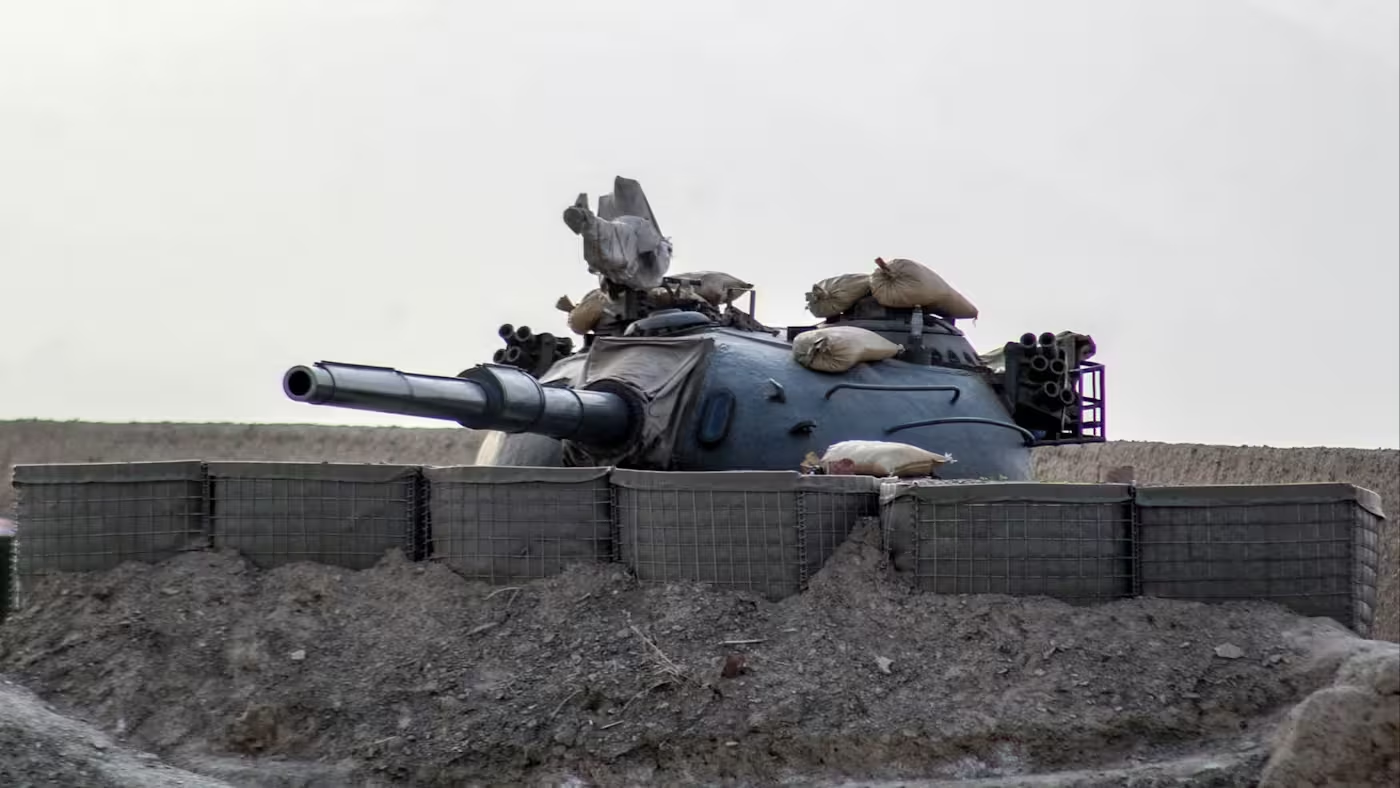
On Friday, Pakistani authorities said the fighting had killed 133 Afghan Taliban fighters, led to the seizure of nine of their military positions, and destroyed dozens of bases, depots, tanks, and artillery pieces on Afghan territory.
The Taliban, for their part, reported the deaths of 55 Pakistani servicemen, claiming they had recovered the bodies of some of them, and said they had captured 19 posts during cross-border raids. Islamabad and Kabul rejected each other’s claims, with neither side officially acknowledging its own losses.
Later on Friday, the Taliban used drones to attack three army facilities in north-west Pakistan, including in the Abbottabad area, home to the country’s main military academy, Pakistani and Afghan officials said. According to Pakistan’s information minister, Attaullah Tarar, all the drones were shot down and there were no casualties.
A Taliban spokesman, Zabihullah Mujahid, said late on Thursday that the movement had launched “offensive operations” against “centres and facilities of the Pakistani army” in response to air strikes carried out over the weekend that, according to the United Nations, killed at least 13 civilians.
Pakistan described the Taliban’s actions as “unprovoked” and says its strikes targeted hideouts of Tehrik-e-Taliban Pakistan, a group formally distinct from the Afghan Taliban, as well as a local Islamic State affiliate. The latter claimed responsibility for a suicide bombing in Islamabad this month that killed more than 30 people.
“By expanding its targets from TTP militant infrastructure to the Taliban regime itself, Pakistan is signalling a willingness to take the conflict directly to the Afghan state,” said Michael Kugelman, a senior fellow for South Asia at the Atlantic Council. He added that the Taliban, for their part, are indicating an intention to wage a prolonged campaign against Pakistan, while diplomatic efforts have failed to address the crisis’s root causes.
The Taliban deny that groups operating from their territory carry out attacks against Pakistan, a claim that international observers dispute.
Hamid Karzai, the former president of the Islamic Republic of Afghanistan who led the NATO-backed government overthrown by the Taliban in 2021, wrote on X: “Afghans will defend their beloved homeland with full unity under all circumstances.” He added that Pakistan “must change its own policies and choose a path of good neighbourliness, respect, and civilized relations with Afghanistan”.
Since October, representatives of Islamabad and the Taliban have held four rounds of talks in Doha, Istanbul, and Riyadh in an effort to preserve a fragile ceasefire. The latest exchange of strikes came despite the Taliban’s release last week of three Pakistani soldiers under a Saudi-brokered deal.