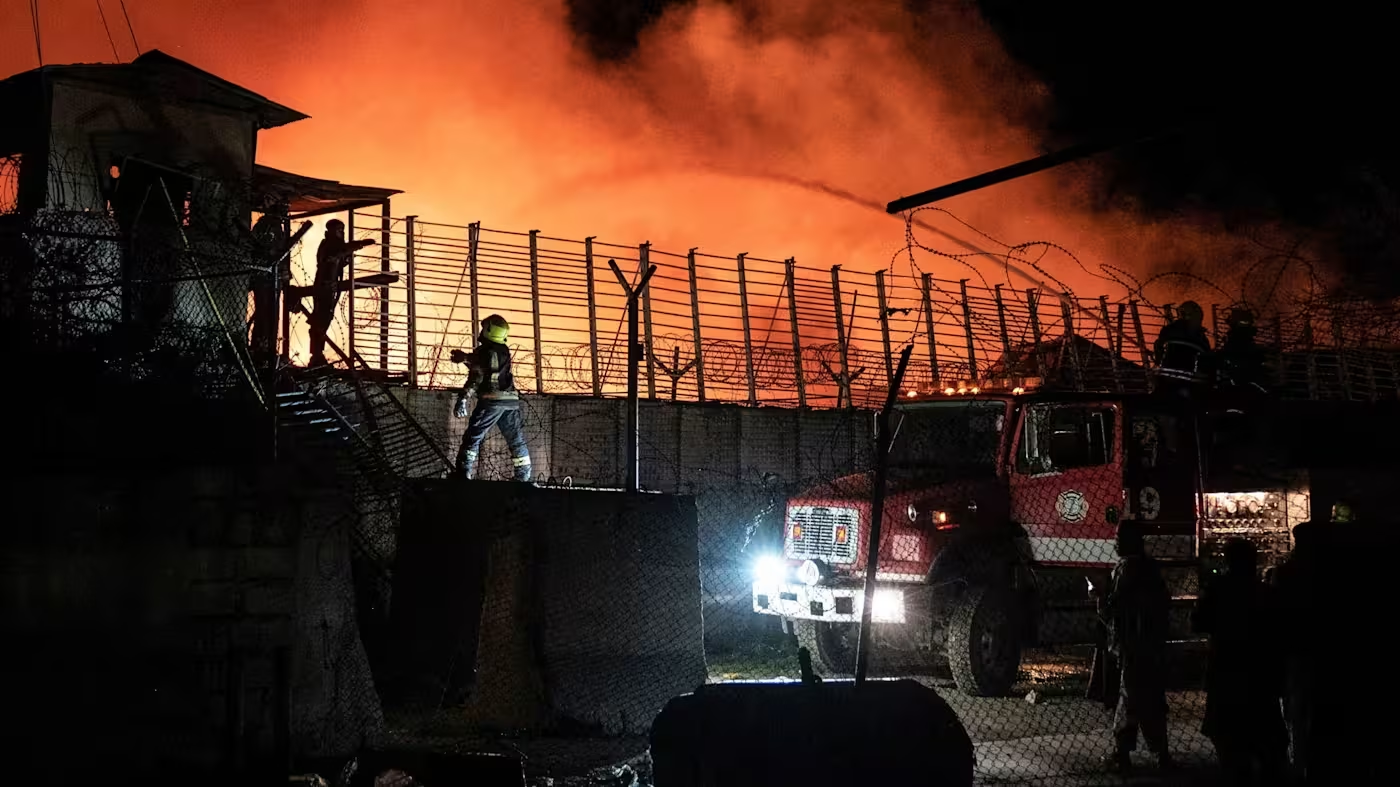
Hundreds of people are feared to have been killed in an airstrike on a hospital in Afghanistan, which the Taliban government has blamed on Pakistan. The incident comes amid escalating tensions between the two countries that risk tipping into open war.
Hamdullah Fitrat, deputy spokesperson for the Taliban, said on X on Tuesday that Pakistani forces had “carried out an airstrike” on Kabul, hitting the Omid Addiction Treatment Hospital—a 2,000-bed facility specialising in the treatment of drug dependency.
“As a result of the attack, a significant part of the hospital has been destroyed, and there are serious concerns about a large number of casualties,” he said.
“Unfortunately, the death toll has so far reached 400, with around 250 others injured,” Fitrat added.
The Afghan Red Crescent posted videos on X showing rescue teams assisting the “dead and wounded” placed on stretchers, as search-and-rescue operations continue.
Afghan television channels aired footage of a two-storey complex engulfed in flames, Taliban fighters in uniform clearing debris in search of bodies and survivors, and dozens of people outside hospitals trying to locate missing relatives.
The UN special rapporteur on Afghanistan, Richard Bennett, said on social media that he was “shocked” by fresh reports of “Pakistani airstrikes” on the country’s territory “resulting in civilian casualties”. These claims have not been independently verified.
Another Taliban spokesperson, Zabihullah Mujahid, condemned the strike on the hospital, saying Pakistan had “violated Afghanistan’s airspace and attacked a drug rehabilitation centre in Kabul”. The Taliban, he added, view “such actions as a violation of all recognised principles and a crime against humanity”.
A spokesperson for Pakistan’s prime minister Shehbaz Sharif, Musharraf Zaidi, rejected accusations of civilian deaths, describing them on X as part of the Taliban’s “ongoing falsehoods”. He added that strikes on Afghan territory would continue until the “elimination of terrorists and their infrastructure”.
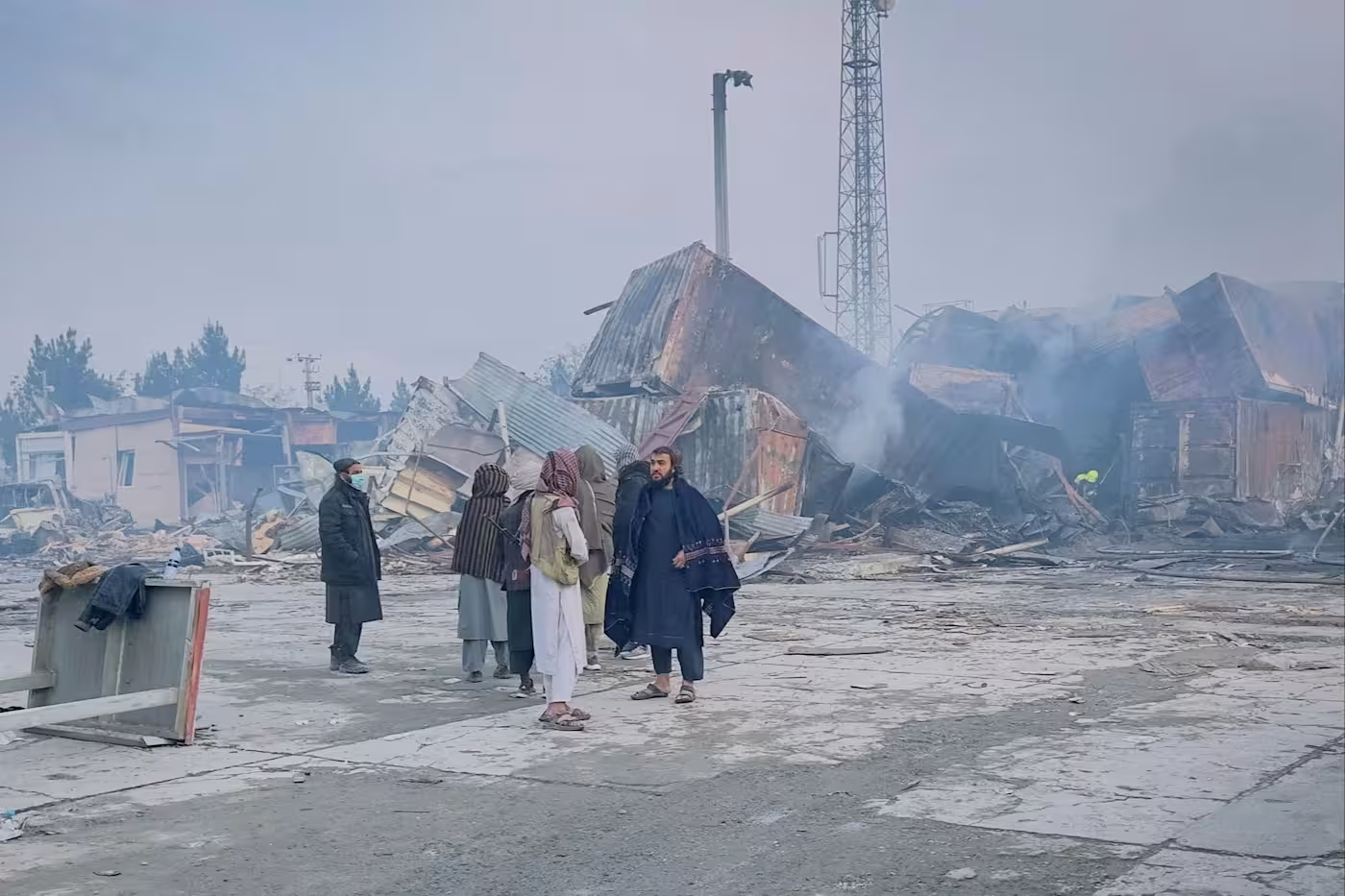
Officials and rescuers at the site of the destroyed rehabilitation centre in Kabul.
Pakistan’s information minister, Attaullah Tarar, said the country’s armed forces had “successfully carried out precision airstrikes” targeting what he described as “military installations of the Afghan Taliban regime supporting terrorism”, including in Kabul.
According to him, the strikes hit “technical support facilities and ammunition depots”.
This episode may prove one of the deadliest in a conflict that began last year amid deteriorating relations between Pakistan and the Taliban. Islamabad is battling two increasingly active insurgent movements in its border regions and claims they receive support from Kabul. The Taliban reject these allegations.
The strike was carried out despite diplomatic efforts by China—a key security and economic partner of Pakistan—which has also moved closer to the Taliban in recent months.
In phone calls last week with his Pakistani and Afghan counterparts, China’s foreign minister Wang Yi said Beijing’s special envoy has been travelling between Islamabad and Kabul in an effort to secure a ceasefire and initiate “direct talks”.
Several rounds of negotiations between Afghan and Pakistani officials, held since October in Doha, Riyadh and Istanbul, have failed to produce a durable settlement. Pakistani authorities have refused further direct engagement until the Taliban commit to restraining militant groups.
The latest wave of strikes began in late February, when Pakistan carried out a series of air raids on border villages. Islamabad said the targets were militants, but the Taliban and the UN report civilian casualties.
Before the strike on Monday night, the UN had reported at least 75 civilian deaths in Afghanistan as a result of Pakistani attacks.
Pakistan says it has killed more than 680 fighters from the Afghan Taliban and affiliated groups. In response, the Taliban have used drones and artillery against Pakistani territory, killing at least four civilians, according to Islamabad.