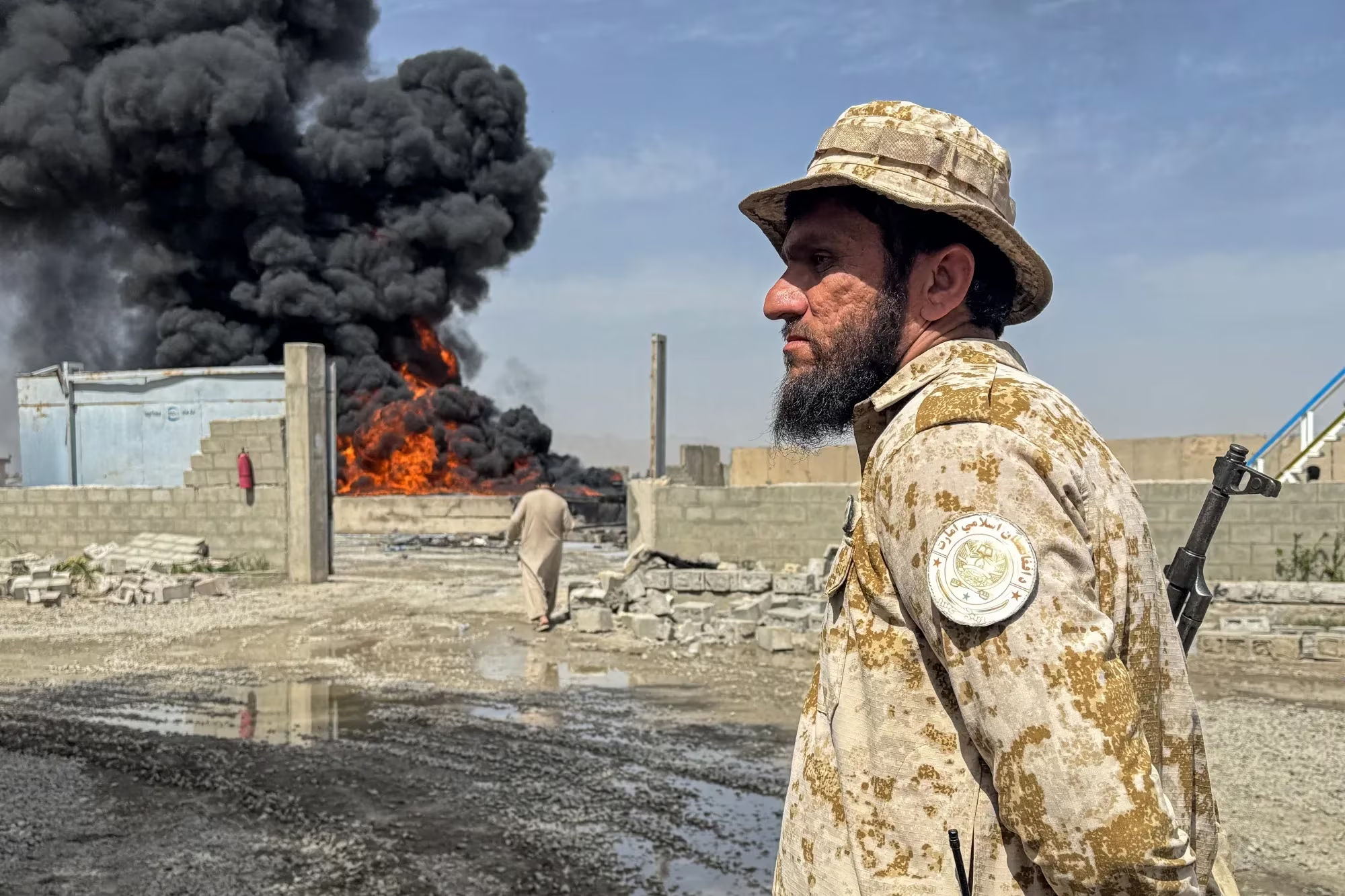
Years of strained relations between Afghanistan and Pakistan have flared once again this year, bringing a fragile ceasefire to an end.
Since February, the sides have repeatedly clashed, exchanging strikes across each other’s territory. The deadliest episode came on March 17, when Pakistani aircraft struck a drug rehabilitation centre in Kabul—Afghan authorities say hundreds were killed. The escalation raises the risk that the conflict could shift into a broader phase.
Relations between the neighbours have steadily deteriorated since 2021, when the Taliban returned to power in Afghanistan and violence intensified in Pakistan’s border regions. At the heart of the dispute are Islamabad’s accusations that Afghan authorities are sheltering militant groups responsible for suicide and armed attacks against Pakistani security forces—claims the Taliban reject.
What Happened During The Latest Clashes?
In October, Pakistan carried out a series of airstrikes inside Afghanistan, saying the operation targeted militant groups. The strikes triggered a fresh escalation and renewed clashes along the border.
Later that month, the sides agreed to a ceasefire mediated by Qatar and Turkey, but subsequent rounds of talks failed to produce a durable peace agreement.
After a wave of explosions in Pakistan—claimed by militant groups, including a rare attack in Islamabad where a blast at a mosque killed dozens—Islamabad launched another round of strikes in February. Targets included defensive positions in Kabul, as well as Kandahar—the de facto centre of Taliban power and the location of its supreme leader, Hibatullah Akhundzada.
Pakistan’s defence minister, Khawaja Asif, said the countries are in a state of “open war”, adding that Islamabad has exhausted its patience with Afghanistan’s failure to dismantle militant groups operating from its territory.
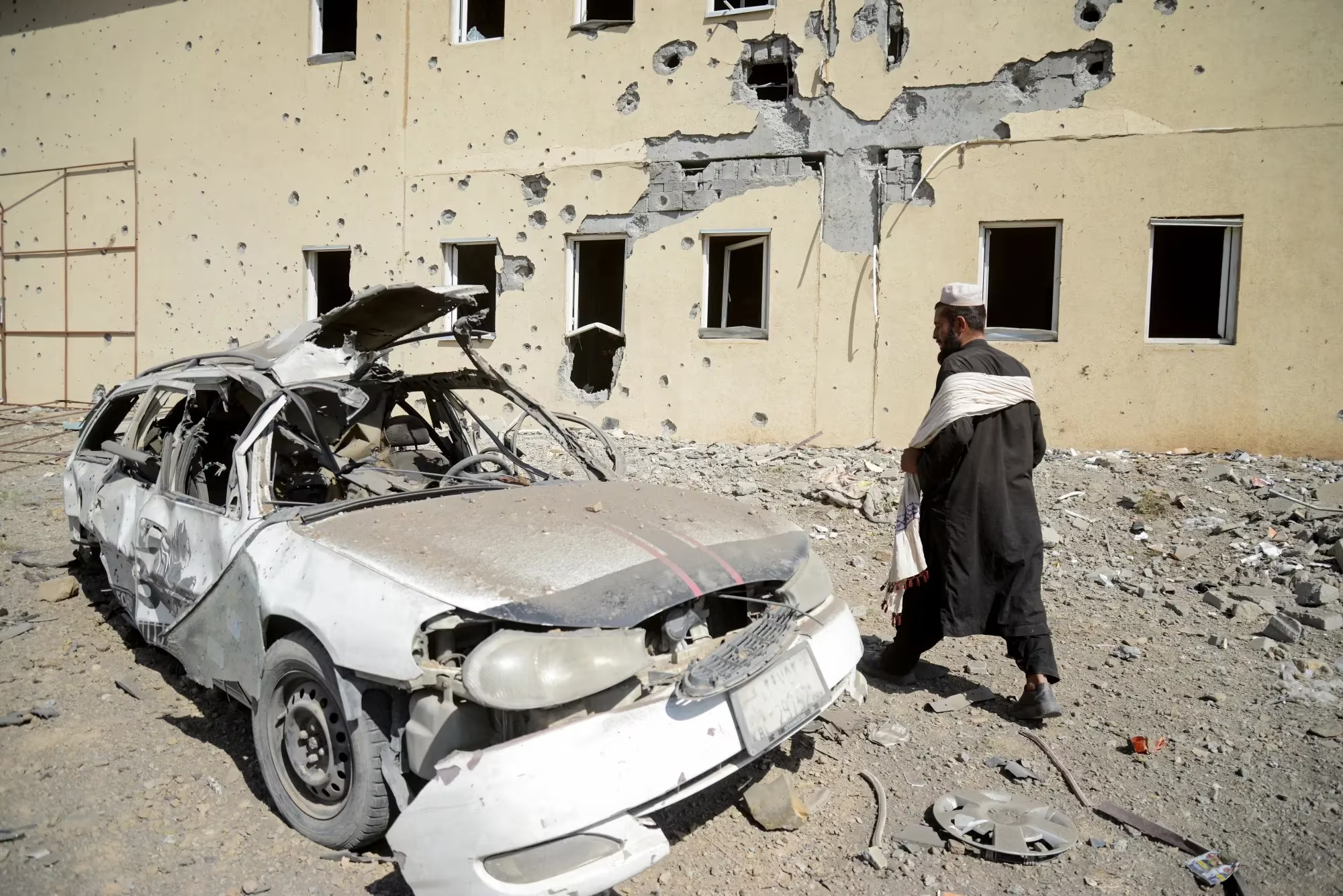
Destruction at the site of a Pakistani airstrike in Kandahar. February 28, 2026.
Afghan officials said civilians, including children, were killed in the airstrikes—a claim rejected by authorities in Islamabad. Afghanistan, with крайне limited air capabilities, responded with strikes on Pakistani army positions along the border, as well as drone attacks in several Pakistani cities.
The strike on a medical facility in Kabul in March marked a sharp escalation in violence. Afghan authorities say at least 400 people were killed, although the figures have not been independently verified. Pakistan denied targeting a healthcare centre, insisting the operation was aimed at military infrastructure.
How Serious Is The Latest Escalation?
When fighting erupted in February, Maliha Lodhi, Pakistan’s former ambassador to the United States and the United Kingdom, described it as the most dangerous and serious confrontation between the two countries to date. In her words, it led to a “complete breakdown in relations”.
Afghanistan’s limited military capabilities constrain the scale of the conflict—for instance, the country has no fighter aircraft. However, Lodhi argues that the cycle of violence will persist unless both sides return to diplomatic efforts to find a solution. In her assessment, that is unlikely without the involvement of external mediators.
Pakistani authorities say they will not enter talks to halt the clashes until Afghanistan stops supporting and sheltering militant groups that carry out cross-border attacks from its territory.
Mediation efforts have previously been undertaken by Qatar, Turkey, Saudi Arabia, and Iran, but negotiations and ceasefire agreements have failed to produce results. China, which has significant investments in Pakistan and is interested in expanding its economic presence in Afghanistan, is seeking to ease tensions by engaging both sides in an attempt to revive a peace dialogue.
What Lies At The Core Of The Current Conflict Between Pakistan And Afghanistan?
According to the South Asia Terrorism Portal, 2025 was Pakistan’s deadliest year in a decade in terms of insurgent violence. Authorities and analysts have repeatedly pointed to Tehreek-e-Taliban Pakistan (TTP) as a central driver of this surge.
The group has waged an armed campaign against the Pakistani state for years and is now seeking to establish control over border regions. Islamabad says Afghanistan provides the TTP with safe haven, and that the militants maintain close ties with the Afghan leadership. The Taliban reject these accusations.
Kabul also denies allegations that it supports Baloch separatists—an insurgent movement seeking independence for the resource-rich province of Balochistan in southwestern Pakistan.
A further source of tension is Afghanistan’s growing engagement with India—Pakistan’s long-standing rival. Authorities in Islamabad claim that India also supports militant groups operating against Pakistan—an accusation New Delhi denies. At the same time, Afghanistan and India are discussing the expansion of trade ties, including new routes using Iranian ports to bypass Pakistani territory. For Islamabad, this creates potential economic and strategic risks.
How Have Relations Between Afghanistan And Pakistan Evolved?
Afghanistan and Pakistan are bound by close cultural ties, a more than 2,600-kilometre mountainous and porous border, and a complex history in which, since the 1990s, both sides have repeatedly accused each other of supporting militant groups across the contested line.
When the Taliban first came to power in Afghanistan in 1996, the movement found itself internationally isolated, and Pakistan was among the few countries to formally recognise its government. After the Taliban were overthrown by NATO forces led by the United States in 2001, Islamabad maintained close ties with them throughout the two-decade insurgency.
However, after the Taliban’s return to power following the withdrawal of international forces, relations began to deteriorate. Pakistan supported the transition, expecting that a friendly government would help contain militant groups operating against it. In practice, violence in border regions only intensified.