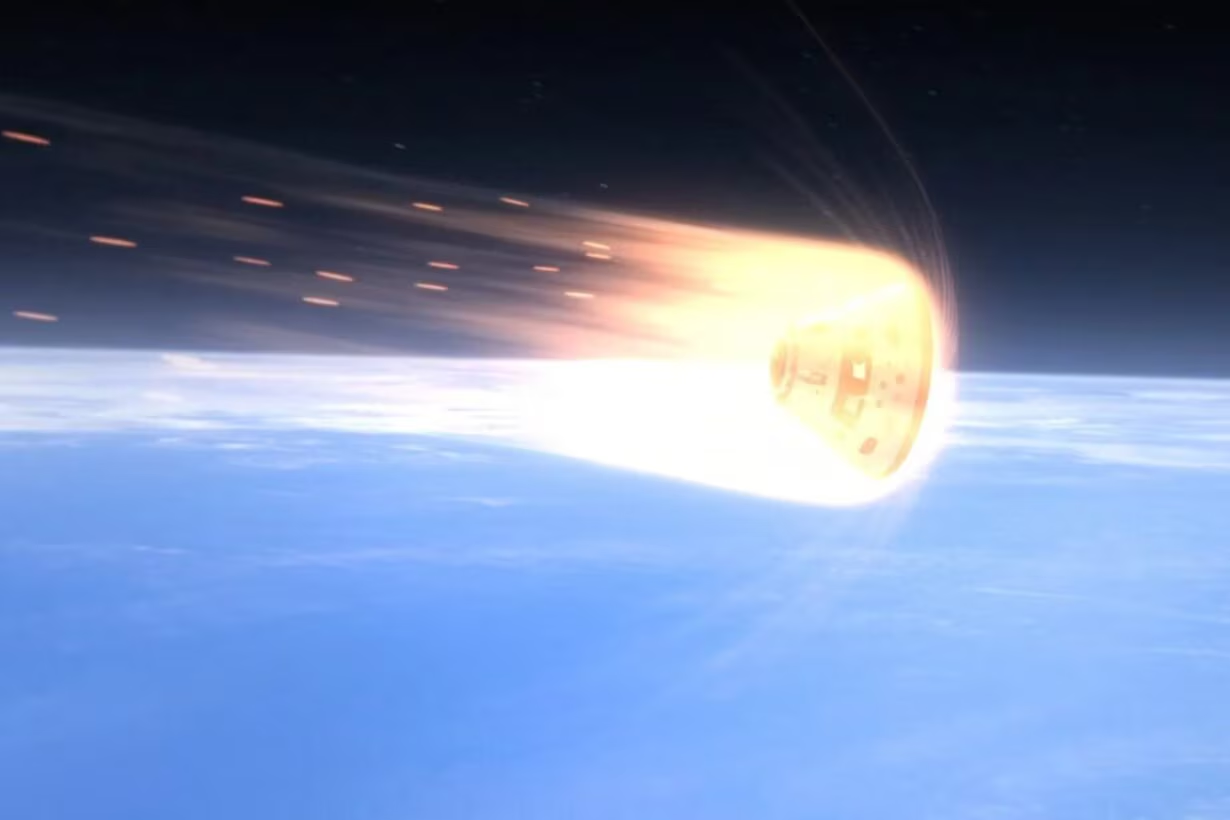
The Artemis II mission ended with a successful return to Earth after a ten-day flyby of the far side of the Moon. Overnight into April 11, the Orion capsule splashed down in the Pacific Ocean not far off the coast of San Diego. The crew—American astronauts Reid Wiseman, Victor Glover, and Christina Koch, along with Canadian astronaut Jeremy Hansen—were evacuated and brought ashore without incident. More than three million people watched NASA’s live YouTube broadcast of the landing.
What the Return-to-Earth Plan Looked Like
⋅ 11:33 PM UTC — Orion’s crew module separated from the service module, exposing the heat shield.
⋅ 11:37 PM UTC — after separation, the spacecraft carried out an 18-second correction maneuver to set the proper entry angle and align the crew module for atmospheric reentry.
⋅ 11:53 PM UTC — the planned six-minute communications blackout began: at an altitude of 120 kilometers, Orion entered the upper layers of the atmosphere for the first time. According to the projected trajectory, the crew was expected to experience forces of up to 3.9 G at that moment.
⋅ 12:03 AM UTC — at an altitude of about six kilometers, the drogue parachutes deployed, slowing and stabilizing the capsule.
⋅ 12:04 AM UTC — at an altitude of about 1.8 kilometers, the drogue parachutes detached, after which the three main parachutes deployed. By that point, Orion’s speed had fallen below 220 kilometers per hour.
⋅ 12:07 AM UTC — having slowed to roughly 30 kilometers per hour, Orion splashed down in the Pacific Ocean off the coast of San Diego. Since launch, the spacecraft had traveled 1,117 thousand kilometers.
Welcome home Reid, Victor, Christina, and Jeremy! 🫶
— NASA (@NASA) April 11, 2026
The Artemis II astronauts have splashed down at 8:07pm ET (0007 UTC April 11), bringing their historic 10-day mission around the Moon to an end. pic.twitter.com/1yjAgHEOYl
After splashdown, NASA recovery teams and U.S. military personnel retrieved the crew from Orion, helped the astronauts climb into an inflatable raft, and then flew them by helicopter to the amphibious transport dock USS John P. Murtha. On board, the astronauts underwent medical examinations. They were then taken ashore and flown to NASA’s Johnson Space Center in Houston.
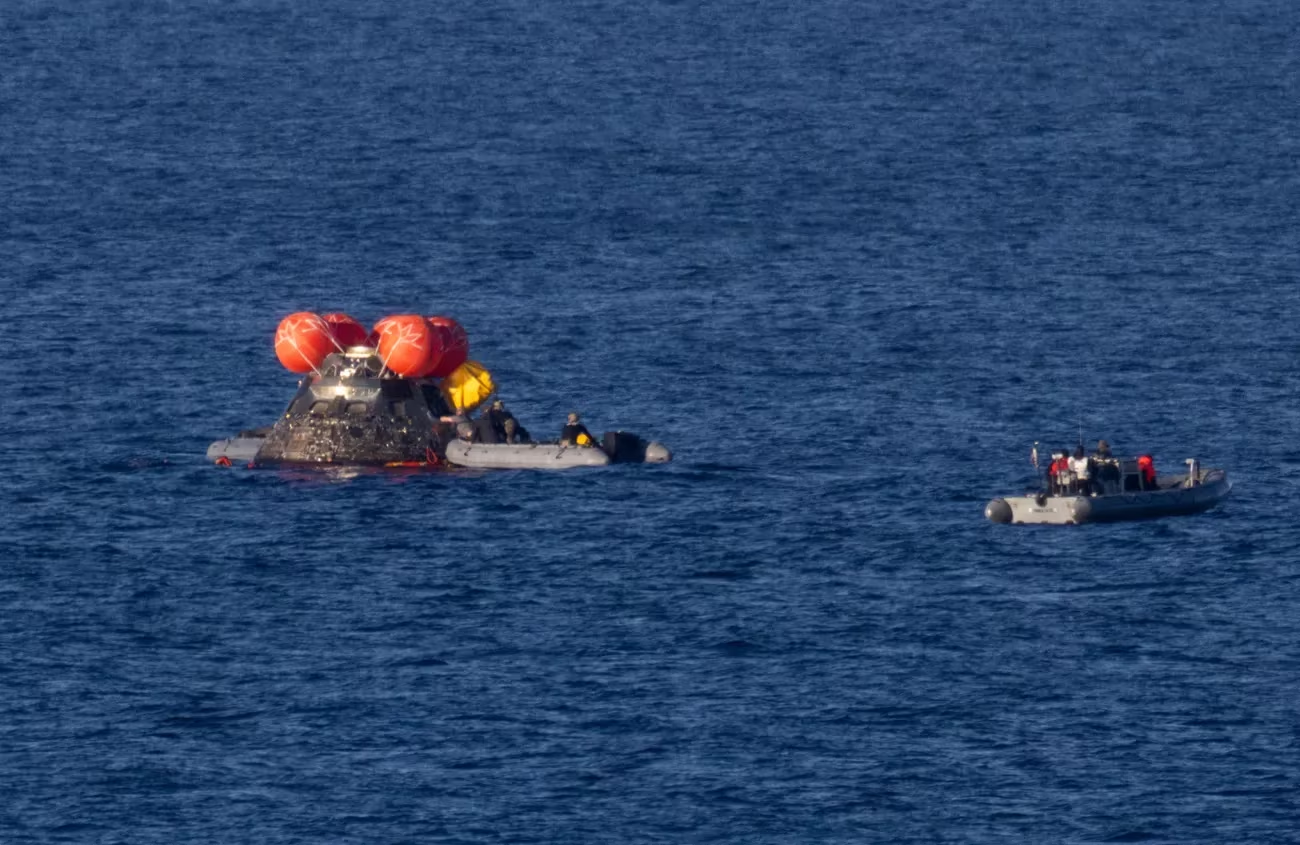
The Orion capsule in the Pacific Ocean off the coast of California. April 10, 2026.
Where Can You Watch the Replay?
Why Is Returning From the Moon Far More Difficult Than Returning From the ISS?
In the Artemis II mission, the most challenging phase was considered to be the return to Earth—not the flyby of the Moon. It is at this moment that the heat shield, the spacecraft’s onboard systems, and the astronauts themselves are truly put to the test—as they endure extreme g-forces during atmospheric reentry.
The approach to the Moon was the most visually dramatic part of the flight, but in terms of risk it was relatively predictable. At that stage, the spacecraft was operating almost passively—the mission trajectory had been calculated so that the crew could return to Earth even if Orion’s engines failed. After entering the outbound trajectory, the spacecraft carried out only limited course corrections, including before the return, but even without them it still retained the ability to make it back.
The central difficulty of the return lay in the exceptionally high speed at atmospheric entry—it was significantly greater than the speed involved in returning from the ISS.
To set course for the Moon, Orion had to accelerate from roughly 7.9 kilometers per second—the first cosmic velocity required to enter low Earth orbit—to nearly 11 kilometers per second, or about 40,000 kilometers per hour, only slightly below escape velocity. On the way back, that speed had to be shed in full.
A precise and detailed visualization of the trajectories of three lunar missions: Apollo 8, Artemis I, and Artemis II. Although all three are described as “flybys of the Moon,” the spacecraft followed fundamentally different paths.
As a result, Orion entered the atmosphere at a speed about 30 times greater than the speed of sound—around Mach 30, roughly 40% faster than spacecraft returning from the ISS. Because kinetic energy rises in proportion to the square of velocity, the difference was not one-and-a-half times, but nearly twofold. The temperature on the outer shell therefore rose sharply as well—by NASA’s calculations, it reached about 3,000 degrees Celsius.
Even at the design stage, it was clear that Orion would require a more resilient heat shield than spacecraft returning from low Earth orbit. In the end, engineers chose AVCOAT—a composite heat-shield material based on carbon fiber and phenol-formaldehyde resin. Similar solutions had also been used in the Apollo program.
However, the results of Artemis I’s first uncrewed flight showed that the material degraded more quickly than engineers had expected. NASA concluded that the cause was the temperature swings produced by a two-stage atmospheric reentry—a profile in which the spacecraft passes twice through dense layers of the atmosphere, with a brief cooling phase in between.
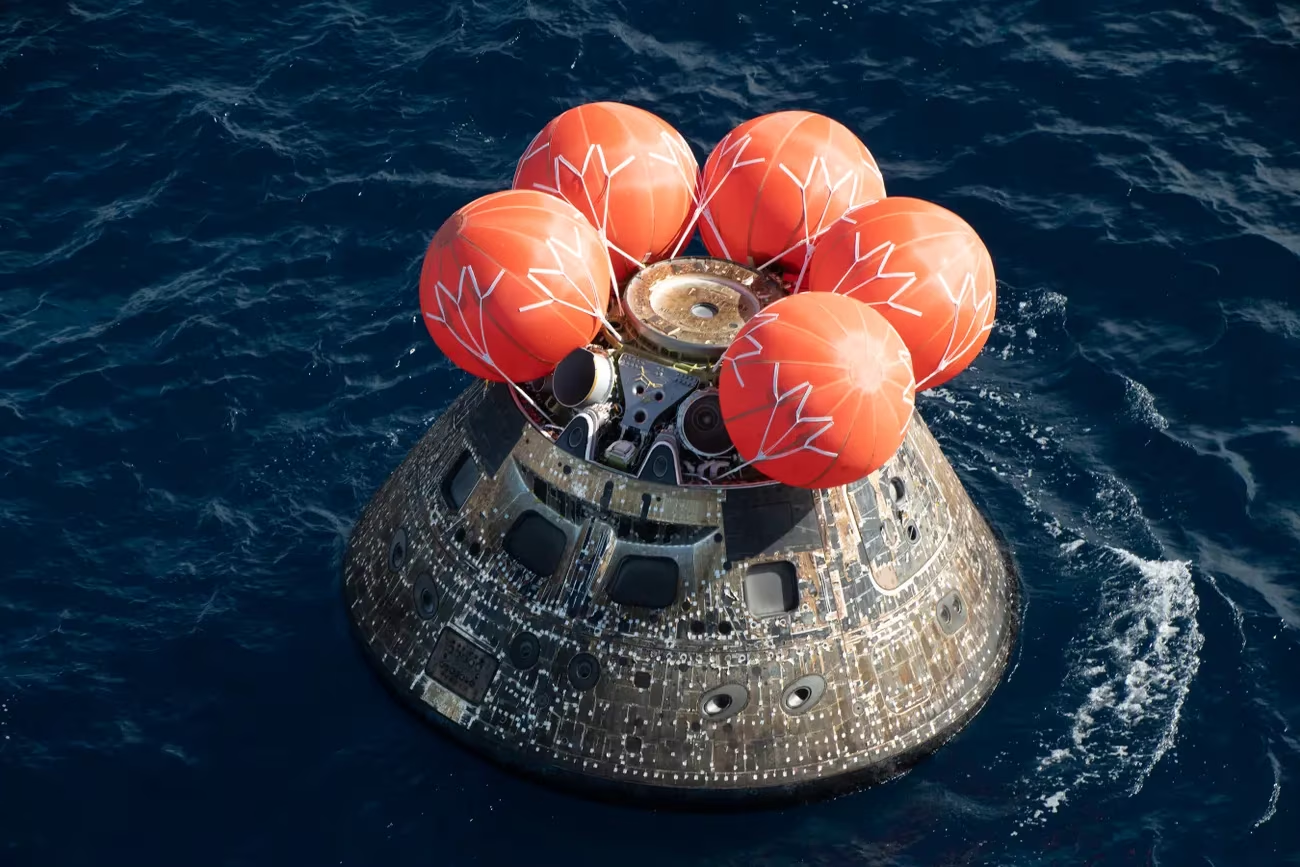
The uncrewed Orion splashing down in the Pacific Ocean during the Artemis I mission, December 11, 2022.
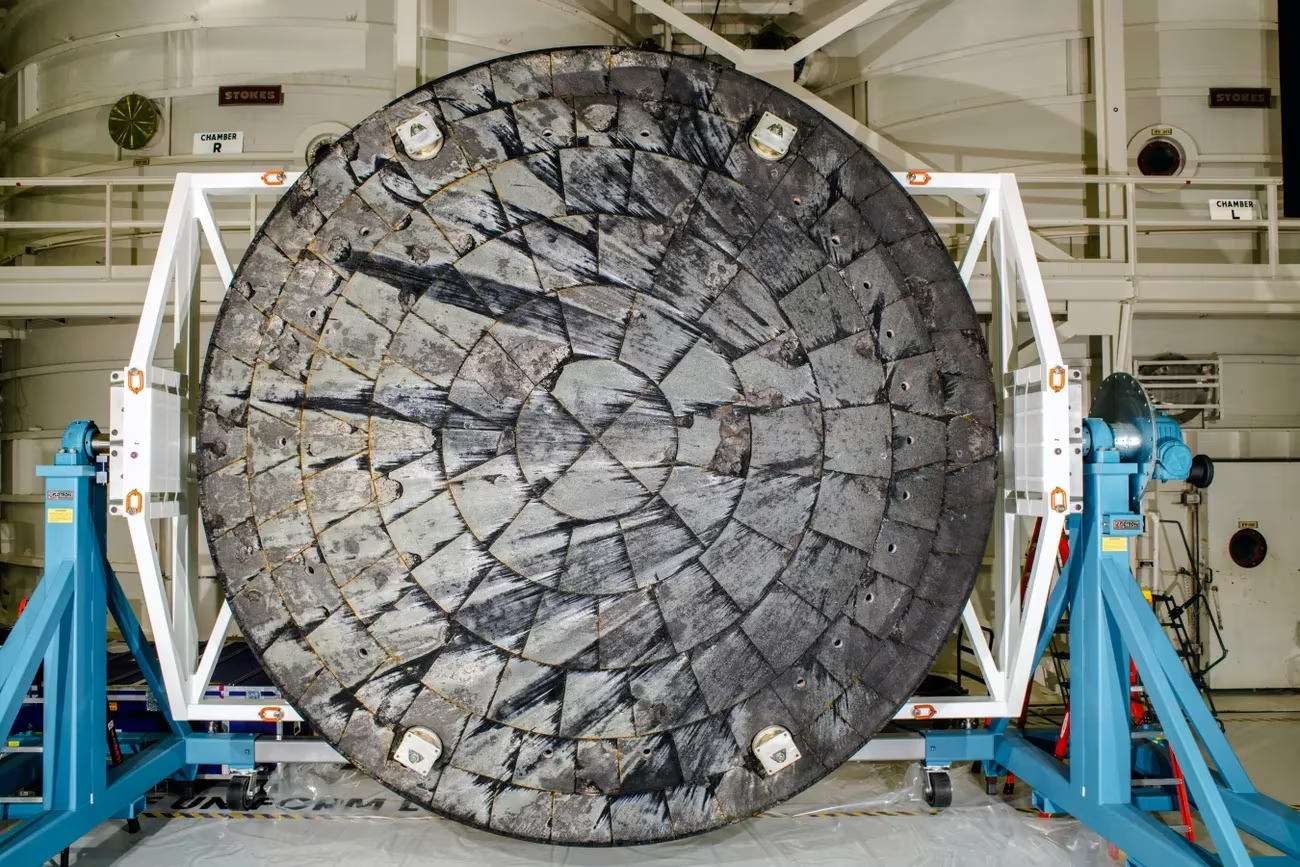
Orion’s heat shield at Kennedy Space Center in Florida after the completion of the Artemis I mission.
Enlarging the heat shield would have required a redesign of the entire spacecraft and, as a result, would have caused further delays to the mission. NASA therefore chose a different path—it sought to reduce the risk through a gentler return trajectory that avoided cycles of sharp heating followed by cooling of the heat shield. How effective that solution proved to be will become clear only after the spacecraft undergoes a detailed inspection back on Earth.