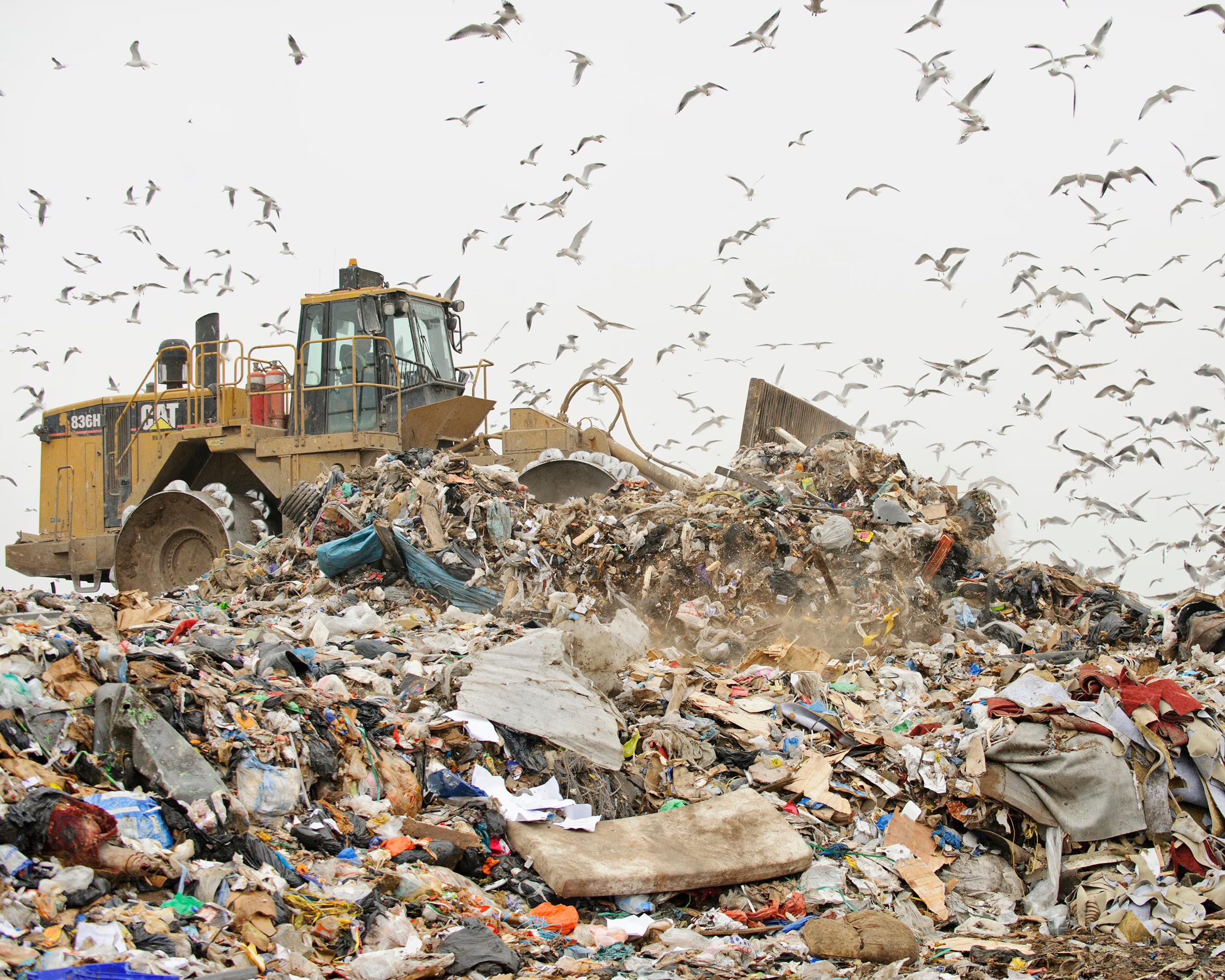
A large-scale joint investigation by The Guardian, Watershed Investigations and Investigate Europe has, for the first time, mapped tens of thousands of landfill sites across Europe and the United Kingdom, many of which sit in areas prone to flooding and erosion. A substantial share of these sites was built before modern environmental safeguards and may allow toxic substances—from heavy metals to the so-called “forever chemicals” Pfas—to leach into rivers, groundwater and surrounding ecosystems. The absence of centralised data on the composition and condition of ageing dumps, the researchers note, makes it impossible to assess the full scale of the potential risks to drinking water and the environment.
According to the investigation, thousands of landfill sites across the UK and Europe lie in river floodplains and may threaten drinking water and natural habitats if contaminated waste enters rivers, soil and ecosystems. These findings draw on the first continent-wide mapping of landfill locations, conducted with the involvement of The Guardian, Watershed Investigations and Investigate Europe.
Patrick Byrne of Liverpool John Moores University said: «As flooding and erosion intensify and become more frequent because of climate change, the risk of waste being washed into the environment increases». He stressed that the concern extends beyond plastics or construction debris to toxic substances, including metals and chemicals such as Pfas—the “forever chemicals”—and PCBs.
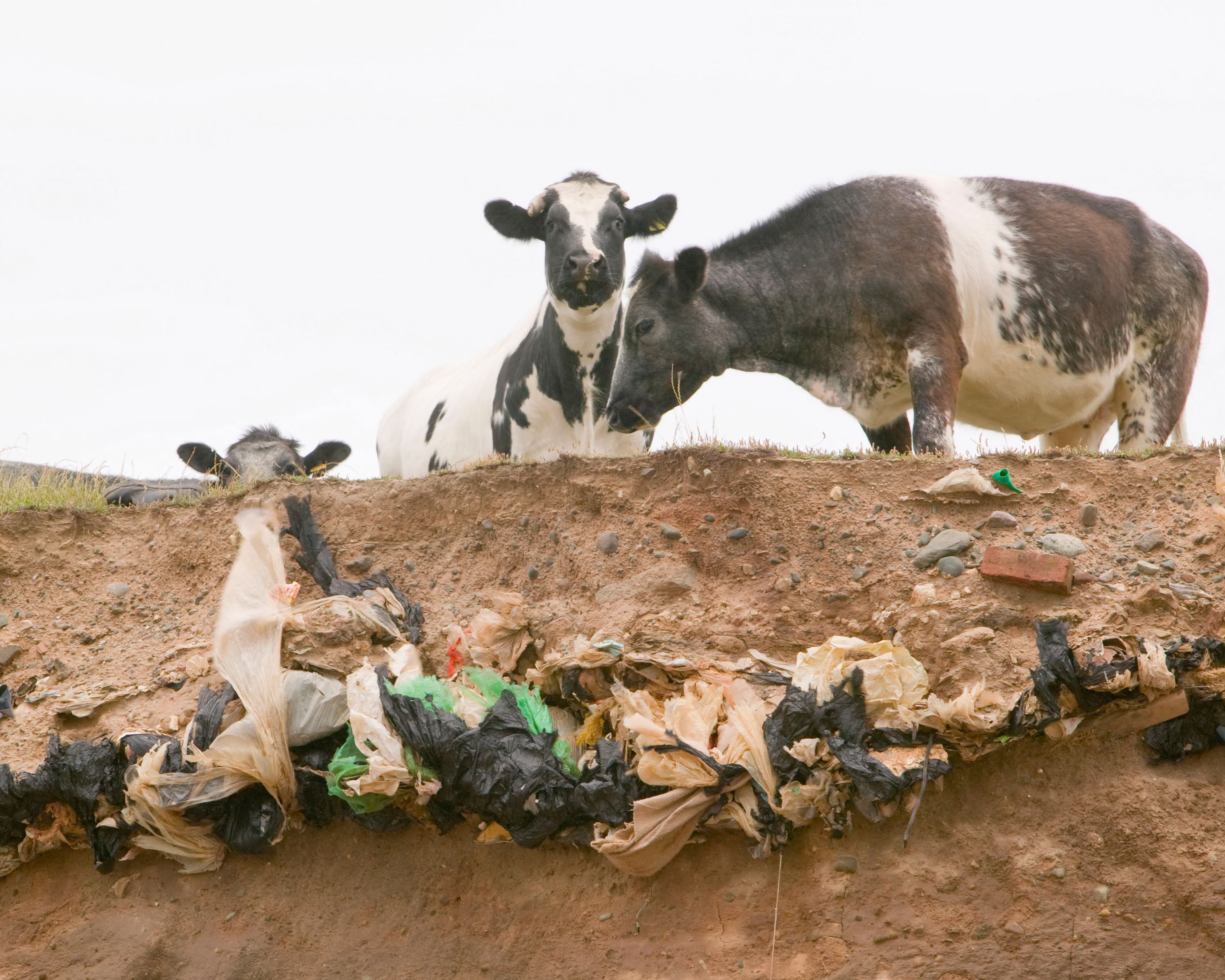
Kate Spencer, professor of environmental geochemistry at King’s College London, noted: «We found a wide range of waste at an eroding coastal landfill site in Tilbury, including items resembling hospital blood bags, and we are talking about tens of thousands of objects. If such sites lack protective liners and are exposed to flooding, there are numerous pathways through which contaminants can reach groundwater and surface waters, as well as food chains».
Estimates suggest the EU may have up to 500,000 landfill sites. Around 90% of them, including 22,000 in the United Kingdom, were built before environmental standards were introduced—such as mandatory waterproofing to prevent leaks. Modern sites, when properly managed, are considered relatively safe.
The mapping identified more than 61,000 landfills, 28% of which lie in areas vulnerable to flooding. Modelling indicates the real number could reach 140,000. Data collection, based on information requests in ten countries and supplemented with open sources, exposed a systemic problem: EU institutions lack a centralised landfill registry, while national datasets remain fragmented, inconsistent and often inaccessible.
«We do not have enough data, and classification methods vary, which makes the work significantly harder», Spencer said. She stressed: «This is the worst-case scenario. Most landfills pose no threat, but a few sites containing highly toxic substances are enough to create a serious problem. We simply do not know which ones».
More than half of the surveyed sites are located in areas where groundwater quality fails to meet chemical standards, suggesting that landfills may be contributing to contamination.
The EU’s 1999 directive banned the operation of landfill sites without waterproofing and set strict criteria for waste acceptance. Before its adoption, however, measures to prevent leakage were virtually nonexistent.
Byrne notes that pollution can stem from many sources, including agriculture and industry, yet groundwater remains one of the principal pathways through which chemicals from landfill sites migrate.
He documented leachate escaping from an old landfill in the Newgate nature reserve in Wilmslow (Cheshire), where it was entering a small stream. Tests showed concentrations of toxic “forever chemicals” Pfas that exceeded drinking-water limits by a factor of 20. In Greece, research found multiple breaches of Pfas standards, as well as mercury and cadmium leaks into the Nedontas River from the former Maratolaka landfill in the Taygetos mountains, an area visited by thousands of tourists each year. The mayor of Kalamata maintains that the site ceased operations in June 2023 and that «there is currently no data or evidence indicating any negative environmental impact».
Some of these water bodies may serve as sources of drinking water, and the analysis identified nearly 10,000 landfill sites located within water-catchment zones in France, the United Kingdom, Spain, Germany, the Netherlands and Italy. More than 4,000 of them are older sites in England and Wales, which typically lack modern pollution-control systems. It was not possible to determine whether the European sites were constructed before environmental standards came into force.
Byrne emphasises: «We do not know—and cannot determine—the level of risk to public health and drinking-water quality until we understand where all landfill sites are located, what they contain, whether leaks are occurring and whether treatment systems are capable of capturing them».
A European Commission spokesperson said that «under the drinking-water directive, water quality must be guaranteed “at the tap” across the EU. The directive sets parameters that must be monitored and establishes corresponding limit values. If these limits are exceeded, member states are required to ensure that appropriate remediation measures are taken».
In the United Kingdom, water companies assess risks and monitor water-catchment areas in line with regulatory requirements.
Coastal landfill sites remain the most vulnerable to external pressures. The analysis identified 335 sites in zones of coastal erosion in England, Wales and France, and 258 sites across Europe located less than 200 metres from the shoreline, making them susceptible to erosion or storm surges.
«This is only the tip of the iceberg», says Spencer, who is assisting the UK Department for Environment, Food and Rural Affairs in determining priorities among the 1,200 highest-risk sites in England and Wales. Studies of two eroding coastal sites found that the landfill in Lynemouth in the northeast is releasing elevated concentrations of arsenic, while the site in Lyme Regis in the southwest is discharging significant quantities of lead, posing potential environmental harm.
«We now need to assess the potential risks posed by climate change and related pollution releases across all older landfill sites, not just those on the coast», she stressed, adding that resolving this issue will require financial resources.
Spencer stresses that «in essence, we are all living on a rubbish dump», noting that around 80% of the UK population resides within two kilometres of known landfill sites—most commonly in the country’s poorest areas.
A report by the UK Health Security Agency, published last year, concluded that living near an active or closed municipal landfill, provided it is properly managed, does not pose a significant health risk. Yet the situation with older sites remains uncertain because of limited data.
Wildlife may also be at risk: more than 2,000 European landfill sites lie within protected natural areas. «We know that plastic accumulates in animals, humans and the wider environment, and emerging evidence points to its negative health effects», Byrne notes. He adds that the key driver of chemical pollution is the pathway of leachate migration: «If it enters important wetlands, it can accumulate in animal tissues».
Illegal waste dumping has become another large-scale challenge, which Europol describes as one of the fastest-growing areas of organised crime in Europe. In February, Croatian authorities detained 13 people suspected of illegally transporting at least 35,000 tonnes of waste from Italy, Slovenia and Germany into Croatia, generating no less than €4 million in criminal profit. In England, data from the Environment Agency point to 137 ongoing investigations into illegal dumps where the volume of unlawfully deposited waste exceeds 1 million cubic metres. In Italy’s Campania region, toxic emissions linked to mafia activity are believed to contribute to elevated mortality and disease rates.
In England and Wales, at current rates of use, landfill capacity may be exhausted by around 2050. Efforts to create new sites face environmental concerns and resistance from local communities.
A spokesperson for the Environment Agency said: «Our role is to protect people and nature, and we work closely with industry, water companies and government bodies to better understand the impact of Pfas chemicals on landfill sites». He noted that the agency is running a multiyear programme to examine sources of Pfas pollution in England and is conducting further studies to determine whether landfill leachate contributes to wastewater contamination at specific treatment plants.
A spokesperson for the Department for Environment, Food and Rural Affairs said: «Our priority is to prevent waste from being generated in the first place, but when it does arise, it must be managed in the most responsible way». He noted that the government intends to reduce the volume of waste sent to landfill, supported by forthcoming reforms to packaging collection and recycling. He added that the upcoming circular-economy plan will outline measures to expand reuse and recycling in order to preserve the value of resources and decrease the amount of waste directed to landfill.