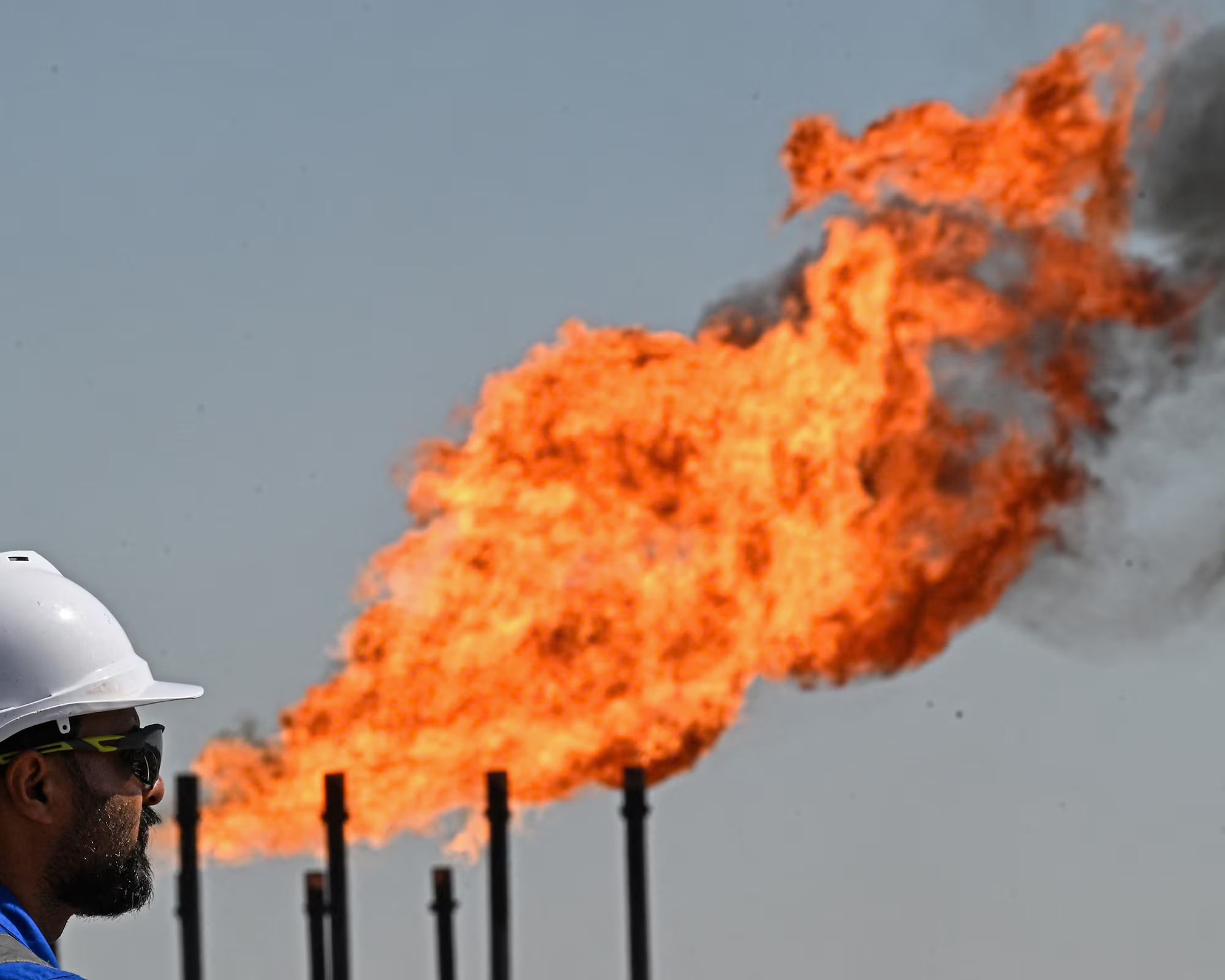
Brent rose by more than 13% over 24 hours, reaching its highest level since the war began on February 28. The last time Brent climbed above $120 was after Russia’s invasion of Ukraine in 2022, when it reached $139.
This week, oil markets were rattled by Donald Trump’s readiness to maintain the blockade of Iranian ports using US naval forces. In response, Iran continues to keep the Strait of Hormuz effectively closed to other oil tankers.
US-Iran talks scheduled for the weekend in Islamabad did not take place, and the deadlock remains. On Wednesday, Trump said Iran “better wise up as quickly as possible”, and at a meeting with oil-industry executives he discussed what steps would allow the United States to “keep the current blockade going for months, if necessary”, a White House official said.
In Washington, officials believe the blockade will force Iran to shut down oil wells and halt production once its oil infrastructure, including Khark Island, is filled to capacity. Analysts are unsure how long that would take.
“In some ways, a blockade is more effective than bombing,” Trump told Axios. “They’re suffocating like a fattened pig.”
The war is approaching its tenth week, although Trump had initially expected a conflict lasting four to six weeks, after which Tehran was supposed to give way. As long as the strait remains blocked, global oil supplies are being cut by nearly 20 million barrels a day.
Oxford Economics warned in a blog post that a six-month deadlock in the Strait of Hormuz could push oil prices to $190 a barrel as early as August.
According to Deutsche Bank market strategist Jim Reid, the surge in oil prices is fuelling “growing fears of a prolonged stagflationary shock” and driving up government bond yields.
“Overnight, the yield on Japan’s 10-year bonds rose to 2.51%, which would mark the highest closing level since 1997. A similar pattern was visible in Europe: the yield on Germany’s 10-year bund reached its highest level since 2011 at 3.11%, while the yield on Britain’s 10-year gilt climbed to its highest level since 2008 at 5.07%,” Reid added.
Economist Paul Krugman, a former New York Times columnist, said he believes most analysts are “far too complacent” in assessing the consequences of a prolonged crisis around the Strait of Hormuz.
“In my view, a full-scale global recession is more likely than not if the strait remains closed for, say, another three months, which seems entirely possible,” he wrote on Substack on April 20.
In 2008, during the global financial crisis, oil reached record levels: prices briefly climbed to about $147. Two weeks after the first US and Israeli strikes on Iran, Tehran said the world should prepare for oil at $200 a barrel.
The consequences of the supply shock extended far beyond higher petrol prices. They spread through the global economy, intensified inflation, and fuelled fears of an approaching global recession.
In the United States, inflation accelerated sharply in March: prices rose 3.3% year on year. On the other side of the Atlantic, one think tank warned that the war threatens Britain with £35 billion in economic damage and the risk of recession in 2026.
While Congress was grilling US defense secretary Pete Hegseth over the rising cost of the war and its strategy, Iranian foreign minister Abbas Araghchi spent the day on phone calls with India, Kenya, and Poland, trying to shore up support for Tehran in its confrontation with Washington.